Uganda

Uganda Police Force is the Biggest Violator of Media Rights with 101 Cases (60%)

Uganda Police Force (UPF) was again the biggest single violator of media rights, contributing 60% of all violations. The Police beat up and ironically arrested journalists who were protesting against Police brutality. The Uganda Communications Commission (UCC) was the second biggest violator accounting for 22% in addition to its independence as a regulator being questioned. The Uganda People’s Defence Forces (UDPF) came a third at 3.6%. Abuse by mobs against journalists also stood at 3.6%.

Advert

  • In terms of the nature of violations and abuses, the leading incidents were perpetrated by security officers, especially the Police who on several occasions were responsible for blocking journalists from accessing news scenes of crime and accessing sources. This kind of violations accounted for 27% of all incidents; UCC’s suspensions of editors and producers was in second place at 23% while arrests and assault followed in third(22%) and fourth positions(16%) respectively.

Broadcasting and online media platforms suffered more violations and abuses, as compared to print media, which reported fewer cases. Detailed stories of all these violations are captured in the narratives.

  • The number of cases involving RDCs (Resident District Commissioners) meddling in media freedoms increased from two in the previous year to six in 2019.

Some RDCs raided radio stations, switched them off and forcefully removed opposition politicians who were participating in talk-shows from the studios.

  • With regard to internet freedoms, it was observed that there is increased surveillance of online business which endangers the practice of journalism in the digital age. This is made worse by the fact that, many journalists lack digital security skills.

This is a direct threat to their safety and security. • Journalists continue to work under unfavorable conditions that include being paid meager salaries, temporary employment for many and lack of job security and social welfare.

These challenges expose journalists to manipulation and unethical practices that greatly undermine their professional integrity and limit the exercise of their right to freedom of expression.

For Full report visit http://www.hrnjuganda.org

Do you have a story in your community or an opinion to share with us: Email us at editor@scribe.co.ug or Whatsapp +256774034989

For any financial support or sponsorship for this news website you can contribute on +256704290651

What's your reaction?

Excited
0
Happy
0
In Love
0
Not Sure
0
Silly
0

You may also like

Comments are closed.

More in:Uganda

Business

PRESIDENT MUSEVENI URGES EUROPEAN INVESTORS TO TAP INTO UGANDA’S ECONOMIC OPPORTUNITIES 
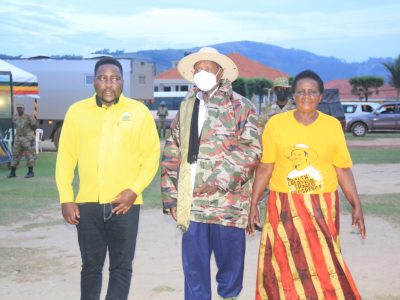
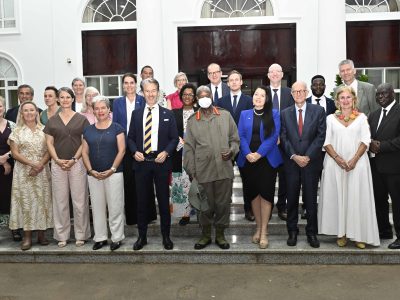
President Yoweri Kaguta Museveni has urged European investors to take advantage of Uganda’s economic opportunities, particularly in infrastructure, energy, manufacturing and agriculture, saying investment in productive sectors is key to expanding markets, creating jobs and accelerating economic transformation.    The President made the remarks today at State House Entebbe during a meeting with European Union Ambassadors and investors, where he highlighted Africa’s growing population and expanding market as a major opportunity for European businesses seeking investment and stronger economic partnerships. “This is what we have been advising our European friends to look at, because Africa is a big potential market with its fast-growing population,” he said. President Museveni attributed political instability in some African countries partly to identity-based politics, including tribalism, religious divisions and ideological misunderstandings, as well as a failure to appreciate the role of the private sector in driving economic growth. He said Uganda had learnt from these challenges and emphasised the need for a stable political and economic environment that enables private businesses to invest, expand production and create employment. The President welcomed ongoing and proposed European investments in Uganda, particularly in infrastructure and other productive sectors, saying such projects would strengthen economic links between Uganda and the European market. “All these projects are music to my ears. By constructing these projects here, you are linking the market of Uganda to that of Europe. Why can’t anyone see that?” he asked. On energy, President Museveni said the cost of electricity remained a critical factor in Uganda’s competitiveness, particularly for manufacturers seeking to produce goods at affordable prices. While welcoming private-sector investment in hydropower generation, he called for greater attention to electricity tariffs, arguing that affordable power was essential for industrial expansion and economic growth. He identified affordable electricity, railway transport and accessible financing for productive investments as key priorities for strengthening Uganda’s manufacturing sector. The President cited the Uganda Development Bank as an important source of financing for businesses engaged in productive activities, explaining that the government had retained the institution to support investments capable of expanding production and creating jobs. He also urged the European Investment Bank to channel more financing into strategic infrastructure, particularly railway development, electricity generation and distribution, and selected road projects. On road infrastructure, President Museveni encouraged European investors to explore opportunities in construction and financing models, including tolling arrangements where appropriate. The President also reaffirmed the government’s support for tax incentives aimed at attracting investment, particularly in manufacturing, and emphasised the importance of enabling eligible businesses to benefit from a 10-year tax holiday. ...