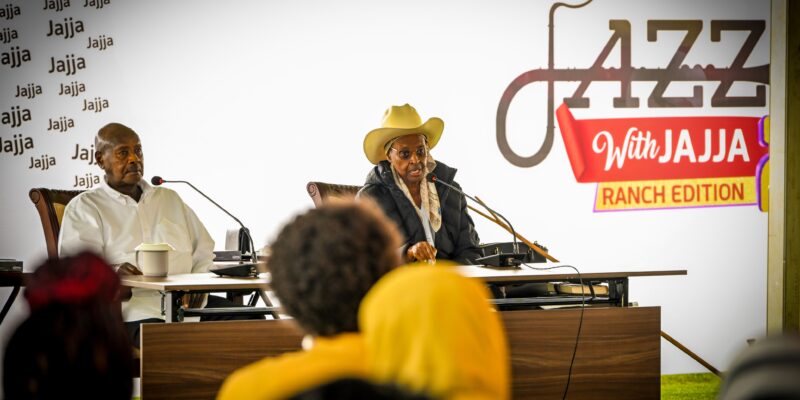
President Yoweri Kaguta Museveni and the First Lady, also the Minister
of Education and Sports, Maama Janet Kataaha Museveni today hosted
the second edition of Jazz with Jajja at their Kisozi farm in Gomba
District.
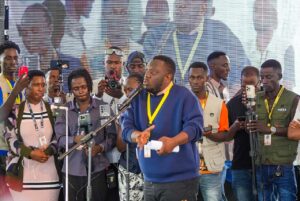
The event brought together a number of content creators, journalists,
digital entrepreneurs, and social media influencers for a deep reflection
on Uganda’s economic transformation and national values.
Before the formal discussion, President Museveni took the youth on a
tour of his farm, showcasing his herds, including Ekyigondo, now
numbering over 700 cows originally belonging to his late mother,
Kokundeka, for ghee production.
He emphasized the importance of preserving the legacy of forefathers
and passing it on to the next generation.
The Ranch Edition, coordinated by Mrs. Natasha Museveni Karugire,
brought together young Ugandans, many of whom shared stories of
rising from difficult beginnings through digital enterprise. The inaugural
edition took place on January 4, 2026.
During the meeting, President Museveni also pledged Shs5 billion in
support to organized content creators, describing them as an important
layer in Uganda’s evolving economy.
Responding to a request from YouTuber Isaac Katende, popularly known
as Kasuku, on how digital influencers can formally collaborate with the
government, the President described the sector as a modern evolution
of traditional advertising.
“What you are talking about is not something new. In the past,
companies spent money on television and radio advertising. Now a layer
of operators has come up using social media as an easier way of
communication to package and present products to consumers,” he
said.
“If you are organized, we shall support you. If it is a combination of sales
and entertainment, that is fine. I am glad to see our young people putting
up that layer of promoters. We shall support you both in improving
communication technology and operationally.”
President Museveni also underscored the contribution of content
creators in the new economy.
“You are adding something different. It used to be an advertisement on
radio and television. Now you have used the internet to combine
celebrity with promotion and link it with other sectors.”
He framed the discussion within what he called Uganda’s “whole battle”,
moving citizens from poverty into productive economic participation.
“I have heard that many of you were born in difficult circumstances.
There are many like that. The question is: how can the country deal with
that?” he inquired.
The President explained that the government's long-standing strategy
has been to involve as many Ugandans as possible in the four wealth
creation sectors.
“Now about 70 percent have joined the money economy. Those will help
us deal with the remaining 30%. In this new kisanja, we must fight
poverty because poverty is the biggest problem,” he said.
He emphasized that financing has been deliberately taken closer to
citizens through the Parish Development Model (PDM), Emyooga,
ghetto funds and boda boda funds.
“We have made sure the money is near the people. PDM is in the parish;
in towns it is in the wards. Go and join the SACCOs. They are open to
everyone above 18 years.”
He revealed that the government injects Shs100 million per parish
annually totalling Shs500 million per parish over five years, creating
what he described as “parish banks.”
For creatives specifically, he confirmed direct intervention.
“For the creatives, we are going to put money in your own SACCOs. We
already have billions with the musicians. Now we are supporting you as
well.”
He reiterated that science and technology remain the primary drivers of
transformation.
“The primer of change in human society is science and technology,” he
said. “Without it, you cannot transform society.”
He concluded by thanking the organizers.
“I thank Natasha for coordinating you and bringing you here. I thank
Maama for coming to support me at this event. God bless you all.”
In her comprehensive address, Maama Janet urged young Ugandans to
rediscover their identity, embrace faith and take responsibility for
transforming their country.
“It is important that we celebrate being Ugandan. Africa has failed to
develop because it always looks to other countries to develop it, to
change it or to do things for it, yet there are jobs here.”
She expressed concern about young Africans risking their lives abroad
while opportunities exist at home.
“We must start by being proud of being Ugandan. All the other things will
come from knowing that Uganda depends on us to develop it,” she said.
Maama Janet cautioned against identity erosion, urging young people to
value who they are and where they come from.
“When you see Ugandans trying to change themselves to look like
others, just think,” she said, emphasizing that confidence in national
identity is foundational to transformation.
On education reform, she spoke at length about Uganda’s new
competency-based curriculum, describing it as a shift from passive
learning to active engagement.
“Our young people now enjoy being in class, asking questions and doing
their own projects. Teachers are becoming facilitators. Education should
liberate, not keep us captive.”
She also contrasted education rooted in colonial philosophies with an
approach that empowers African identity and critical thinking.
“When you educate a person properly, you liberate your country,” she
said.
The First Lady further highlighted the government's growing investment
in sports, noting that structured planning has replaced past
improvisation.
“In the past, students would go for national competitions without
accommodation or food,” she said. “Now we plan. We select which
teams to fund as a nation because we cannot fund all at once.”
Although the national budget must address multiple priorities, Maama
Janet assured participants that sports development is steadily improving
as resources increase.
Drawing on faith, she encouraged discipline and purpose.
“Before you were in your mother’s womb, God knew you. Those who
discipline their lives will fulfil their purpose.”
She urged the youth to reject divisions based on tribe or religion and to
work together.
“If we hold hands as Ugandans and work together, our country will be
unstoppable.”
Among the participants was Ms. Jackie Arinda, a young entrepreneur
who runs a coffee business using social media platforms.
“I sell my coffee on TikTok, X and Instagram,” she said. “I go to the
roastery, roast my coffee, take it home and market it directly on my
social media platforms.”
Ms. Arinda noted that digital platforms have enabled her to reach
customers beyond her immediate location and build a brand without
relying on traditional distribution channels. She added that she had
previously benefited from the National Social Security Fund (NSSF),
which helped strengthen her financial footing.
However, she raised concerns about skills gaps and emerging
technologies.
“What policy changes can enable Ugandan businesses to use new
technologies like AI and drone systems?” she asked. “As much as we
advertise, we are not yet skilled to the required standard.”
In response, President Museveni welcomed the innovation
demonstrated by young entrepreneurs.
“We shall support you to continue improving the technology of
communication and also give you operational support,” he said.
Delivering a vote of thanks, Ms. Pamela Ankunda said the central
message of the engagement was patriotism and strategic security for
Uganda and Africa.
“The biggest takeaway is the love of Uganda and the strategic security
of Uganda and Africa,” she said.
“When you love Uganda, you understand that this event was teaching us
the values of our country.”
She thanked the First Lady for being “a woman of faith and valor” to the
women of Uganda, recalling her declaration in Karamoja that the region
would grow its own food “not by anyone’s power, but by the mighty
power of God.”
What's your reaction?
You may also like
More in:Business

From the Lab to Your Bathroom Shelf: Why I’m Proud to Sell UBeauty

Minister Babalanda Calls for Financing Architecture to Match Uganda’s US$500 Billion Growth Ambition by 2040
PRESIDENT MUSEVENI COMMENDED FOR SKILLING INITIATIVE AS STATE HOUSE ANNOUNCES NEW HUB IN BUSOGA
Namayingo Farmers Confront Sugar Council Over Delayed CN Sugar Licence