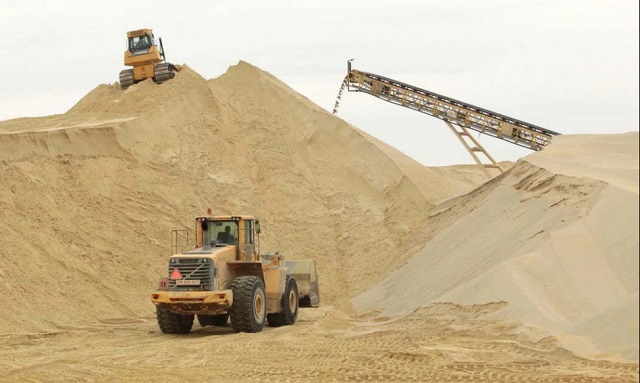
On March 26, 2021, Hon. Richard Sebamala, the Bukoto Central Member of Parliament, wrote to the Uganda Development Corporation requesting approval for the long-awaited Sheet Glass Project in Diimu, Masaka District.
The project was intended to explore the vast deposits of white sand in the area, a resource with great potential for industrial use. Sebamala’s request was a call to fast-track the exploration phase so that the project could kick off and begin contributing to Uganda’s economy. However, years later, the plans remain stalled, leaving the community and the nation disappointed.
The project, originally conceived in 2014, was projected to generate up to US $7 million annually while creating over 4,000 jobs for youth in Masaka District. By 2016, exploration was expected to be in full swing, transforming Diimu into a hub of industrial activity. Economists and business analysts at the time hailed the initiative as a golden opportunity for both Uganda’s economy and the livelihoods of the local population. Yet, nearly a decade later, the ambitious dream has withered away due to persistent delays and poor implementation.
According to submissions from the Ministry of Finance, Planning, and Economic Development, the project held enormous potential as a regional income source. Minister Matia Kasaijja himself described the white sand exploration as a life-changing venture that could stimulate local business, improve infrastructure, and reduce poverty. His reports emphasized that the project was not only economically viable but also socially transformative. Unfortunately, his vision never materialized, leaving communities in Masaka questioning the government’s commitment to development.
President Yoweri Museveni also weighed in on the matter on January 16, 2016, when he directed the Ministry of Finance to collaborate with KIMU Investments to advance the exploration. The directive was expected to clear bureaucratic bottlenecks and push the project forward. However, the process stalled due to what observers described as weak technical teams and the absence of a robust anti-corruption mechanism to monitor progress. These challenges undermined the president’s directive and bred frustration among both the investors and local leaders.
The collapse of the Sheet Glass Project represents more than just a failed industrial dream—it symbolizes Uganda’s struggle with accountability and poor project follow-up. Without clear oversight, the country risks losing an investment that could have transformed not only Masaka District but also Uganda’s entire glass and construction sector. Reports indicate that early frustrations from investors were never addressed, further eroding confidence in Uganda’s ability to deliver on such mega projects. Unless urgent action is taken, Uganda could lose billions while valuable natural resources remain idle.
The expected benefits of the project were enormous. Thousands of unemployed youth in Masaka would have found jobs in exploration, transportation, and factory work. Local businesses, from shopkeepers to boda-boda riders, would have thrived from increased economic activity. Moreover, the government stood to gain significant revenue through taxes and exports. Sadly, the absence of political will and strategic planning has denied the community these opportunities.
Findings from recent qualitative analysis and data collection in Diimu highlight the severity of the missed opportunity. Poverty levels remain high, and the majority of youth are still unemployed, surviving only on fishing and small-scale trade. The locals strongly believe that if the white sand had been utilized, their lives would have drastically improved through steady incomes and new business ventures. Their expectations now rest heavily on current leaders such as Hon. Richard Sebamala and aspiring Woman MP Babirye Kabanda to revive the project.
Geographically, Diimu’s location is strategic for industrial development. Situated near a landing site and surrounded by Lake Victoria, the area is home to hundreds of fishermen under Buliiro Parish in Bukoto Central Constituency. Experts believe the project would have provided fishermen and fishmongers with supplementary income, diversifying their sources of livelihood beyond the risky fishing industry. Such a development would have brought long-term stability and growth to the community.
The white sand deposits in Masaka have been identified as highly suitable for the production of sheet glass, tiles, and other construction materials. With Uganda’s booming construction industry, the demand for such products is steadily increasing. Local production would reduce reliance on costly imports and make building materials more affordable for ordinary Ugandans. Additionally, surplus products could be exported to neighboring countries, further strengthening Uganda’s position in the regional market.
Despite its potential, the project lacked sufficient political backing to push it through. Although the late Speaker of Parliament Jacob Oulanyah and Finance Minister Matia Kasaijja offered early support, their influence was not enough to overcome bureaucratic inertia. Critical follow-up was missing from other policymakers, leaving the project to collapse silently. This lack of unity and commitment highlights one of the biggest hurdles in Uganda’s development journey.
As it stands, the Sheet Glass Project remains one of Uganda’s most glaring examples of underutilized resources. Billions of shillings that could have been earned annually are lost, while youth in Masaka continue to grapple with unemployment. For many locals, the project is not just about economics but about dignity, opportunity, and hope for a better future. Reviving it would require a united front among leaders, investors, and government agencies, with strong anti-corruption mechanisms in place.
The time to act is now. If leaders like Hon. Sebamala and other influential figures reignite efforts to explore the white sand in Diimu, Uganda could still salvage the project and tap into its vast potential. With proper planning, transparent management, and strong political support, the Sheet Glass Project could transform Masaka into a model of industrial success. Failure to do so will leave the community trapped in cycles of poverty and Uganda deprived of billions in revenue from a resource that continues to lie idle beneath its soil.
What's your reaction?
You may also like


More in:Business

From the Lab to Your Bathroom Shelf: Why I’m Proud to Sell UBeauty

Minister Babalanda Calls for Financing Architecture to Match Uganda’s US$500 Billion Growth Ambition by 2040

PRESIDENT MUSEVENI COMMENDED FOR SKILLING INITIATIVE AS STATE HOUSE ANNOUNCES NEW HUB IN BUSOGA

Namayingo Farmers Confront Sugar Council Over Delayed CN Sugar Licence