
By Wilfred Arinda Nshekantebirwe
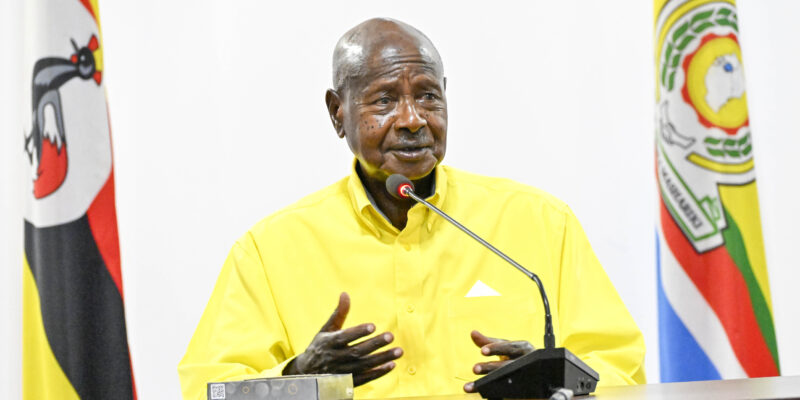
As President Yoweri Kaguta Museveni prepares to take the oath for his seventh term following the January 15, 2026 general elections, where he secured roughly 71.65% of the presidential vote, the formation of the new cabinet will be the most consequential political exercises in Uganda’s recent history.
At 81, the “Big Man” will be architecting the machinery that will steer the country through the critical 2026–2031 window. This period encompasses the ramp-up of commercial oil production, the push toward middle-income status under the Tenfold Growth Strategy and NDP IV, and the delicate undercurrents of generational political transition.
From my vantage point, one grounded in the cold realities of power retention, patronage networks, ethnic arithmetic, and public legitimacy, Museveni’s choices will not be driven by abstract meritocracy alone. They will reflect a calculated fusion of regime survival, economic pragmatism, anti-corruption optics, and legacy-building.
The January parliamentary results, where we witnessed at least ten sitting cabinet ministers losing elections is a signal itself, that the new cabinet may host many new faces. The Constitution (Articles 108, 113, and 114) largely ties ministerial eligibility to elected MPs, meaning many high-profile casualties cannot simply be reappointed without Museveni invoking his limited discretion for non-MP slots, a rare and politically costly move.
Now let me dissect, layer by layer, what the President is likely to rely upon…..
.
1. Loyalty and Political Reliability: The Non-Negotiable Bedrock
In Museveni’s four-decade playbook, loyalty has always trumped competence when the two conflict. Confidential vetting reports from State House, the NRM Secretariat, and intelligence organs will scrutinize every aspirant’s track record: Did they mobilize effectively during the campaigns? Did they defend the President against opposition narratives, particularly in volatile regions? Did they avoid open flirtations with the National Unity Platform (NUP) or other dissenters? Did they support NRM mobilisation teams on ground?
Those who campaigned for the NRM Party vigorously, even in seats they ultimately lost, may still find favor if their loyalty is unquestioned. Conversely, figures perceived as having grown too independent or whose constituencies rejected them amid voter anger over service delivery gaps are vulnerable.
The influence of key power brokers cannot be overstated: General Salim Saleh (the President’s brother) has emerged as a quiet gatekeeper, with aspirants reportedly making pilgrimages to Gulu for endorsement.
Equally pivotal is the rising imprint of the UPDF leadership and the Patriotic League of Uganda (PLU) network linked to General Muhoozi Kainerugaba. Cabinet slots will increasingly serve as rewards for those who helped stabilize the security apparatus during the election cycle. In practical terms: proven NRM foot soldiers and military-aligned technocrats are firmly “in”; anyone tainted by perceived disloyalty or fence-sitting is “out.”
2. Electoral Legitimacy and the Parliamentary Filter: Winners Advance, Losers Pay the Price
The 2026 parliamentary polls embarrassed at least ten cabinet ministers, including heavyweights like Beatrice Anywar (Environment), Hamson Obua (Chief Whip), Betty Amongi (Gender), Joyce Moriku Kaducu (Primary Education), Henry Okello Oryem and John Mulimba (Foreign Affairs), Florence Nambozo and Peter Lokeris (Karamoja Affairs), Agnes Nandutu, and others, lost their seats. Many fell in NRM primaries before contesting as independents or on opposition tickets; others succumbed to strong local challengers. Shockingly, some who were NRM Party chairpersons dumped their NRM honor, and contested as independents…literally against NRM Party candidates.
This is more than coincidence, it is a voter rebuke that Museveni cannot ignore. The Constitution bars non-MPs from most ministerial roles, so the default position for these casualties is “out” unless the President exercises rare executive prerogative (as seen sparingly in past terms). Those who won their seats, especially district women MPs or constituency representatives who delivered landslide victories, may enter the cabinet shortlist with momentum. The message here is that grassroots accountability matters.
Museveni will use this filter strategically, dropping underperforming incumbents to signal responsiveness while rewarding fresh winners to refresh the bench.
3. Performance and Delivery: The Shift from Patronage to Results.
Museveni has repeatedly framed the 2026–2031 agenda around “transformation” and “prosperity” . In private strategy sessions and public addresses, he has identified corruption as “the number one enemy.”
The recent launch of the Inspectorate of Government’s five-year strategic plan (2025/26–2029/30) and parallel efforts by the Directorate of Ethics and Integrity indicates a renewed rhetorical offensive.
In practice, the President will scrutinize ministerial scorecards: Who delivered on infrastructure (roads, electricity)? Who advanced oil-sector readiness without major scandals? Who improved agricultural commercialization under Operation Wealth Creation? Technocrats with demonstrable results in finance, energy, or trade, especially those aligned with Vision 2040 metrics, will be “in.”
Underperformers (sleeping giants), particularly those linked to stalled projects or controversies, will be eased out, even if loyal.
This sphere intersects with anti-corruption: Museveni needs a cabinet that can credibly prosecute the new five-year anti-graft roadmap (higher convictions, asset recovery, digital forensics) without exposing the regime’s inner workings. Expect a mix of battle-hardened loyalists in sensitive dockets and younger, reform-minded appointees in economic portfolios to improve Uganda’s corruption perception index and donor relations.
4. Regional, Ethnic, Religious, and Gender Balancing: The Art of National Cohesion .
Uganda’s politics remains a delicate ethnic jigsaw. Museveni has long maintained equilibrium…Western Uganda, Northern, Eastern and Buganda all equally represented in his cabinet, and informal religious quotas (the Vice Presidency traditionally tilting Catholic).
Post-2026, Buganda’s strong NRM performance will likely translate into more slots. Gender remains a priority: women currently occupy key roles (Janet Museveni in Education, Rebecca Kadaga as First Deputy Prime Minister, Robinah Nabbanja as Prime Minister, Anita Among as Speaker).
Museveni will most likely preserve or expand this to project inclusivity, especially after strong female voter turnout. Youth and “new blood” will feature prominently, not out of sentiment, but strategic necessity. At 81, the President must visibly prepare the ground for an eventual transition. Appointing younger MK-aligned figures or technocrats signals continuity without abrupt rupture, blunting opposition narratives about dynastic rigidity.
5. Security, Stability, and the Succession Shadow.
No analysis of Museveni’s thinking is complete without the security lens. With regional threats (Eastern DRC instability, South Sudan spillovers) and domestic youth restlessness, the cabinet must reinforce stability.
Expect more military or ex-military voices in defence-adjacent roles and Muhoozi-linked allies in strategic positions.
This is not mere nepotism; it is regime insurance. The “transition” question, delicate and rarely voiced openly, will subtly shape choices… retain experienced hands who can manage handover tensions, while injecting PLU-connected reformers to consolidate the next generation’s loyalty.
6. International Optics and Economic Pragmatism.
Museveni is acutely aware of how cabinet composition plays abroad.
Donors, USA and China (a key infrastructure partner), and investors watching oil commercialization will scrutinize for technocratic competence and anti-corruption signals.
Appointees who can navigate multilateral negotiations or attract FDI will gain favor. At home, the cabinet must deliver visible “prosperity” dividends, jobs, roads, electricity, to sustain the 71% mandate.
In the end, Museveni’s cabinet will be a masterpiece of calibrated realism: enough renewal to blunt criticism and project anti-corruption momentum, enough continuity to safeguard the regime, and enough strategic placement to navigate the treacherous waters of succession and transformation.
The “Big Man” from Rwakitura has always understood that power is not given, it is constantly re-engineered. The next list of ministers, expected shortly after the May swearing-in, will reveal exactly how he has recalibrated the levers this time. *Stay tuned.*
The writer is from Rubanda District,Kigyezi subregion.
wilfredarinda@gmail.com
What's your reaction?
You may also like


More in:Analysis

One Mic, One Man, One Mission: How Moses AK Gumisiriza Became the Sound of the NRM, PLU

How a US-Iran War Could Hit Ugandans Hardest

SPA Peace Rugambwa: The Strategist Redefining Mobilisation in Southwestern Uganda

SPA Peace Rugambwa: The Strategic Mastermind Reshaping NRM’s Western Uganda Political Map