President Yoweri Kaguta Museveni has called upon Cabinet Ministers
and Ministers of State to dedicate themselves to Uganda’s historic
mission of socio-economic transformation, urging them to move the
country from subsistence living to a modern, prosperous and
industrialized economy.
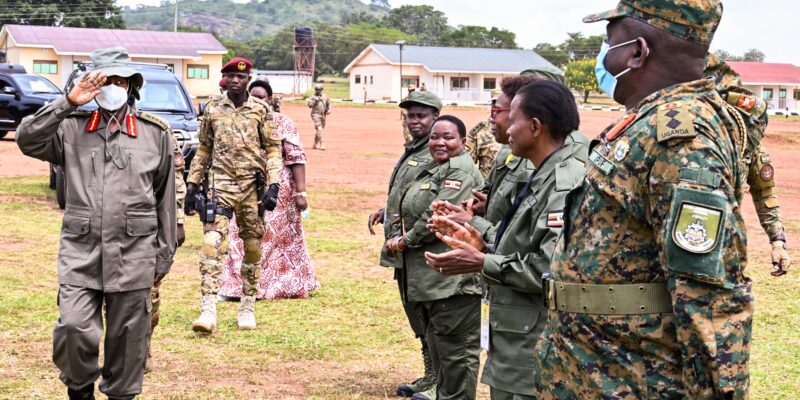
The President made the remarks today while officially opening a 10-day
Cabinet Induction Retreat at the National Leadership Institute (NALI),
Kyankwanzi, attended by newly appointed ministers and senior
government officials.
Describing Kyankwanzi as “a place of sacrifice,” President Museveni
reminded leaders that the National Resistance Movement (NRM) was
built on selflessness and service to the people.
“This is a place of sacrifice. The NRM is a party of sacrifice. People who
let us down are people looking for their own things,” he said.
The President warned against ideological disorientation among leaders,
saying public service should be guided by political education and a clear
understanding of the purpose of leadership rather than personal
ambition.
Quoting from the Church of Uganda prayer book, he observed that some
leaders “leave undone what they ought to have done,” emphasizing that
the retreat was intended to combat such tendencies.
“I have noticed a decline in political awareness among leaders. In order
to help yourself, you must understand how to help your people,”
President Museveni said.
The President drew a distinction between political education and
propaganda, arguing that sustainable leadership requires knowledge
and ideological grounding.
“Political education is knowledge and understanding, whereas
propaganda is merely about exciting people,” he said.
President Museveni warned that since 1986, certain elements had
attempted to infiltrate government institutions for personal gain, including
businessmen seeking favors, careerists, criminals and individuals using
public offices to enrich themselves and their families.
He stressed that such tendencies undermine national transformation and
called on ministers to uphold integrity, discipline and patriotism in public
service.
Reflecting on the evolution of human societies, President Museveni cited
the works of German philosopher and economist Karl Marx, whom he
described as one of history’s greatest analysts despite disagreeing with
some of his conclusions.
“By 1848, Karl Marx had identified several social systems. I do not agree
with some of his conclusions, but he was one of the best analysts,” he
said.
The President outlined the progression of societies from primitive
communalism, slave societies, feudalism, capitalism and socialism,
arguing that leaders must understand how economies evolve in order to
transform their countries.
He noted that Uganda’s challenge is completing the transition from pre-
capitalist structures to a modern economy driven by production, value
addition, industrialization and wealth creation.
President Museveni criticized the colonial economic model introduced by
the British after 1894, saying it confined Uganda to the production and
export of raw materials such as coffee, cotton, tea and copper.
“They were not interested in creating a modern society. By 1962, only
nine percent of Uganda’s population was in the money economy,” he
said.
He explained that at Independence, Uganda’s economy revolved around
the “3Cs and 3Ts” — Coffee, Cotton and Copper; and Tobacco, Tea and
Tourism — with most products exported in raw or semi-processed form.
The President cited recent concerns raised by Ugandans abroad
regarding the export of semi-processed tea through regional markets,
arguing that greater value addition would significantly increase incomes
and create jobs.
He emphasized that processing, packaging and branding Ugandan
products locally would enable the country to capture more value from its
resources.
“The purpose of leadership is to transform society. We must move our
people from subsistence production into the money economy and build a
modern society,” President Museveni said.
He reiterated that the NRM’s central mission since its inception has been
socio-economic transformation through participation in the money
economy and education.
The President identified commercial agriculture, manufacturing, services
and Information and Communication Technology (ICT) as the four
strategic sectors that should drive Uganda’s transformation.
He challenged ministers to actively mobilize citizens household by
household to embrace commercial production and wealth creation,
saying leadership should be measured by tangible improvements in
people’s livelihoods.
President Museveni highlighted the progress made in parts of Uganda’s
cattle corridor, where communities have gradually transitioned from
traditional pastoralism to commercial agriculture.
Recalling his efforts in the 1960s, he said convincing pastoral
communities to adopt settled agriculture was difficult because nomadism
had become part of their culture.
He nevertheless noted significant socio-economic transformation in the
region, while cautioning against persistent challenges such as land
fragmentation, low productivity, poor pasture management and
inadequate irrigation.
The President urged communities to adopt modern farming methods and
collective investment approaches, including shareholding arrangements
instead of physically subdividing land.
“We cannot continue to have peasants in Uganda. Every family must
move from subsistence living into the middle class or the skilled working
class,” he emphasized.
President Museveni said the historical role of African leaders both during
the independence struggle and in the post-independence era has always
been socio-economic transformation.
“We must build a middle class in Africa. We must build a skilled working
class in Africa,” he said.
“In this Kisanja, I do not want any excuses. The challenge is socio-
economic transformation. Peasants must disappear from Uganda; they
must become either middle class or skilled middle class,” he added.
The President further called for stronger coordination among ministries
and agencies to support farmers through irrigation, mechanization,
disease control, improved enterprise selection and market access.
The Vice President, H.E Jessica Alupo said President Museveni’s
landslide victory in the recent elections reflected the continued trust
Ugandans have in his leadership.
She described the Kyankwanzi retreat as more than a retreat, but an
opportunity for ministers to acquire knowledge and prepare for their new
responsibilities.
H.E Alupo urged ministers to contribute toward the realization of
Uganda’s ambitious development targets, including the aspiration to
grow the economy to USD 500 billion, while pledging Cabinet’s
commitment to fighting corruption.
“We shall confront corruption and deliver diligently,” she pledged.
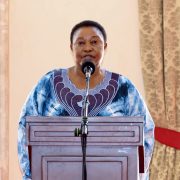
The Prime Minister, Rt. Hon. Robinah Nabbanja thanked President
Museveni for the confidence he had placed in them through their
appointments and pledged commitment to delivering government
programmes.
“Your Excellency, the theme of this retreat directly aligns with your call:
no more sleep, no more corruption,” she said.
Rt. Hon. Nabbanja noted that attaining upper middle-income status
would require deepening agro-industrialization, increasing participation
in the money economy and investing in infrastructure such as roads,
railways, schools and health facilities.
She pledged that the government would strengthen physical monitoring
of projects to ensure effective implementation and service delivery.
Head of Public Service and Secretary to Cabinet, Ms. Lucy Nakyobe
Mbonye, reminded ministers that their appointments reflected the
President’s confidence in their capabilities and urged them to deliver
tangible results.
She said the retreat, themed: “Leading Government with Integrity,
Discipline and Results: Delivering Uganda to Upper Middle-Income
Status,” was intended to equip ministers with the knowledge and skills
necessary for effective service.
“The President has sounded a wake-up call. You must all go to the field
and work there. No more time for relaxing and rolling away your chairs,”
she cautioned.
Ms. Nakyobe further urged leaders to lead by example in the fight
against corruption, describing graft as a major obstacle to Uganda’s
aspiration of attaining upper middle-income status.
The Cabinet Induction Retreat is expected to provide ministers with an
opportunity to deepen their understanding of government priorities and
align their work with Uganda’s development agenda for the
What's your reaction?
You may also like
More in:National
Minister Babalanda Urges Ugandans in Diaspora to Invest at Home and Champion Uganda’s Global Image
Minister Babalanda Roots for Coordination, Accountability to Drive Wealth-Creation
We Must Honor the Builders of PLU in Western Uganda
64TH INDEPENDENCE ANNIVERSARY: Minister Babalanda Calls for Economic Independence and Stronger Anti-Corruption Drive