Climate Resilience Takes Center Stage as Kayunga Receives Climate-Smart Agricultural Tools
By Denis Mukisa
As prolonged dry spells increasingly threaten crop and livestock production, Kayunga District has received practical climate adaptation equipment under the President’s agricultural extension grant.
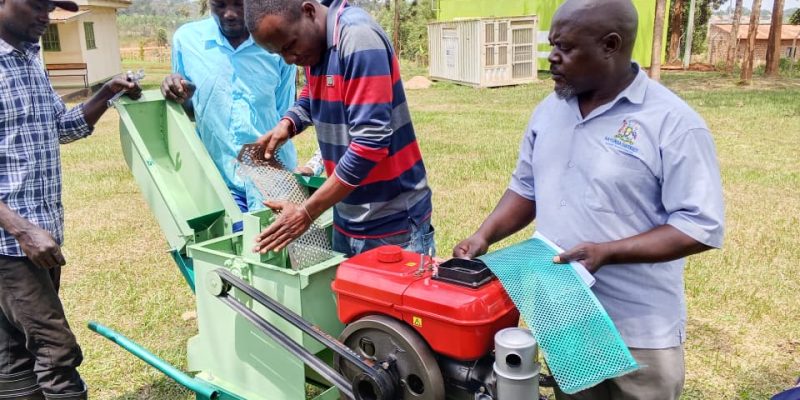
The district on Wednesday distributed beehives to farmers and a silage-making machine to the Kiwangula Farmers’ Cooperative, alongside motorcycles for extension workers. While all items support broader agricultural goals, the beehives and silage machine stand out as direct responses to climate-related challenges facing smallholder farmers.
District Veterinary Officer Dr Ronald Kanaakulya highlighted the strategic importance of the new equipment during the handover ceremony.
“Bees play a vital role in pollination, which enhances crop yields,” Dr Kanaakulya explained. He noted that many farmers have been experiencing reduced harvests due to declining bee populations and poor pollination services.
The silage machine, he added, addresses one of the most pressing seasonal problems in the district of feeding livestock during extended dry periods when pastures dry up and fodder becomes scarce.
“This machine will help farmers preserve green fodder during the rainy season so they have sufficient feed for their animals when the dry spell hits,” Dr Kanaakulya said. He urged farmers to fully utilise the equipment and take advantage of the district’s practical training centre to learn modern conservation and feeding techniques.
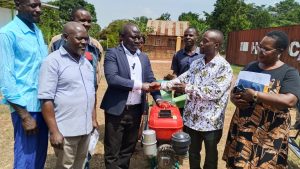
District Veterinary Officer handing over the machine to Kiwangula Farmers’ Cooperative
John Magezi, Kayunga Deputy Resident District Commissioner, who officiated the handover, said the support forms part of a wider government effort to strengthen food production and build resilience at the grassroots level.
The Kiwangula Farmers’ Cooperative is expected to use the silage machine to produce high-quality animal feed, particularly during the dry season, helping members maintain healthy livestock herds even when natural pastures are unavailable. This is expected to stabilise milk and meat production while reducing the pressure on farmers to sell animals at distress prices during droughts.
Andrew Muwonge, LC5 Chairperson, welcomed the equipment, noting that strengthening extension services and providing appropriate tools is essential for helping farmers adapt to the changing climate.
By focusing on pollination support and fodder preservation, the latest intervention signals a growing shift toward climate-smart agriculture in Kayunga. Local leaders hope these practical tools will help smallholder farmers build stronger, more resilient livelihoods in the face of unpredictable weather patterns.
What's your reaction?
You may also like
More in:National
Let’s Build Stronger Families for Uganda’s Future, Says Tayebwa
Focus on Climate Action, Tayebwa Tells MPs
President Museveni Fulfils UGX 50 Million Pledge for Fr. Bagumisiriza’s Marriage Book.
“I am Not Willing to Defend Corrupt RDCs,” Minister Babalanda Intensifies Expose the Corrupt Campaign