Degrees Without Rewards: Why Uganda’s Primary Teachers Remain Trapped on U7 Salary Scale.
By Stephen Okhutu
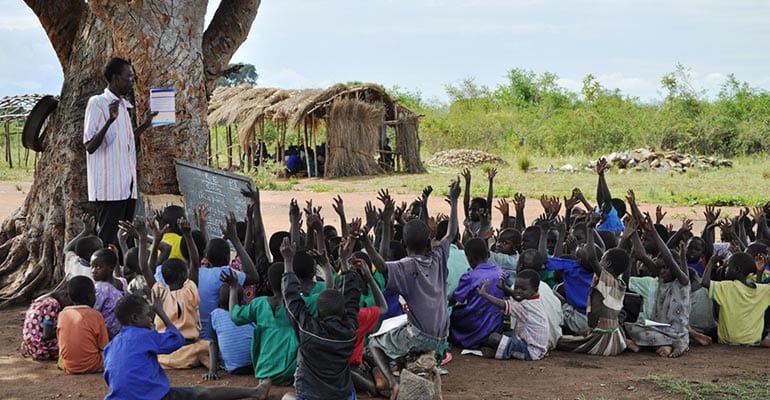
Uganda’s push to require university degrees for primary school teachers aims to professionalize the teaching force and raise education quality. Yet the reform risks falling short unless paired with a coherent transition plan, transparent re-grading, verified payroll adjustments, and sustained funding. Recent salary enhancements for primary and arts teachers have provided some relief, but educators and analysts highlight a persistent structural problem: many degree-holding teachers remain trapped on the same low U7 and U6 scales as certificate holders, rather than advancing to the U4 scale typical for other university graduates in the public service.
This mismatch is not accidental. Historically, primary classroom positions were graded according to traditional entry qualifications; Grade III certificates or diplomas, placing most teachers on U7 (Education Assistants) or U6 (Senior Education Assistants). Even as more teachers upgrade to degrees, the position itself often remains classified at those lower scales. Only head teachers routinely reach U4. The result is a system where qualifications rise on paper, but pay and career ladders lag behind.
Teachers have invested time and money in further studies expecting recognition and better remuneration. Instead, many find salary adjustments uneven and still anchored to certificate-level scales. The government’s 2026/27 enhancements; raising Education Assistants (U7) toward UGX 700,000 and Senior Education Assistants (U6) to around UGX 727,000, with higher increases for deputies and head teachers; are welcome but incremental. They do not fully resolve the deeper grading disconnect.
This creates dual realities: one of policy rhetoric that treats teachers as professionals, and another on the payroll where they are compensated like their less-qualified predecessors. The consequences extend beyond individual frustration. Teacher motivation, retention, and classroom performance suffer when higher standards are not matched by clearer pathways. In a system already strained by staffing gaps and foundational learning challenges, losing experienced, upgraded teachers to better opportunities or demotivating those who stay; undermines the very goals of the reform.
This creates dual realities: one of policy rhetoric that treats teachers as professionals, and another on the payroll where they are compensated like their less-qualified predecessors
The Ministry of Public Service’s recent emphasis on centralized recruitment clearance (as reiterated by Minister Gen. Katumba Wamala) underscores the government’s focus on wage bill discipline and merit-based hiring. Similar rigor is needed for re-grading existing staff. Without it, the degree requirement becomes another unfunded mandate.
A credible transition should include three practical steps. First, issue clear, public guidelines mapping qualifications (certificate, diploma, degree) to specific salary scales and positions. Second, implement a phased re-grading program with dedicated funding so qualified teachers move promptly to appropriate bands (e.g., recognizing degree holders for accelerated progression toward U5/U4 roles). Third, expand accessible in-service upgrading support; scholarships, study leave, or subsidized programs because many teachers cannot afford degrees on current wages while supporting families.
The recent pay enhancements are a positive signal, but they are only one piece. True professionalization demands alignment between qualifications, job grading, payroll systems, and promotion structures. Without this, the policy risks becoming performative; raising entry barriers without delivering the motivated, well-compensated teaching force Uganda’s children need. The government must now move from announcements to implementation if it wants the reform to succeed.
What's your reaction?
You may also like


More in:Editorial

Could Uganda Learn from Kenya and India’s Street Vending Laws to End the Cycle of Evictions?

Evictions Deepen Poverty as Uganda Clears Streets Without Alternatives for Informal Traders

Can President Museveni let his son be the Next “King Solomon”?

“Corruption and Abuse of Power: Mbale City Land Committee Accused of Land Grabbing and Dispossessing Innocent Owners”