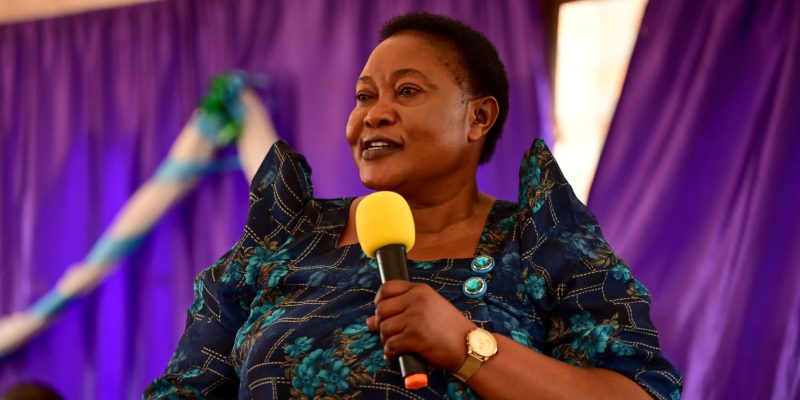
KAMULI: The Minister for the Presidency, MP for Budiope West and Director for Busoga SDA Women field, Hon. Babirye Milly Babalanda, urged the Seventh-day Adventist Church faithful to work as much as their voices praise to combat poverty.
Minister Babalanda made remarks yesterday at the closure of a one-week Seventh-day Adventist Camp Retreat at Kiige SDA Church in Kamuli District.
The Minister delivered greetings from H.E President Yoweri Kaguta Museveni, First Lady and Minister of Education and Sports, Mama Janet Kataaha Museveni, PS Office of the President, Hajji Yunus Kakande, and the entire staff of the Office of the President.
Minister Babalanda applauded the SDA Church leadership in Kamuli for dedicating the week to prayer, Bible study and fellowship. “This is the kind of moral foundation our nation needs. But faith must go hand in hand with work,” she said.
She noted that the NRM Government, under the stewardship of H.E. President Yoweri Kaguta Museveni, has guaranteed freedom of worship and recognizes religious institutions as key partners in national development, unity, and moral transformation.
The Minister urged church pastors and leaders to use their pulpits to preach and mobilize communities around Government wealth-creation initiatives aimed at fighting household poverty.
“The government has established several wealth creation programmes, like the Parish Development Model – PDM, Emyooga, Youth Livelihood, Operation Wealth Creation – OWC, GROW, etc. Our role now is to ensure these resources are used with integrity, unity, and hard work to create wealth and jobs at the household level,” she said.
She specifically called on the people of Kamuli to embrace H.E. President Yoweri Kaguta Museveni’s 4-Acre Model Concept as a strategy for rural transformation. Under the model:Acre 1: Coffee or cocoa for long-term cash income; Acre 2: Fruits such as oranges, mangoes, and passion fruit; Acre 3: Food crops including maize, beans, cassava, sweet potatoes and vegetables; Acre 4: Animal pasture to support zero-grazing dairy.
Minister Babalanda also encouraged backyard projects such as poultry farming for eggs for Muslims and SDA believers, then piggery for non-Muslims, in line with the H.E. President Museveni’s guidance as the champion of wealth creation.
The Minister rallied participants to heed H.E President Museveni’s call for this term.
“This term, the President has tasked us with two things: Fighting corruption and working hard. There must be ‘No Sleeping’. As Christians, our hands must work as much as our voices praise. That is how we shall defeat poverty,” she emphasized.
In a show of support to the Church, Minister Babalanda also contributed 100 bags of cement towards the ongoing construction of Kiige SDA Church.
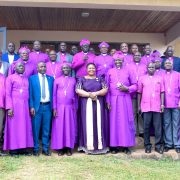
The retreat brought together hundreds of SDA faithful from across Kamuli District for a week of spiritual renewal.
What's your reaction?
You may also like
More in:Business

Personal care is not a gender issue. It is a matter of health, hygiene and self-confidence
AAYC, NIMD Explore Strategic Partnership to Advance Youth Leadership, Democracy and Peacebuilding
PRESIDENT MUSEVENI URGES SHEEMA FARMERS TO EMBRACE IRRIGATION, COMMERCIAL AGRICULTURE TO FIGHT POVERTY
PRESIDENT MUSEVENI URGES EUROPEAN INVESTORS TO TAP INTO UGANDA’S ECONOMIC OPPORTUNITIES