Leaders in the Madi sub-region have appealed to the State House to
establish Information and Communication Technology (ICT) laboratories
and introduce computer-related courses at the Madi Zonal Presidential
Industrial Skilling Hub, arguing that digital skills are now essential for young
people seeking employment and entrepreneurship opportunities.
The appeal was made during a stakeholders’ engagement meeting held at
the Madi Zonal Presidential Industrial Skilling Hub in Adjumani District on
Friday, July 31, 2026.
The hub serves youth from the districts of Moyo, Adjumani and Obongi.
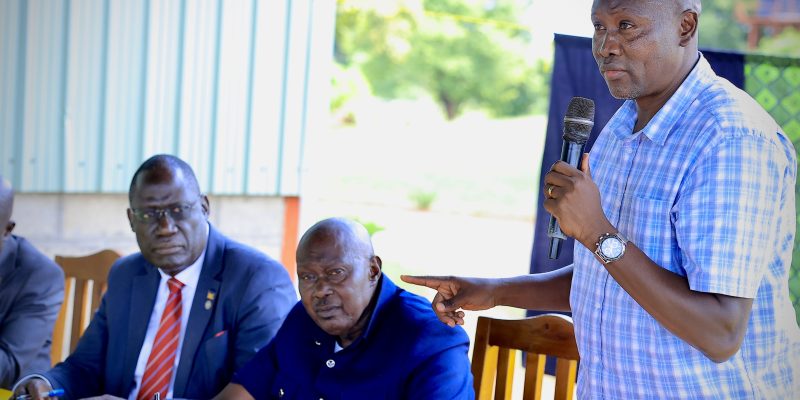
Mr. Geoffrey Filbert Ocaliap, the Resident District Commissioner for Moyo
and Chairperson of the Madi Zonal Presidential Industrial Skilling Hub
Board, said vocational trainees should graduate with both practical trade
skills and digital competencies to remain competitive in the modern
economy.
“The world is increasingly becoming digital. Our trainees need computer
skills alongside their vocational training,” Mr. Ocaliap said, noting that an
ICT laboratory would enable learners to conduct research on emerging
technologies while also paving the way for computer studies to be
introduced as a new course at the hub.
He described the Presidential Industrial Skilling Hubs as transformative
institutions that equip young people with practical skills while awarding
qualifications comparable to the Uganda Certificate of Education (Senior
Four) level.
Mr. Ocaliap urged leaders across the region to intensify mobilisation so that
more vulnerable youth can benefit from the free government programme.
He noted that the growing recognition of the hubs was reflected in the
recent recruitment of several graduates into the Uganda People's Defence Forces (UPDF) as skilled professionals.
On post-training support, Mr. Ocaliap revealed that the Madi Hub SACCO
had received Shs150 million, with Moyo, Adjumani and Obongi districts
each allocated Shs50 million to finance graduates starting their own
businesses.
However, he cited inadequate facilitation for SACCO executives and district
hub committees responsible for monitoring beneficiaries as one of the
major challenges affecting programme implementation.
Representing the State House Comptroller, Ms. Jane Barekye, the Special
Presidential Assistant on Political Affairs, Mr. Godfrey Longa, commended
leaders in the Madi sub-region for their continued support towards the
Presidential Industrial Skilling Hubs programme.
He announced that President Yoweri Museveni had released Shs8.8 billion
to Presidential Industrial Hub SACCOs across the country to provide start-
up capital to graduates.
Each zonal hub SACCO, he said, received Shs50 million, and called upon
district leaders to ensure the funds are invested in productive enterprises.
“We want leaders to monitor these beneficiaries so that the money
achieves its intended purpose of creating wealth and improving
livelihoods,” Mr. Longa said.
He disclosed that 121 beneficiaries from the Madi sub-region had already
received start-up capital, with more graduates expected to benefit.
Addressing concerns over delays in loan disbursement, Mr. Longa
explained that the verification process was necessary to guarantee
transparency and accountability.
He also revealed that State House had expanded the hub's value-addition
component through the construction of a grain milling plant, an animal feed
factory and modern grain silos with a storage capacity of 500 metric
tonnes.
Mr. Longa urged local leaders to mobilise communities to embrace
commercial agriculture to ensure the facilities operate at full capacity and
generate more employment opportunities.
On student discipline, he challenged district selection committees to admit
only committed trainees willing to complete the programme.
“We need students who are committed to learning because this programme
is transforming lives,” he said.
Mr. Longa recalled incidents where some trainees attempted to abandon
the programme before later claiming they had been attacked by spirits. He
also attributed some withdrawals to health conditions, including Hepatitis B,
as well as pregnancy, and called for thorough screening before admission.
Regarding transport challenges, he said programme implementers should
continue working within available resources as the State House finalises
plans to provide transport to the hubs.
The meeting also heard testimonies from graduates whose lives have been
transformed through the initiative.
Rehema Jamila, a tailoring graduate from Moyo District, said she received
Shs560,000 from the hub SACCO, which enabled her to purchase a
sewing machine and tailoring materials before establishing her own
business.
She said the enterprise now employs other people and has significantly
improved her family’s livelihood.
“My dream is to meet President Museveni and personally thank him for
giving me a second chance in life,” she said.
Another beneficiary, Amacha William, a Primary Seven dropout from Lori
Village in Adjumani District, said the programme helped him abandon
illegal fishing after enrolling for bakery and confectionery training.
William said he initially failed to raise Shs30,000 from his wife to start a
small mandazi business but later received support to launch the enterprise.
After securing Shs700,000 from the hub SACCO, he expanded the
business, now employs six people, has trained more than 20 others in
bakery and confectionery, and supplies bread and mandazi across Moyo,
Adjumani and Obongi districts.
“I thank President Museveni for giving me this opportunity. Today I can
support my family and my next goal is to modernise my bakery by acquiring
an industrial mixer and oven,” he said.
The Presidential Industrial Skilling Hub programme, implemented under the
Office of the State House Comptroller, provides free vocational training,
accommodation, meals and start-up capital to vulnerable youth, enabling
them to establish businesses, create jobs and contribute to Uganda’s
socio-economic transformation.
What's your reaction?
You may also like

More in:Business
PRESIDENT MUSEVENI URGES EUROPEAN INVESTORS TO TAP INTO UGANDA’S ECONOMIC OPPORTUNITIES

From the Lab to Your Bathroom Shelf: Why I’m Proud to Sell UBeauty
Minister Babalanda Calls for Financing Architecture to Match Uganda’s US$500 Billion Growth Ambition by 2040

PRESIDENT MUSEVENI COMMENDED FOR SKILLING INITIATIVE AS STATE HOUSE ANNOUNCES NEW HUB IN BUSOGA