The renewed fight against corruption has become one of the defining governance priorities of President Yoweri Kaguta Museveni’s current term of office. It is a campaign that seeks not merely to punish the corrupt but to restore integrity in public service, protect taxpayers’ money and ensure that every Ugandan benefits from government programmes.
The President has repeatedly made it clear that corruption is not simply theft of public resources. It is theft of opportunities from ordinary Ugandans. It denies mothers proper health facilities, children quality schools, farmers reliable roads and communities the development projects they deserve.
As Minister for the Presidency, I have had the privilege of supervising one of the most important institutions in this fight the Resident District Commissioners (RDCs), Resident City Commissioners (RCCs) and their deputies and assistants.
While recent anti-corruption operations have deservedly attracted national attention, it is important that Ugandans appreciate that the foundation of this work has for many years been laid by these officers, who are the President’s representatives in every district and city.
Their constitutional and administrative mandate places them at the centre of monitoring government programmes, supervising service delivery and ensuring that public resources are used for their intended purposes.
Every day, RDCs and RCCs inspect schools, health facilities, roads, markets, water projects and other government investments.
Through these routine inspections, they have intercepted countless cases involving payments for incomplete projects, shoddy construction works, inflated contracts, fraudulent land transactions and other forms of abuse of public resources.
Many government agencies have been compelled to halt illegal payments because vigilant RDCs raised red flags before money was lost.
Others have exposed contractors who abandoned projects after receiving advance payments or delivered work far below acceptable standards. In many districts, they have also helped resolve fraudulent land transactions that threatened government institutions and community interests.
Unfortunately, much of this work rarely makes newspaper headlines. This is because most RDCs operate quietly with very limited operational budgets.
They do not possess dedicated media resources to publicise every case they uncover or every corrupt official they stop. Yet media exposure itself is often costly and beyond the financial capacity of many district offices.
Their work therefore follows the institutional procedures established by government.
Under their Terms of Reference, RDCs and RCCs are required to compile detailed monitoring reports and submit them to the Office of the President through the Ministry for the Presidency.
These reports are carefully analysed before being escalated to His Excellency the President. It is from this constant flow of information from across the country that government is able to identify recurring weaknesses, strengthen accountability systems and shape broader anti-corruption interventions.
Many of the policy decisions that government has taken to tighten supervision of public projects have been informed by these reports submitted over the years by RDCs and RCCs.
This is why the current intensified campaign should not be viewed as replacing existing supervisory structures. Rather, it strengthens and complements them.
I therefore commend the Lands Minister Hon. Balaam Barugahara and my daughter Justine Nameere for the energy and visibility they have brought to this campaign.
Their nationwide engagements have amplified the work that has long been undertaken by RDCs and other government supervisory agencies. Public confidence has increased because citizens can now see investigations taking place openly, while institutions are working together more closely than before.As these inspection teams continue traversing the country, I direct all RDCs, RCCs and their deputies to remain fully present at their duty stations whenever the teams visit their respective districts and cities.
Their presence is essential because they possess institutional memory regarding many of the projects under investigation. They should actively corroborate information contained in the monitoring reports they have previously submitted.
This process will help investigators identify any gaps or possible underreporting while improving the quality of future investigations, reporting and follow-up actions.
An evidence-based anti-corruption campaign can only succeed when all government supervisory structures work as one coordinated team.A few bad apples, though But like in every public institution, the RDC establishment is not without challenges. There have been isolated cases where individual RDCs have not performed to the standards expected of them. Whenever this has happened, Government has acted.
Through the Ministry for the Presidency, officers have been transferred, relieved of their responsibilities or subjected to other administrative measures where circumstances warranted. Accountability must begin with those entrusted to enforce it.
At the same time, we must acknowledge another reality: some RDCs have paid a personal price for confronting entrenched corruption.
Powerful cartels rarely surrender quietly. When illegal payments are blocked, fraudulent land transactions stopped or questionable contracts challenged, those benefiting from corruption often retaliate.
They sponsor malicious propaganda, manufacture false accusations and attempt to intimidate officers whose only offence is doing their work faithfully.But government treats every allegation seriously.
Complaints made against RDCs are investigated objectively, and where wrongdoing is established, appropriate action is taken. Equally, where accusations are found to be false and malicious, the affected officers are vindicated.
We must ensure that honest officers are protected from intimidation while remaining fully accountable for their actions.Citizen participation is pricelessI also wish to express sincere appreciation to the people of Uganda.
The information citizens continue to provide during village barazas and other community engagements has become one of government’s most valuable weapons against corruption.
Many investigations begin with a simple complaint from an ordinary citizen who refuses to remain silent after witnessing wrongdoing. These community reports provide important leads that investigative agencies can verify and pursue.
We therefore encourage Ugandans to continue reporting corruption confidently and responsibly through the established government channels. Ultimately, this renewed momentum against corruption would not have been possible without the unwavering political will demonstrated by President Yoweri Kaguta Museveni.
His clear and consistent directive that corruption must be confronted at every level has reinvigorated government institutions and reaffirmed that no public official should misuse resources intended for the people.
I also commend the Chief of Defence Forces, Gen. Muhoozi Kainerugaba, whose determination to support national efforts against corruption has reinforced government’s resolve to confront criminal networks that undermine public service.
His commitment to ensuring that those involved in corruption are pursued without fear or favour has added important momentum to the broader national campaign.Corruption has denied Uganda valuable resources for far too long.
Defeating it hence requires every institution, public servant and every citizen to play their part.
Our RDCs and RCCs have been doing exactly that for many years. They deserve our support, our cooperation and our recognition as some of the country’s most important frontline defenders of accountability.
Together, we shall protect public resources, strengthen service delivery and ensure that government programmes reach every Ugandan as intended.
The author is the Minister for the Presidency and Budiope West MP.
What's your reaction?
More in:National
My Role is to Put Rubanda’s Needs in the Budget-Minister Musasizi
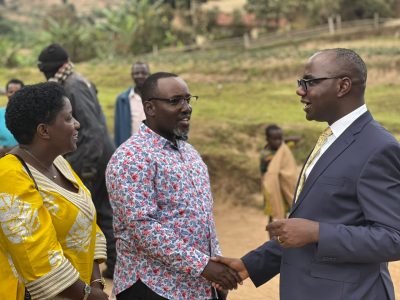
Minister Musasizi Monitors Government Projects, commissions Maternal Health Equipment
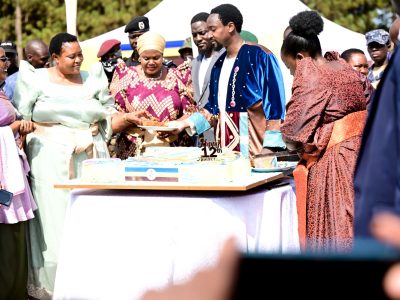
Minister Babalanda Hails Kyabazinga for Promoting Household Wealth Creation as Busoga Marks 12th Coronation Anniversary
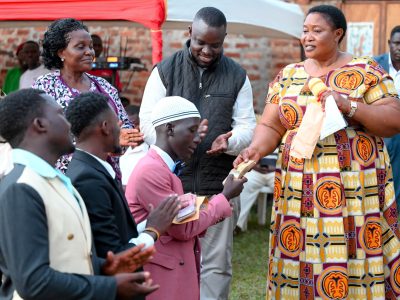
Minister Babalanda Hails Reformed Buwenge Youth Group