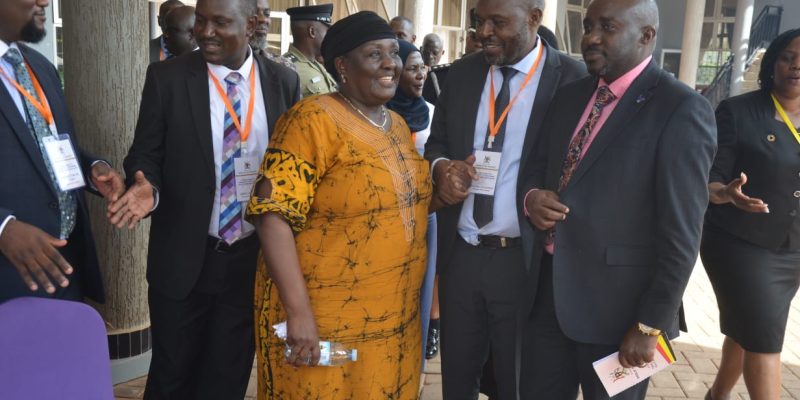
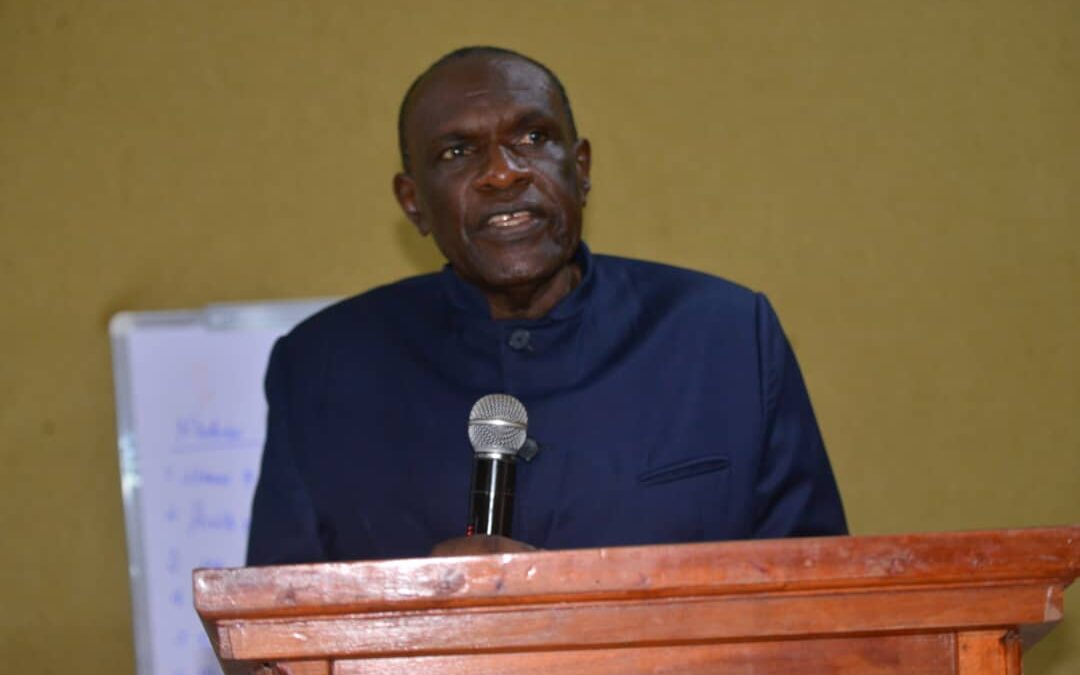
Former Vice President, Dr. Specioza Wandira Kazibwe has called for stronger public policy analysis and effective coordination across government institutions, saying professional policy analysts are critical to ensuring that government programmes respond to the needs of citizens.
Dr.Kazibwe made the remarks on Tuesday 10th November, 2026 while delivering a keynote address at the opening of the five-day Third Policy Analyst Cadre Forum at Hoima Resort in Hoima City.
The forum is being held under the theme: “Promoting Professionalism in Public Policy Management for Effective Public Service Delivery.” Dr. Kazibwe, who also serves as Senior Presidential Advisor on Population and Health, said the government could not achieve meaningful results without competent policy analysts capable of conducting research, interpreting data and developing practical solutions to public challenges. “When I was a Vice President, I set up a consultative forum which helped to draw the programme of government for that term. We were able to coordinate the working of the government,” she said.
She emphasised that effective communication and mastery of appropriate language were essential in policy analysis, noting that analysts must understand how to communicate technical information within their respective fields. “You should be able to analyse data for effective results.
You should be able to talk to data and allow it to speak,” Dr. Kazibwe said. She defined public policy as a system of laws, regulatory measures, funding priorities and government actions designed to address public problems, guide societal behaviour and respond to the needs of citizens. “A public policy is a written strategy in response to real problems,” she said.
Dr. Kazibwe noted that Uganda had several policy issues that required proper analysis and communication to the public, adding that the National Resistance Movement (NRM) government had a specific and actionable manifesto aimed at addressing people’s challenges. She called for formalised mechanisms and standard operating procedures (SOPs) to strengthen policy development, evaluation and recommendations, enabling government institutions to identify challenges and provide appropriate solutions. The Deputy Head of Public Service and Deputy Secretary to Cabinet, Dr. Theopista Mary Wenene, said public policy was central to government service delivery, noting that almost every public infrastructure and service, including roads, schools and health facilities, was a product of policy decisions. She explained that the Cabinet was constitutionally responsible for determining public policy, with proposals submitted by ministries and government institutions considered before appropriate decisions are made.
“We get proposals from your respective ministries and an appropriate Cabinet decision is promptly made,” Dr. Wenene said. Dr. Wenene described policy analysts as the first line of defence in scrutinising government proposals and ensuring that decisions are informed by credible research, sound analysis and practical considerations. She urged the analysts to uphold competence, integrity and professionalism, particularly when preparing policy submissions and assessing their financial implications.
“When you are submitting, in the part of financial implications, you should have integrity and the paper must help the government to make an informed decision. The issue of professionalism is key,” she said.
Dr. Wenene challenged Policy Analysts to demonstrate their value through tangible contributions to their respective institutions, urging them to make their professional impact visible. “Always add value to your entity. Make sure that you’re missed at your place of work due to your impact.
Make yourself visible,” she said. She further emphasised the importance of the whole-of-government approach, which promotes consultation, coordination and collective responsibility among public institutions in addressing complex national challenges.
“The government is now promoting what we call the whole-of-government approach, which means consultation and integrity.
The government needs everyone on board because one government institution cannot solely solve the current complex issues,” Dr. Wenene said.
She attributed the deferral of several government proposals to inadequate consultations, urging policy analysts to engage relevant stakeholders and institutions before submitting proposals for Cabinet consideration.
Dr. Wenene also challenged the analysts to align their work with Uganda’s 10-fold growth strategy, saying their expertise should contribute to accelerating national economic transformation.
“You should think of supporting your respective ministry to help the country grow 10 times,” she said.
The Acting Assistant Commissioner- Policy Analysis- Office of the President, Ms. Namirembe Hafsa, said the annual forum provided an opportunity for policy analysts to reflect on their professional performance, assess progress and identify areas requiring improvement.
She said the engagement was specifically intended to strengthen professionalism, ethical standards, knowledge-sharing and innovation among policy analysts.
Ms. Namirembe added that participants were expected to develop actionable recommendations that would improve policy implementation and enhance service delivery across government institutions. She commended the Office of the Head of Public Service and Secretary to Cabinet for its continued support towards strengthening the policy analysts’ capacity to execute their mandate.
Meanwhile, the Resident City Commissioner (RCC) of Hoima City, Hajji Badru Mugabi, welcomed participants to the oil-rich city and highlighted the government’s ongoing investments and development initiatives in the area.
Hajji Mugabi said Hoima was experiencing rapid development, driven by strategic government investments and preparations for the forthcoming Tuko Pamoja Africa Cup of Nations (AFCON). He revealed that the government was extending an interest-free financing facility worth Shs100.1 billion to the private sector ahead of the continental football tournament.
“There are a number of activities that the government has deliberately accorded to this city. The government is loaning out an interest-free Shs100.1 billion to the private sector ahead of the Tuko Pamoja Africa Cup of Nations,” he said.
He also pointed to the completed stadium in Hoima, which is expected to host some of the AFCON matches, as evidence of the city’s growing infrastructure and investment potential.
Hajji Mugabi called for deliberate policy interventions to address challenges affecting government service delivery, noting that some public services were being frustrated by existing policy gaps.
He urged policy analysts to develop practical and intentional policy measures that would enable government institutions to fulfil their responsibilities more effectively.
The five-day forum brings together policy analysts from various government ministries, departments and agencies to exchange experiences, strengthen professional capacity and develop strategies for improving public policy management and service delivery.
What's your reaction?
You may also like
More in:Business
PRESIDENT MUSEVENI IMPLORES ITALIAN INVESTORS TO PARTNER WITH UGANDA IN VALUE ADDITION, INDUSTRIALISATION
Minister Babalanda Warns Busoga Leaders Against Corruption and Political Interference in NUSAF IV Implementation

Personal care is not a gender issue. It is a matter of health, hygiene and self-confidence
AAYC, NIMD Explore Strategic Partnership to Advance Youth Leadership, Democracy and Peacebuilding