Three months ago, 27-year-old Denis Opio from Lwamuge Village in
Lwamuge Sub-county, Abim District, had little hope for the future.
Born with only one functional hand, Opio had never attended formal
education, lacked vocational skills and struggled to secure employment.
Like many persons with disabilities in rural Karamoja, he feared he would
remain dependent on others throughout his life.
Today, his story has taken a remarkable turn.
Opio is among more than 240 trainees benefiting from vocational training at
the Karamoja Zonal Presidential Industrial Skilling Hub in Napak District, an
initiative championed by President Yoweri Kaguta Museveni to empower
young people with practical skills for employment and enterprise
development.
Despite his physical disability, Opio has mastered leather tanning and
design, producing shoes, school bags, wallets and other leather products
alongside fellow trainees.
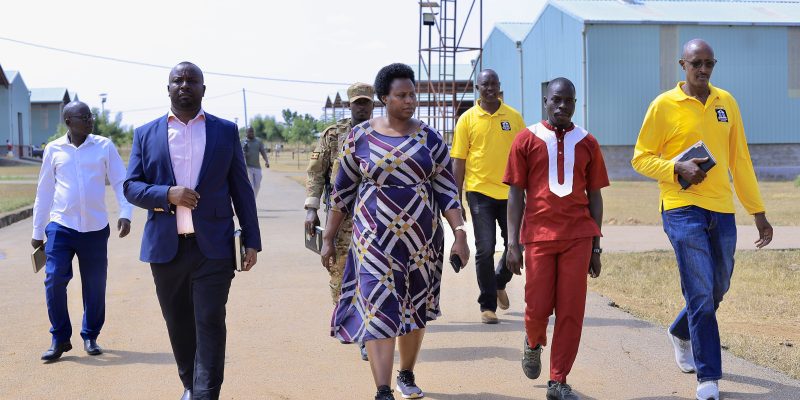
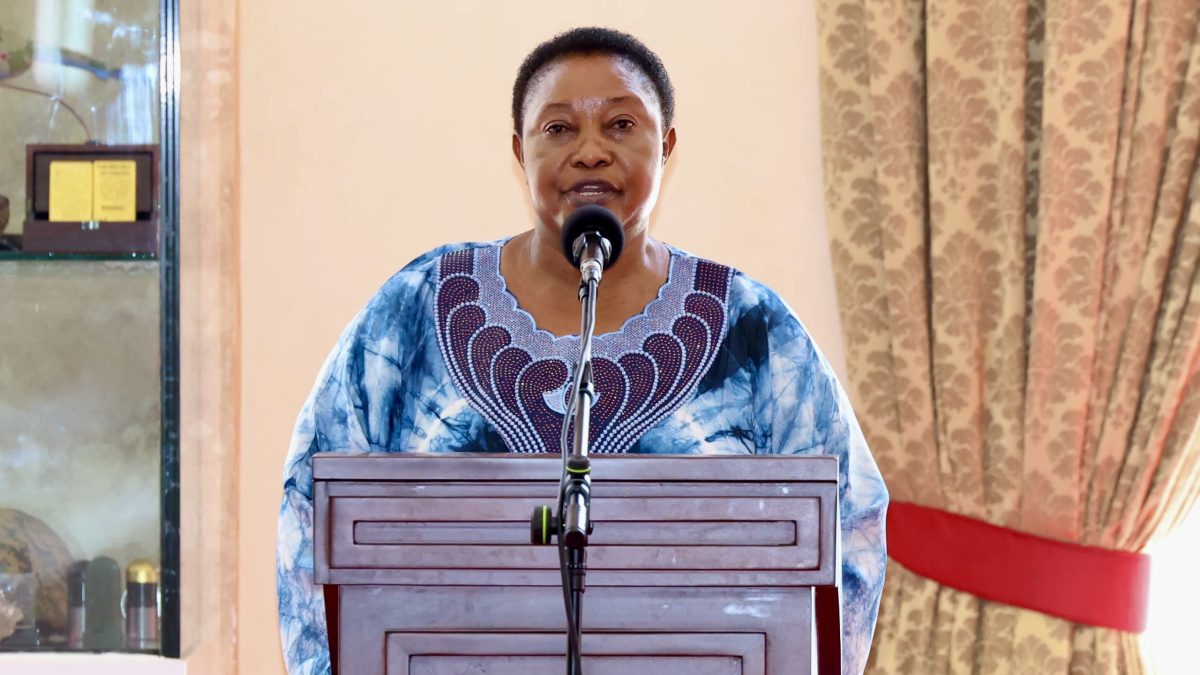
His determination and progress impressed the State House Comptroller,
Ms. Jane Barekye, during her visit to the facility on Tuesday, July 21, 2026,
to assess the implementation and impact of the programme.
Caroline Inyakoit, Head of the Leather Tanning and Design Department,
described Opio as one of the hub’s most promising trainees.
“He can now make all these products you see here. He is among the best
students we have despite his physical disability. His future is bright,” she
said.
For Opio, the programme has restored his confidence, dignity and hope for
a better future.
His journey represents the broader impact of the Presidential Industrial
Skilling Hub initiative, which is equipping unemployed youth across the
country with hands-on skills to enable self-employment, job creation and
participation in industrial production.
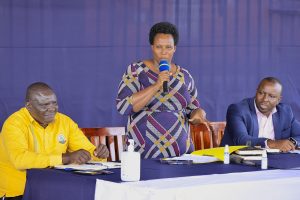
During the assessment visit, Ms. Barekye met leaders and stakeholders
from across the Karamoja sub-region, including Resident District
Commissioners (RDCs), Chief Administrative Officers (CAOs), Community
Development Officers (CDOs), District Internal Security Officers (DISOs),
district chairpersons, mayors, youth leaders, chairpersons of Presidential
Industrial Hub SACCOs, NRM district leaders and programme
beneficiaries.
The meeting reviewed the progress of the hub, assessed the performance
of graduate SACCOs and discussed strategies to expand opportunities for
more young people.
The visit was also attended by the Director of Presidential Projects and
Industrial Hubs at State House, Eng. Raymond Kamugisha.
Representatives from benefiting districts including Moroto, Kotido, Napak,
Abim, Nabilatuk, Nakapiripirit, Amudat, Karenga and Kaabong participated
in the engagement.
Ms. Barekye directed district leaders to elect representatives from each
district to form a regional committee that will oversee the affairs of the
Karamoja Industrial Skilling Hub after the expiry of the current leadership’s
term.
She also announced the appointment of Lorot John Bosco Kapel as the
Regional SACCO Manager for the Karamoja sub-region.
According to Ms. Barekye, Mr. Kapel will supervise the utilisation of the
Shs50 million revolving fund allocated by President Museveni to each
graduate SACCO.
She said he will work closely with district commercial officers to ensure that
beneficiaries invest the funds productively.
“This officer is a field person. He will constantly move across the districts
supervising our SACCOs because we want this money to work. We do not
want the President’s money to disappear,” Ms. Barekye said.
She revealed that the State House was developing stricter guidelines for
selecting future SACCO beneficiaries to ensure that support reaches
committed and deserving youth.
The Comptroller also cautioned leaders against forcing young people to
enrol in the industrial skilling hubs, saying participation should be voluntary
and based on understanding the available opportunities.
“Stop abducting people to come for training. Let them join willingly after
understanding the opportunities available. Selection must follow the
established guidelines,” she said.
Ms. Barekye challenged local governments to prioritise graduates of the
industrial skilling hubs when awarding supply contracts.
She noted that many graduates acquire loans to purchase equipment but
struggle to find markets for their products.
“These youths borrow money, buy equipment and then sit with it because
they have no work. Give them tenders to supply school uniforms, beds,
furniture and other items so that they can repay their loans and grow their
businesses,” she appealed.
Call for Second Industrial Hub:
Leaders in Karamoja unanimously called for the establishment of another
Presidential Industrial Skilling Hub to serve northern parts of the sub-
region.
Napak District Chairperson and Chairperson of the Karamoja Zonal
Presidential Industrial Skilling Hub Board, Mr. John Paul Kodet Ditecks,
commended President Museveni for initiating a programme that had
transformed the lives of many young people.
He said the hub had produced skilled labour benefiting from both
employment and self-employment opportunities.
Mr. Kodet urged the government to strengthen communication and
coordination while expanding training courses to include additional areas
such as plumbing.
Kotido Municipality Mayor, Mr. Peter Abrahams, admitted that he initially
opposed the project but changed his mind after witnessing its impact.
“I was one of those who did not support this project at first, but today I can
genuinely confirm that it is a game changer for Karamoja. Many youths
have acquired skills, secured jobs and others have started their own
businesses,” he said.
Mr. Abrahams said demand for training had exceeded the capacity of the
Napak facility, leaving many applicants without opportunities.
He proposed that the second hub be established in Kotido, where the
municipality has already secured about 70 acres of land.
“Kotido is centrally located in northern Karamoja. We are ready to
surrender the land to the State House for construction of another industrial
hub,” he said.
He said the proposed facility would serve Kotido, Karenga, Kaabong, Abim
and other surrounding areas.
Eng. Kamugisha assured leaders that the government was already
planning to establish another industrial hub in Karamoja in the next
financial year.
He said preparations would commence immediately and additional
vocational courses would be introduced in line with President Museveni’s
directive to widen access to skills training.
Eng. Kamugisha said the programme would continue strengthening its key
pillars, including vocational skilling, value addition, common-user
production facilities and the Four-Acre Model.
“This is Kisanja No Sleep and No Corruption. We want every stakeholder
involved so that the programme achieves its intended purpose. We are also
monitoring how the Shs50 million SACCO funds are being utilised because
they must improve the livelihoods of our graduates,” he said.
Several graduates shared testimonies of how the programme had
transformed their livelihoods.
Peter Chilla from Lokatap in Kotido District said he invested about Shs1
million in construction tools after receiving support through the programme.
After securing construction jobs and earning income, he diversified into
produce trading by buying and selling maize flour and beans, allowing him
to sustain his livelihood even when construction works slowed down.
Another beneficiary, Angela Martin from Moroto, said the programme
enabled him to acquire welding and grinding machines.
He has since
become an instructor with a local NGO and trains other youth in welding
and fabrication from his home, which now serves as an internship centre.
Martin appealed for support to acquire land to expand the training facility
and thanked President Museveni for introducing a programme that had
changed his economic fortunes.
For trainees like Opio, the expansion plans offer renewed hope that more
young Ugandans, regardless of disability or background, will have
opportunities to transform their lives through skills development and
entrepreneurship.
What's your reaction?
You may also like

More in:Business

Minister Babalanda Calls for Financing Architecture to Match Uganda’s US$500 Billion Growth Ambition by 2040
PRESIDENT MUSEVENI COMMENDED FOR SKILLING INITIATIVE AS STATE HOUSE ANNOUNCES NEW HUB IN BUSOGA
Namayingo Farmers Confront Sugar Council Over Delayed CN Sugar Licence

From Fragmented Processes to Integrated Operations: CINAT Technologies Launches GRIND ERP