
Stakeholders in Uganda’s avocado value chain have held discussions
with government officials on measures to address challenges affecting
production, value addition, and access to international markets.
The engagement, held at Imperial Royale Hotel in Kampala today,
brought together farmers, exporters, processors, government agencies,
and other key players to discuss ways of strengthening the avocado
industry and ensuring that all actors benefit from the growing global
demand for avocado products.
Representing Col. Edith Nakalema, head of the State House Investors
Protection Unit (SHIPU), Mr. Stephen Kaheru commended the Ministry
of Agriculture and other government agencies for supporting efforts to
resolve concerns affecting investors in the sector.

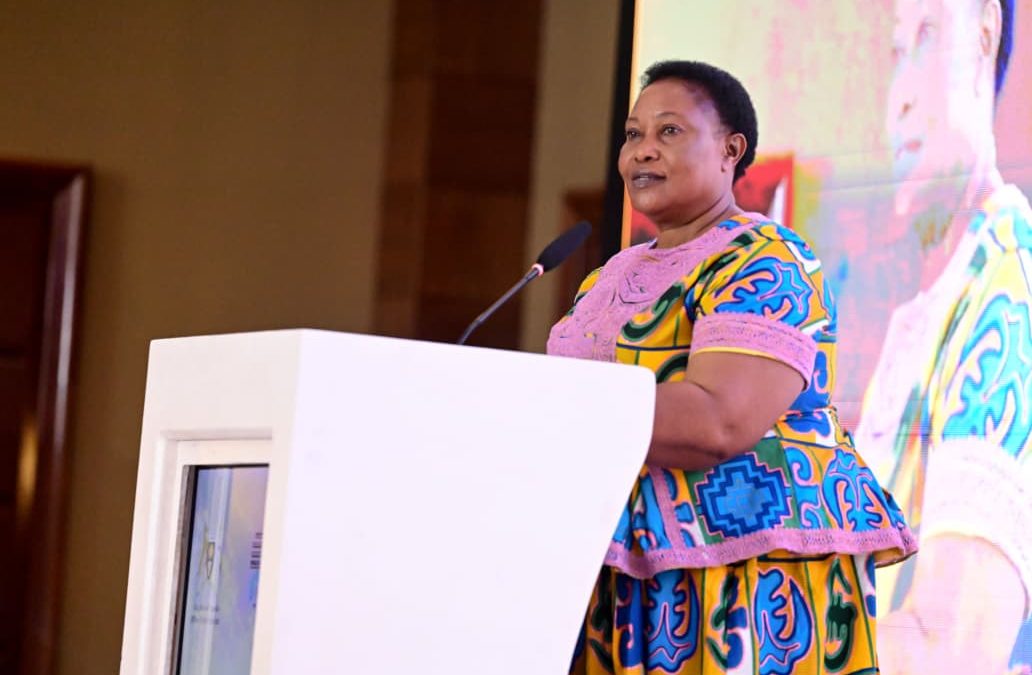
(Left – right) State House Investors Protection Unit (SHIPU) Unit Administrator and IT Officer Kaheru Stephen, BioSyntec Uganda Managing Director Florian Knaus, Former Minister of Agriculture of Uganda Victoria Sekitoleko and Nilecado Director Operations Uthuman Katerega having a discussion during the Avocado Stakeholder’s Consultative meeting at Imperial Royal Hotel, Kampala on 18th June 2026. Photos by PPU/Tony Rujuta.
He said the engagement demonstrated a shared commitment towards
transforming the avocado value chain into a driver of economic growth
and improved livelihoods.
“We are gathered here because we share a common vision of
transforming the avocado value chain into a vehicle that catalyzes
economic growth and improves rural livelihoods,” Mr. Kaheru said.
He noted that the meeting was critical in addressing barriers preventing
exporters and other players from fully tapping into the potential of the
sector.
“We are here to collectively address the concerns that hinder us as
farmers and exporters from realizing the full potential of this value chain
as a catalyst for rural transformation,” he said.
Mr. Kaheru emphasized that cooperation among government ministries,
departments, agencies, and private sector players would be key to
achieving sustainable results.
“The seamless collaboration amongst ministries, departments and
agencies is what will yield the real value that we are all yearning for,
from the seed to the plate,” he said.

Some of the participates attending the Avocado Stakeholder’s Consultative meeting at Imperial Royal Hotel, Kampala on 18th June 2026. Photos by PPU/Tony Rujuta.
He expressed optimism that the discussions would lead to practical
solutions that allow investors to realize returns on their investments
while benefiting all actors in the value chain.
The Commissioner of External Trade, Mr. Cleopas Ndorere, who
represented the Permanent Secretary at the Ministry of Trade, Industries
and Cooperatives (MTIC) Ms. Lynette Bagonza, welcomed stakeholders
and said the government was committed to supporting the growth of the
avocado industry.
Mr. Ndorere thanked Col. Nakalema for drawing attention to the sector
and bringing together stakeholders to discuss challenges affecting the
industry.
“We are here to listen to the farmers and obtain their views because we
recognize that any interventions must be informed by the perspectives of
all stakeholders,” he said.
He encouraged participants to openly share challenges affecting
production, quality standards, markets, and value addition to guide
government policy interventions.
“We want to ensure that farmers, exporters, and other players are
supported to promote quality production, value addition, and market
access,” Mr. Ndorere said.
Mr. Peter Dhamuzungu, who represented, Maj. Gen(Rtd) David Kasura
Kyomukama,the Permanent Secretary at the Ministry of Agriculture,
Animal Industry and Fisheries (MAAIF), said government recognizes the
growing importance of avocado as an emerging commercial crop and is
committed to working with stakeholders to address challenges affecting
the value chain.
He said the discussions provided an opportunity for farmers, exporters,
processors, and other actors to share concerns and propose solutions
that will improve production, quality standards, and market access.
“We are here to listen to the different players in the value chain so that
interventions are informed by the realities on the ground,” Mr.
Dhamuzungu said.
The Board Chairperson of the Uganda Agribusiness Alliance (UAA), Ms.
Victoria Sekitoleko, traced the growth of avocado sector discussions,
saying the industry had come a long way from small stakeholder
meetings.
She thanked farmers and sector players who remained committed
despite limited resources during the early stages.
Ms. Sekitoleko called for greater involvement of relevant government
agencies, especially those responsible for cooperatives, industry,
standards, and export promotion.
She said the growth of avocado as an emerging commercial crop
required a deliberate strategy and stronger coordination.
“Avocado is a new crop, so we are going to need new policies and a
strategy for avocado,” Ms. Sekitoleko said.
She urged the government to work closely with stakeholders on
international market trends, noting that Uganda needed to position itself
competitively in global markets.
Mr. Francis Kasirinya from the Uganda Agribusiness Alliance said
Uganda must improve its competitiveness if it is to benefit from the
expanding global avocado market.
“Nobody buys from you out of sympathy. You must meet the
requirements of quality, price, and trust,” Mr. Kasirinya said.
He warned that an unstructured local market was affecting farmers,
exporters, and the country’s reputation.
He explained that without proper market organization, farmers receive
inconsistent information, exporters struggle to access reliable raw
materials, and Uganda’s brand suffers.
“Markets work best when they are organized,” Mr. Kasirinya said, adding
that better coordination would improve quality, information flow,
investment, revenue collection, and job creation.
Meanwhile, Agribusiness Entrepreneur and Chief Executive Officer of
Avotein Farms Limited, Mr. Hank Dahlan, said Uganda’s avocado sector
was still at an early stage compared to leading global producers.
He noted that while Uganda has potential due to its favourable climate,
more effort was needed to understand export markets and meet
international standards.
“We haven’t started, literally. If you compare us with the largest exporters
in the world, we are still very small,” Mr. Dahlan said.
He emphasized that Hass avocado was primarily an export crop and
required farmers and exporters to focus on quality.
“This is a cash crop for export. It is not something where we should just
assume we are doing a huge thing. We need to understand the market,”
he said.
Mr. Dahlan also called for better regulation of cross-border trade and
stronger farmer organization to improve competitiveness.
He urged farmers to focus on producing quality fruits that meet market
requirements.
“Do not blame exporters because you are not organized. Organize
yourselves, take care of your fruits, and the market will come to you,” he
said.
Mr. Richard Welisha, founder of the National Avocado Federation of
Uganda and an avocado farmer, called for careful consideration of
proposed regulations affecting the avocado value chain, saying farmers’
interests must remain central.
Mr. Welisha said many farmers were concerned about proposals
reportedly aimed at restricting certain buyers, particularly Kenyan
buyers, from accessing Uganda’s avocado produce.
“Most of us avocado farmers are worried about those proposals in the
newspapers. We call upon leaders to explain these proposed
measures,” Mr. Welisha said.
He questioned whether Ugandan buyers were offering farmers prices
comparable to those offered by external buyers, noting that competition
had helped improve earnings at the farm level.
“Where are these Ugandan buyers paying the same or higher prices to
farmers at the farm gate? Where are they?” he asked.
Mr. Welisha also raised concerns about proposals requiring buyers to go
through designated buying centres, local market dealers, or
cooperatives, arguing that regulations should not disadvantage farmers.
He cautioned against introducing measures that could weaken the
sector, saying lessons should be drawn from other agricultural
experiences where restrictive regulations affected farmers’ livelihoods.
Mr. Welisha emphasized that despite differing views among players,
collaboration remained critical to developing a sustainable avocado
value chain.
“We have no issues with investors. Let us work together. Let the
regulations come out, but let us agree and work together,” he said.
He added that the avocado sector was still developing and required
cooperation between farmers, investors, exporters, and the government
to achieve its full potential.
Ms. Katushabe Harriet Matsiko, an avocado farmer from Ntungamo
District, shared her journey in the avocado business, saying she
ventured into the sector during the COVID-19 period as an alternative
source of livelihood.
Ms. Matsiko, who currently manages 60 acres of avocado, said she
started with a nursery bed before expanding into avocado production
and supplying seedlings to other farmers.
She urged farmers to prioritize production as the foundation of a
successful avocado value chain.
“As farmers, let us begin with production, then other things will come
later,” Ms. Matsiko said.
She called on the Ministry of Agriculture to support farmers by helping
standardize the chemicals used in avocado farming to address pests
and diseases that affect productivity and quality.
Ms. Matsiko said access to proper agricultural inputs was essential if
Uganda’s avocado sector was to meet both local and international
market requirements.
She also appealed for increased investment in irrigation systems, noting
that unreliable water supply remains a major challenge affecting
avocado production.
The meeting brought together farmers, exporters, processors,
government officials, and other stakeholders who committed to
strengthening Uganda’s avocado value chain for increased economic
returns.
What's your reaction?
You may also like

More in:Business

From the Lab to Your Bathroom Shelf: Why I’m Proud to Sell UBeauty

Minister Babalanda Calls for Financing Architecture to Match Uganda’s US$500 Billion Growth Ambition by 2040

PRESIDENT MUSEVENI COMMENDED FOR SKILLING INITIATIVE AS STATE HOUSE ANNOUNCES NEW HUB IN BUSOGA
Namayingo Farmers Confront Sugar Council Over Delayed CN Sugar Licence