President Yoweri Museveni’s enduring spirit of humanity, foresight and concern for Uganda’s future have given birth to one of the most empowering and lifesaving initiatives in Uganda’s history that I know.
That is the Presidential Initiative on Skilling the Girl/Boy Child (PISGBC), an initiative launched in 2017 to provide vulnerable young people in Kampala with practical skills for life and prosperity.
The programme targets young people who have been excluded from conventional education because of poverty, school dropout, lack of qualifications or difficult circumstances.
I can only compare PISGBC to Universal Primary Education (UPE) and Universal Secondary Education (USE), programmes introduced to make accessible free primary and secondary education to the population of school- going age Ugandans that would otherwise be locked out of the opportunity, left to the vagaries of life in a harshly competitive world.
Without UPE and USE, I can’t accurately draw a model of the likely situation that Uganda would be in. Probably, a broken country of wanton delinquency and despair!
UPE and USE have processed millions of young Ugandans through the formal education system, from where they have gone on to serve society alongside those from well-to-do backgrounds. Nevertheless, despite the existence of the two affirmative programmes, alongside the expansion of educational opportunities at all levels including technical, vocational and university, there was a residual category of vulnerable young Ugandans that couldn’t benefit from all those and were headed for a life of total destitution at the hands of an unforgiving society.
These were young people that had totally missed out on enrollment in those programmes or failed to complete them (for various reasons) and who had given up on life.
Some were into all sorts of risky engagements including crime while others were being forced into early marriages and at the mercy of human trafficking gangs. The most wretched of the bazzukulu (grandchildren)!!
So, in 2017, thirty years after the rollout of UPE, PISGBC was introduced to give those a second, or perhaps, a third chance in life, as a direct intervention by the President for Uganda’s young people to be equipped with practical skills to empower them to participate meaningfully in the economy, as part of the broader mission of government to lift people out of poverty.
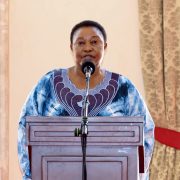
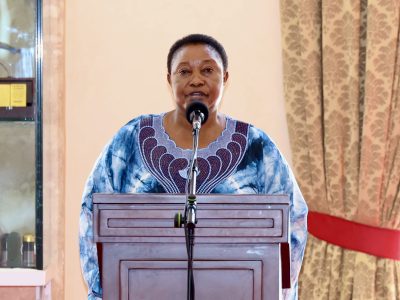
Led by Dr. Faith Katana, PISGBC has seen 10,000s finish their training and go on to establish their own successful income-generating ventures.
Youths that would be a nuisance to society, putting pressure on parents and government for jobs are able to start their own business and create jobs for others like them. Ugandans cottage industry is already reaping big.
Last week, PISGBC registered a fresh batch of students, where more than 4,500 young people currently registered across six Kampala skilling centres of Mulago, Subway, Kikoni, Namuwongo, Mutundwe, Nakulabye, Luzira, Wabigalo, Kigowa and Wandegeya.
There is a strong demand for the programme, which provides vulnerable young people with free practical vocational training.
The skills on offer being tailoring, bakery, carpentry, construction, electrical installation, shoemaking, plumbing, welding and fabrication, mechanics and electronics, knitting, leather design, embroidery, hairdressing and weaving.
The training is absolutely free of charge (including registration), and successful trainees undertake assessment by the Directorate of Industrial Training before receiving certification, after which they equipped with relevant tools like sewing machines, welding torches, salon chairs or bakery ovens.
These items are not just a tool, but a pathway back to dignity for thousands of young Ugandans who once faced a future defined by unemployment, school dropout, poverty and uncertainty.
What began as an intervention for young people who had been pushed to the margins of society has increasingly become a platform through which young Ugandans are acquiring skills, creating products, starting businesses and finding renewed purpose.
Dr. Katana testifies that the initiative has transformed young people from informal settlements who had previously been involved in substance abuse and crime.
The programme combines vocational training with mindset change and rehabilitation.
That is where the deeper meaning of the programme becomes visible.
For some young people, the problem was never simply that they lacked a job.
They had lost direction. Some had dropped out of school. Others had grown up in difficult environments where crime, drugs and hopelessness could easily become a way of life.
They were available for “hire” into bad groups with intent to use them to destroy themselves and the country. The skilling centres have given such young people livelihoods and purpose.
They walk in carrying the weight of their circumstances and walk out with a skill in their hands, a certificate, confidence and, importantly, the possibility of earning an honest living.
The initiative has helped restore what poverty and exclusion had taken away: hope, dignity and self-belief. The beneficiaries have testimonies; their families, too, as well anyone who knew them in their previous circumstances.
The PISGBC ideal, which is for Kampala, is being replicated countrywide through the Presidential Industrial Skilling Hubs located in the different zones where beneficiaries who had previously lost hope and dropped out of school were described as having become completely different people after receiving training.
Many who were job seekers (without skills) are now job creators.
The philosophy behind the programme is increasingly becoming clear and being embraced massively: education should not only be about academic certificates.
It must equip people with the ability to produce, earn and solve practical problems using the gifts that God gave them, including hands and the brain, and adding value to natural things around them like wood, hides and skins and ordinary metal.
I conclude with an affirmative quote of the President:
“I shall not be deterred by people who don’t see where the future of Africa lies. It is the short-sighted people who put their opinions in writing. They don’t understand that the future of all countries lies in processing”.
The author is Special Presidential Assistant-Media and Mobilisation/Deputy Press Secretary-State House
Email: faruk.kirunda@statehouse.go.ug
What's your reaction?
You may also like

More in:NEWS
Minister Babalanda Roots for Coordination, Accountability to Drive Wealth-Creation
MBAGADHI FREDERICK NKAYI: UGANDA’S LAND PARADOX, LAWLESSNESS AMIDST RICH LAWS
Algeria’s President Sends Floral Tribute as Uganda Marks 64th Independence in Algiers
64TH INDEPENDENCE ANNIVERSARY: Minister Babalanda Calls for Economic Independence and Stronger Anti-Corruption Drive