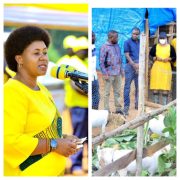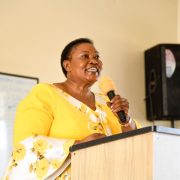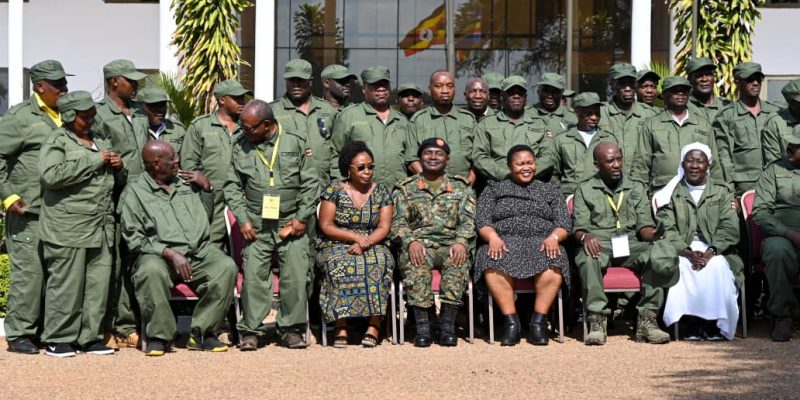
The Minister for the Presidency and Member of Parliament for Budiope West Constituency, Hon. Babirye Milly Babalanda, has called upon District Political and Technical Leaders to shift focus from activities and expenditure to measurable results that change the lives of Ugandans, as the country begins implementation of the 2026-2031 Manifesto.
She was speaking today, Tuesday 01st September 2026, at the National Leadership Institute (NALI) in Kyankwanzi during a Retreat for District Political and Technical Leaders from Ankole, Kasese, Bunyoro, Tooro & Kigezi sub-regions convened to align local government action with the new Manifesto and the National Development Plan IV (NDP IV).
In her keynote address, Minister Babalanda expressed profound appreciation to H.E. President Yoweri Kaguta Museveni for his leadership and stewardship that have enabled the NRM Government to sustain implementation of its programmes and register significant progress.
“A manifesto is not merely a political document. It is a commitment to the people. Its success will ultimately be measured by whether the lives of Ugandans improve,” the Minister stated.
She emphasized that the real test of the 2026-2031 Manifesto will be at the district, city, municipal, community and household levels – seen in better schools and health facilities, increased agricultural productivity, improved roads, water and sanitation, expanded opportunities for youth and women, and more efficient public services.
She told leaders that districts are the critical link between Government policy and service delivery. She directed that all district development plans, budgets, work plans and performance targets must be aligned to the priorities of NDP IV and the Manifesto.
She outlined the implementation chain that must be followed: Manifesto → Plans → Budgets → Implementation → Monitoring → Results.
“The key question should be, ‘What has changed in the lives of our people?’ That is the standard by which we must measure our performance,” she said.
The Minister called for strong cooperation between political and technical leaders, urging RDCs, District Chairpersons, Mayors, NRM leaders, CAOs and Town Clerks to work as one team with mutual respect and shared accountability.
“Let us avoid unnecessary rivalry and conflict. Leadership must be judged by results, not by position,” she warned.
On accountability, Minister Babalanda was firm: “Every shilling of public money is a public trust.”
She directed districts to strengthen financial management, procurement, project supervision and internal controls, ensuring citizens can see what has been committed, what has been delivered, and what remains to be done.
She introduced a guiding principle for monitoring: “Monitor early, identify problems early and act early,” noting that monitoring must be used as a management tool, not just for reporting.
The Minister placed wealth creation and increased household incomes at the centre of the Manifesto, tasking every district to identify its comparative advantage.
“Every district should ask: What can we produce? What can we add value to? Which markets can we access? What enterprises can create jobs? How can we increase household incomes?” she said.
She highlighted opportunities in agricultural commercialisation, value addition, industrialisation, tourism, trade, innovation and the digital economy.
She demanded improvements in education learning outcomes and retention, functionality of health facilities with health workers and medicines, and support for vulnerable groups. She added that youth and women empowerment must be measured by enterprises created and incomes increased, not just the number of beneficiaries.
She also urged leaders to protect wetlands, forests and water sources and to embrace digital transformation to improve revenue, transparency and service delivery.
Minister Babalanda challenged leaders to leave NALI with a practical action agenda, not just a report.
“By the end of this retreat, every participant should return to their district with clarity, commitment and a practical action agenda… with priority commitments, required actions, resources, responsible officers, expected results and measurable indicators,” she said.
She concluded with a strong call to action: “The 2026-2031 Manifesto is not merely a document to be implemented; it is a national commitment to be delivered. Our task is not simply to promise — our task is to deliver. Let us move from commitments → to action → to results → to lasting transformation.”
The Minister urged leaders to lead with integrity, patriotism, discipline and accountability, reminding them that public office is a trust and Ugandans expect tangible improvements in their quality of life.
The minister informed leaders that H.E. President Yoweri Kaguta is committed to serve Ugandans 2026-2031 and beyond.
The retreat brought together the Permanent Secretary, Office of the President, Directors of the Manifesto Implementation Unit, RDCs, District Chairpersons, City and Municipal Mayors, NRM District Chairpersons, Chief Administrative Officers (CAOs), and Town Clerks.
What's your reaction?
You may also like
More in:National
PRESIDENT MUSEVENI URGES EUROPEAN INVESTORS TO TAP INTO UGANDA’S ECONOMIC OPPORTUNITIES
Tayebwa Issues Stern Warning to Ineffective Parliamentary Committees
Minister Babalanda Urges Ugandans in Diaspora to Invest at Home and Champion Uganda’s Global Image