President Yoweri Kaguta Museveni has been commended for establishing
the Presidential Industrial Skilling Hubs, with State House announcing
plans to set up an additional hub in Bugiri District to expand access to
vocational and industrial skills for young people in Busoga.
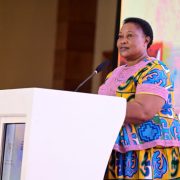
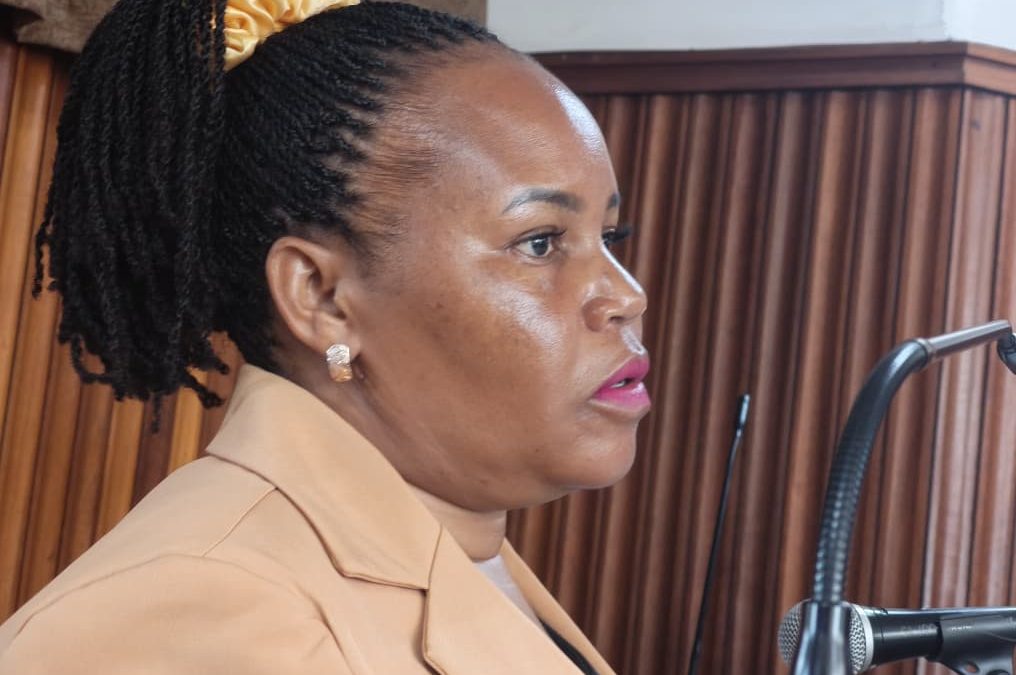
The State House Comptroller, Ms. Jane Barekye, said President Museveni
had directed the establishment of the additional hub and called on Bugiri
leaders to identify suitable land to facilitate its construction.
“If you have land in Bugiri, we are ready to start construction. It is the
President who directed that the hub be constructed in Bugiri,” Ms. Barekye
said.
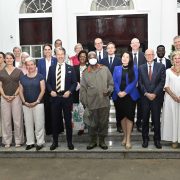
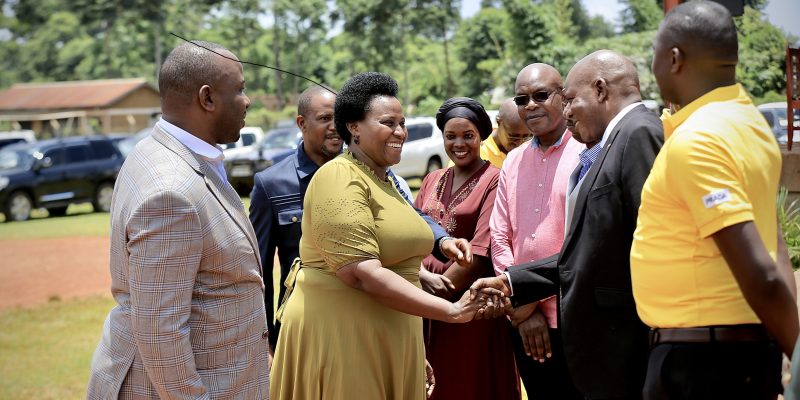
She made the remarks on Friday, October 2, 2026, during a stakeholders’
engagement at the Busoga Zonal Presidential Industrial Skilling Hub in
Jinja City, attended by State House officials, Resident District
Commissioners and local government leaders from the region.
Ms. Barekye also commended Iganga District LC V Chairperson Shabiru
Isabirye, who also chairs the Busoga Zonal Presidential Industrial Skilling
Hub, for putting the interests of citizens ahead of partisan political
considerations.
Mr. Isabirye, who was elected on the National Unity Platform (NUP) ticket,
praised President Museveni for establishing the skilling hubs, saying
political affiliation should not prevent leaders from recognising programmes
they believe are benefiting citizens.
“I stood on the NUP ticket, but I was voted in by the people, so I give credit
where it is due. We have to appreciate President Museveni for this
programme that has uplifted our people,” Mr. Isabirye said.
He added: “I will not fail to continue thanking the President for all the
development and good stewardship. Mzee has done us well, and my CAO
and I are asking for a hub in Iganga.”
Mr. Isabirye said the skilling programme had provided a second chance to
young people who might otherwise have remained unemployed by
equipping them with practical skills for employment and entrepreneurship.
He cautioned hub managers and local leaders against sectarianism and
discrimination based on political affiliation, saying cooperation was
necessary for Busoga to maximise the benefits of the programme.
Mr. Isabirye also raised concern over alleged encroachment on land
belonging to the Busoga Zonal Hub and appealed to Ms. Barekye to
facilitate the acquisition of a land title and fencing of the property to protect
it from encroachers.
Ms. Barekye said government programmes should benefit Ugandans
regardless of their political affiliation, citing the leadership of the Busoga
hub by an opposition politician as an example.
She, however, raised concern over alleged interference in the selection of
beneficiaries, saying some well-connected individuals were reportedly
finding their way onto admission lists at the expense of vulnerable young
people targeted by the programme.
Ms. Barekye said the State House would strengthen the verification
process, including visiting the homes of selected beneficiaries to establish
their circumstances before final admission.
She also urged local government leaders to monitor graduates who receive
start-up capital through hub SACCOs to ensure that the funds are properly
utilised.
She said the government planned to inject additional funds into the
SACCOs to strengthen their capacity to support graduates.
Mr. Godfrey Longa, Hubs project Coordinator for Eastern and Northern
Uganda, urged district selection committees to nominate suitable young
people for training, emphasising that the hubs are intended to provide
vocational and industrial skills rather than serve as rehabilitation centres.
New courses introduced:
The Jinja engagement followed a separate stakeholders’ meeting held on
Thursday, October 1, at the Mengo Zonal Presidential Industrial Skilling
Hub in Kayunga District.
The Kayunga meeting brought together State House officials and leaders
from districts served by the hub to discuss training expansion, employment
opportunities for graduates, SACCO financing and agricultural production.
Eng. Raymond Kamugisha, Director of Presidential Projects and Industrial
Hubs at State House, who represented Ms. Barekye, said the hubs were
established in response to unemployment and the growing dependency
burden associated with population growth, limited access to formal
education and inadequate employment opportunities.
Eng. Kamugisha said the programme admits beneficiaries regardless of
their formal education background and equips them with practical skills for
self-employment and enterprise development.
The hubs currently offer training in welding, carpentry and joinery, bakery,
tailoring, hairdressing, shoemaking, and building and concrete practice.
He said President Museveni had directed the introduction of four additional
courses: electrical installation, knitting and weaving, mechanical
engineering, and plumbing.
“With all the challenges we have as a country, many can be solved through
skilling, and I can tell you that our students are doing very well in the field,”
Eng. Kamugisha said.
He urged local government leaders to consider qualified hub graduates for
suitable contracts while encouraging graduates to actively seek
opportunities from district authorities.
Eng. Kamugisha also announced that President Museveni had directed the
establishment of another Presidential Industrial Skilling Hub in Luweero to
serve the Greater Luweero sub-region.
Mukono Resident District Commissioner (RDC) Hajjat Fatuma Ndisaba
challenged hub graduates to become self-driven and take advantage of
opportunities provided by the government rather than continuously waiting
for additional facilitation.
“You have been given free education and UGX 50 million for the hub
SACCOs, but again you ask for transport to attend SACCO meetings at the
district. Those who need the money should be ready to chase for it,” Hajjat
Ndisaba said.
She also called for a government directive, implemented through the
relevant ministries, to enable qualified industrial skilling hub graduates to
access suitable small contracts in their respective local governments.
Hajjat Ndisaba said such opportunities would enable graduates to build
their enterprises and grow their capital alongside the start-up financing
available through the SACCOs.
Mr. Karangwa Charles, Vice Chairperson of the Mengo Zonal Hub,
commended President Museveni for the skilling initiative, saying it was
improving the livelihoods of young people.
“I ask all of us to embrace this initiative because it is a programme that can
help in fighting unemployment among the youth,” Mr. Karangwa said.
Ms. Kirabo Agnes Nantongo, Vice Chairperson of the National Women
Council and Luweero District Women Council Chairperson, also
commended the programme but challenged young people to stop
complaining and make use of the skills and start-up financing available to
them.
Ms. Kirabo offered land she had previously acquired for a skilling centre to
State House for consideration as a possible site for the planned Luweero
hub.
“Director, I have the land and I am donating it to you, but if it is not suitable
for the State House, then you can look for another one,” Ms. Kirabo said.
The engagements in Jinja and Kayunga form part of State House efforts to
assess the performance of the Presidential Industrial Skilling Hubs,
address challenges affecting beneficiaries and strengthen the transition of
graduates from training into employment, enterprise development and
wealth creation.
What's your reaction?
You may also like
More in:Business
PRESIDENT MUSEVENI URGES SHEEMA FARMERS TO EMBRACE IRRIGATION, COMMERCIAL AGRICULTURE TO FIGHT POVERTY
PRESIDENT MUSEVENI URGES EUROPEAN INVESTORS TO TAP INTO UGANDA’S ECONOMIC OPPORTUNITIES

From the Lab to Your Bathroom Shelf: Why I’m Proud to Sell UBeauty

Minister Babalanda Calls for Financing Architecture to Match Uganda’s US$500 Billion Growth Ambition by 2040