For 25 years, the people of Busoga have patiently waited for the completion of the Mbulamuti–Kamuli–Bukungu road after it was promised by President Yoweri Kaguta Museveni in 2001.
The good news is that this long wait is now closer to an end following last Thursday’s approval by parliament of Government’s request to borrow funds for the road’s construction. As a leader from Buyende and representative of the people of Budiope West, this is a significant milestone not only for Busoga, but also for Uganda’s wider economic transformation agenda.
Therefore, I commend Members of Parliament who supported the motion authorising Government to borrow up to €207.77 million (approximately Shs842.71 billion) from Citibank and other financial institutions to finance the project.
I also specially commend the Parliamentary Committee on National Economy, chaired by Hon. Jane Pacuto, for supporting the fast-tracking of this important project so that its economic benefits can be realised sooner.
The financing will facilitate the upgrading of the 127-kilometre Mbulamuti–Kamuli–Bukungu road, together with 10 kilometres of roads in Jinja City. It will also cater for land compensation and construction supervision.
*More than a road*
The Mbulamuti–Kamuli–Bukungu road must not be viewed simply as a stretch of tarmac connecting districts. It is an economic artery with the potential to transform the fortunes of entire communities. The road connects Jinja and Kamuli through Budondo Sub-county before passing through Mbulamuti on the banks of the River Nile and reaching Bukungu in Buyende District. But its strategic importance extends beyond Busoga. Once completed, it will provide an important alternative transport link between northern and southern Uganda, connecting Busoga to the Lango and Teso sub-regions through Bukungu.
This will reduce travel time, lower the cost of transporting goods and improve access to markets. Farmers, traders, manufacturers, students, workers and ordinary travellers will all benefit.
The areas through which the road passes, such as Budondo and Butagaya sub-counties are also economically important; they are among the key food baskets supplying Jinja City and, indirectly, Kampala. Improving the road will therefore facilitate the movement of food from farms to markets. For the people of Buyende, it will open a much-needed connection to larger markets and economic opportunities in Jinja, Teso, Lango, and beyond.
The road will also give a major boost to tourism in Busoga as it is the principal access route to Kyabirwa and Itanda Falls on the River Nile, one of the region’s important natural attractions, particularly for visitors interested in water sports.
A good road will enable tourists to reach these destinations more easily, safely and conveniently, hence stimulating investment in accommodation, restaurants, tour operations, transport and other businesses along the tourism value chain.
*A project whose time has come*
Socio-politically, this project is particularly important to me and many people in Busoga because it is also a lesson in patience and constructive engagement. In 2013, some people were incited to demonstrate demanding the road. While I understand the frustrations of communities that wait for development projects, citizens must appreciate that Government has many competing national priorities to address with limited resources.
The fact that the project has now reached this stage after 25 years demonstrates that Government commitments can be pursued through patience and constructive engagement. President Museveni has demonstrated over the years that he does not make promises simply to win applause. His approach has been to prioritise projects according to available resources and implement them when conditions permit.
The road now comes to fruition at a time when Buyende district is the site for the country’s maiden nuclear energy project, a critical pillar of Uganda’s future development as envisaged by the NDP IV and Vision 2040. As we speak now, government already eased L. Kyoga transport by commissioning the Bukungu–Kagwara–Kaberamaido ferries. This means the road will further shorten the already shorten distance between the capital Kampala and the northern region through Busoga. This is important for internal trade and also transportation and access to better markets of produce for our people engaging in government programmes such as PDM and Emyooga, among others.
*Guarding every shilling*
As we celebrate this progress, however, we must remain vigilant. Government is borrowing substantial resources to construct this road, and every shilling must therefore deliver value to the taxpayer. I am particularly encouraged by the commitment of the Ministry of Works and Transport to ensure that Project Affected Persons are equitably and smoothly compensated in accordance with the law and established Government policies.
Fair, transparent and timely compensation of our people whose land and property are affected by the project will protect them from unnecessary disruption to their livelihoods, while at the same time protecting government’s image.
But even most encouraging is that this project matures at a time when the president, supported by our dear CDF, Gen. Muhoozi Kainerugaba, have intensified the fight against corruption. This gives us great confidence that the Mbulamuti–Kamuli–Bukungu road project will be protected from wanton abuse that is usually fomented by corrupt behavior by implementers as we have witnessed in the ongoing crackdown on the corrupt.
On that front, I urge the district leadership and Resident District Commissioners, particularly in Kamuli and Buyende, to remain vigilant. They must closely monitor the project and ensure that every penny allocated to it is accounted for and used for its intended purpose.
Road projects must no longer become opportunities for a few individuals to enrich themselves at the expense of taxpayers. Success will require cooperation among the Central Government, local governments, technical officers, cultural and community leaders, Project Affected Persons and the people themselves.
*A new chapter for Busoga*
During last Thursday’s debate for this road project, the Finance Minister made a compelling economic case for the project, indicating that it has an Economic Internal Rate of Return of 16.7%. He noted that this is significantly above the 11% economic opportunity cost of capital, which makes this road not simply a political promise but an economically viable investment capable of generating substantial returns for the country.
For Budiope West and Buyende in particular, Bukungu will increasingly become a gateway to opportunities beyond our traditional geographical boundaries. We should therefore welcome this development with optimism, but also with responsibility. The approval of the borrowing is an important step, but it is not the end of the journey. We must ensure that construction is delivered to the required standards, within agreed timelines and without corruption.
For the people of Busoga, the Mbulamuti–Kamuli–Bukungu road represents more than asphalt, bridges and drainage channels. It represents connectivity, markets, tourism, jobs and hope.
We must therefore be thankful to the president that after 25 years of waiting, government still holds onto the promise to give us this precious enabler of development. We can’t thank you enough, Mr. President!
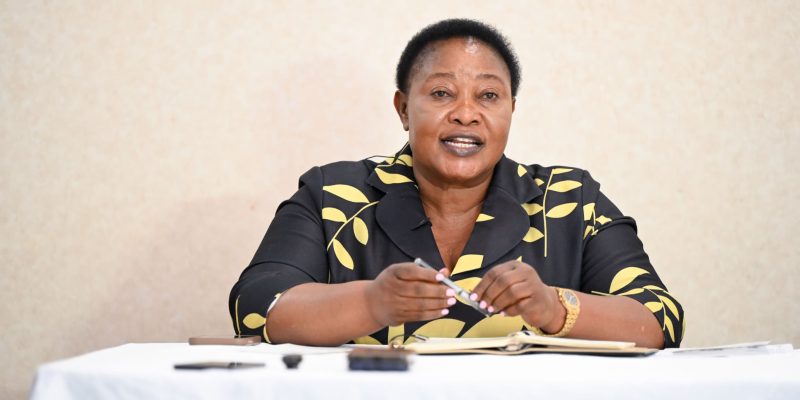
*The author is the Minister for the Presidency and MP for Budiope West County, Buyende District.*
What's your reaction?
You may also like
More in:NEWS
Sironko NRM Boss Hajji Lumolo Injects in UGX 10 Million to Fuel MK Endorsement Rally in Mbale
PRESIDENT MUSEVENI URGES EUROPEAN INVESTORS TO TAP INTO UGANDA’S ECONOMIC OPPORTUNITIES
“Don’t Call me Over Verification” Tayebwa Tells Parliament Staff