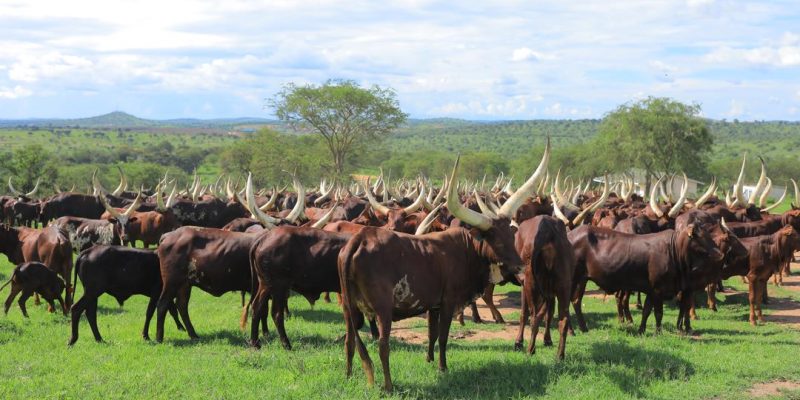
KIRUHURA, UGANDA | LIVESTOCK PRODUCTIVITY
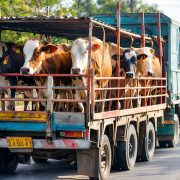
At Nshaara Conservation Ranch in Kiruhura District, a carefully managed breeding programme is producing measurable improvements in the milk output of Uganda’s indigenous Ankole Longhorn cattle, with average daily productivity rising by more than 65 per cent in just two years.
The programme, implemented by the National Animal Genetic Resources Centre and Data Bank (NAGRC&DB), is demonstrating how genetic selection, performance monitoring and improved animal nutrition can collectively enhance the productivity of indigenous cattle.
When the initiative began approximately three years ago, the objective was to identify Ankole cows with naturally superior milk-producing abilities and use them to establish a nucleus breeding population from which improved generations could emerge.
By 2023, the ranch had accumulated sufficient production data to establish a baseline for assessing progress. Average recorded milk productivity stood at 5.2 litres per active cow per day, with annual production reaching approximately 56,040 litres.
The active milking population increased from 24 cows in January to 35 by December of that year.
The following year brought further improvements. Average productivity rose to seven litres per cow per day, while annual recorded milk production increased to approximately 106,358 litres. The milking herd expanded from 36 cows at the beginning of 2024 to 47 by December.
By December 2025, average daily productivity had reached 8.6 litres per cow, while annual recorded production climbed to approximately 168,285 litres. The number of active milking cows grew from 47 in January to 60 by December.
The increase in average productivity from 5.2 to 8.6 litres represents a 65.4 per cent improvement between 2023 and 2025.
Dr Innocent Tuwangye, the manager of Nshaara Conservation Ranch, attributed the progress to deliberate selection of animals with desirable milk-production characteristics.
The breeding programme prioritises milk yield, lactation length, udder conformation and calving interval. Replacement heifers are selected using their mothers’ performance records, while bulls are chosen partly based on the milk production of their dams.
This approach enables the ranch to identify and reproduce desirable characteristics across generations rather than relying on individual animals that may perform exceptionally under particular conditions.
Individual cow performance has also provided evidence of the breed’s productive potential. Selected Ankole cows at Nshaara regularly produce between five and 10 litres during morning milking, compared with an average of approximately two litres under traditional production conditions.
Some exceptional animals have recorded yields of up to 12 litres during morning milking, while one cow has attained a peak of 14 litres.
However, NAGRC&DB says the results cannot be attributed to genetics alone.
The ranch has complemented grazing with supplementary feeding using hay and silage produced on-site. These measures help meet the nutritional requirements of cows with higher milk-producing potential.
Executive Director Dr Peter Beine said production records were helping the institution improve both breeding decisions and feeding practices.
“Selection identifies the animal with superior genetic potential, but nutrition determines how effectively that potential is expressed,” Beine said.
The programme is now focused on extending improved productivity beyond individual high-performing animals to entire maternal families and subsequent generations.
Through continued monitoring and selection, Nshaara aims to make higher milk production increasingly consistent within the pure Ankole population.
The results provide an emerging example of how indigenous livestock productivity can be improved through sustained investment in breeding, nutrition and farm-level data.
What's your reaction?
You may also like
More in:Business
PRESIDENT MUSEVENI CALLS FOR MORE JAPANESE INVESTMENT, ROAD EQUIPMENT
The Cattle at the Centre of Kalangwa’s Family Dispute
PRESIDENT MUSEVENI COMMISSIONS MBALE ZOO, URGES UGANDANS TO TAP INTO GLOBAL TOURISM MARKET
SWEDEN EYES UGANDA ENERGY, TRANSPORT INVESTMENT OPPORTUNITIES AS COL. NAKALEMA ASSURES INVESTORS OF PROTECTION