To give away the Constitutional Square or not? That is the question in the public domain.
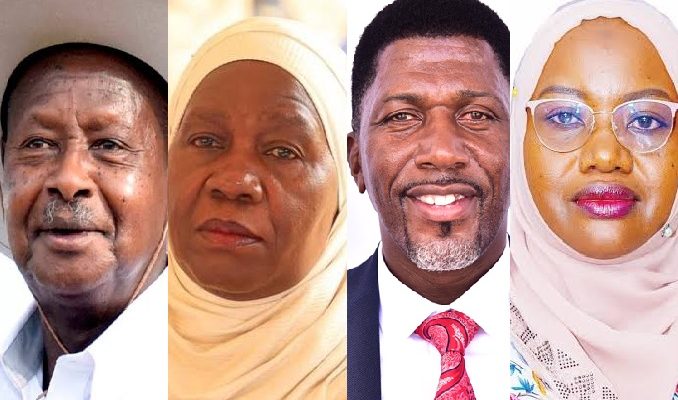
On August 18, 2026, President Yoweri Museveni wrote to the Minister for Kampala Capital City and Metropolitan Affairs, Minsa Kabanda, directing her to study a proposal presented by an indigenous businessman, Hassan Bulwadda, to redevelop the centrally located space within Kampala’s Central Business District (CBD).
Bulwadda wants to develop the two-acre site into a modern eco-friendly real estate complex housing a hotel, shopping mall and solar-powered facilities.
Because the square is presently an open green space that members of the public take as a leisure park, there is resistance to this proposal.
Minister Kabanda has since constituted a special committee to study the proposal and revert to the President with their findings and recommendations on whether to let the square go or to retain it as an undeveloped space with no intrinsic socioeconomic value.
I will not preempt the committee’s job or findings. What needs to be clarified is that whether the space will be granted to Bulwadda to develop or not, the procedure taken by the President should be appreciated and commended. It adds proof that President Museveni does not act unilaterally.
Whenever a proposal comes to his table, he receives it and consults with relevant institutions to determine the way forward.
I could name thousands of such proposals that have come to him over the course of his presidency where he has applied that very method. That’s how he deals with matters of investors, innovators, industrialists and developers of all categories.
Anyone with an eye for opportunity can get the President’s blessing, subject to checks and the regulatory framework.
As Ugandans, we should learn from successful examples that have ended up generating opportunities for a larger section of Ugandans beyond the founders of the enterprises and their close associates rather than fighting to bring others down.
Some concepts come off as high risk and wild at first but all developing economies explore every window of opportunity at their disposal to propel the private sector.
The culture of pushing back against bright proposals to a point of frustrating much-needed investment (local and foreign) al because of politics, rather than cogent consideration of the merits of the pitch on the table, is suicidal for a country aiming for a $500billion economy.
In Uganda, anti-development activists are ever out to spite anything that Government does. They run ahead to paint a picture of President Museveni as characteristically unilateral and authoritarian even when he has a well-known set of Standard Operating Procedures (S.O.Ps), involving inquiries and consultations at different levels to a point that Uganda is considered to be too bureaucratic when it comes to dealing with investment. Very malicious and unfair to him!
Protestations over the constitutional square proposal arose after the President’s letter to Minister Kabanda became public. Was it meant to be classified? No! There was nothing to hide.
If he had meant to act unilaterally, nothing would have stopped him from straightaway writing to Bulwadda to deploy his machinery and start works.
Ideally, even those expressing opposition to the proposed development are free to raise their alternative points. All ideas are taken into consideration.
However, it is wrong to attempt to mislead the public that the President has singlehandedly given away the space when all he did was direct the line minister (for Kampala) to institute an inquiry to consider all relevant issues and report back to him.
Nowhere did he attempt to bias the proposed “Kabanda team”. He trusted that they would do a professional and independent job.
There was no need for panic and generating an environment of scandal in the media.
No issue will be ignored by the committee; whether environmental, legal, economic, cultural/historical or simply sentimental.
It is not enough to say that proposals to develop the place had ever been considered before, such as the one of Al-Hajji Hassan Basajjabalaba from the early 2000s, and that they were dismissed.
Whatever the reasons, there will always be a new set of factors that can be considered and a decision is reached that satisfies all sides to a matter.
For instance, a complex that strongly incorporates elements of environmental preservation, maintaining green leisure spots (that can be elevated to the top of the structure) and using eco-friendly solar energy is something that wasn’t envisaged decades ago. Today, this is the reality of ultramodern architecture and planning which enables developers to establish dream complexes in small urban spaces without damaging the environment acutely and worsening congestion or pollution.
Furthermore, on the environment aspect, the same people that are busy destroying swaths of wetlands and forested areas in their communities, against the impassioned advice of President Museveni, are the very ones claiming to care so much for a tiny green patch at a high-value location in the city. It doesn’t make sense!
The author is the Special Presidential Assistant-Press & Mobilisation/Deputy Press Secretary-State House
Email: faruk.kirunda@statehouse.
go.ug
What's your reaction?
You may also like
More in:Business

From the Lab to Your Bathroom Shelf: Why I’m Proud to Sell UBeauty
Minister Babalanda Calls for Financing Architecture to Match Uganda’s US$500 Billion Growth Ambition by 2040
PRESIDENT MUSEVENI COMMENDED FOR SKILLING INITIATIVE AS STATE HOUSE ANNOUNCES NEW HUB IN BUSOGA
Namayingo Farmers Confront Sugar Council Over Delayed CN Sugar Licence