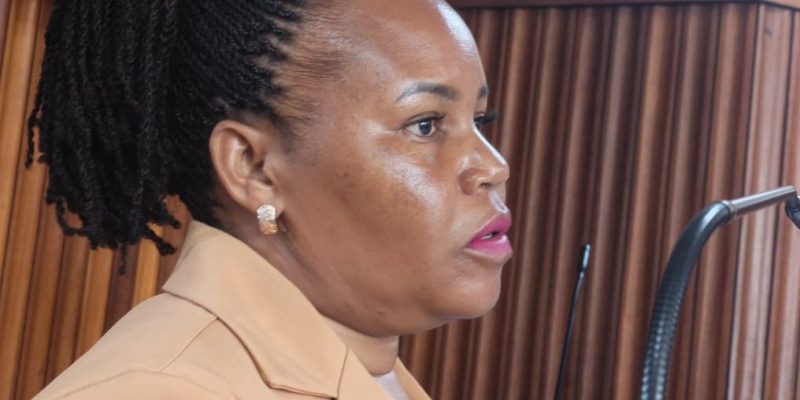
How does someone who says she never sat the Primary Leaving Examination (PLE) or the Uganda Certificate of Education (UCE) end up contesting for Parliament and winning an election?
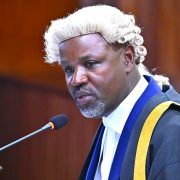
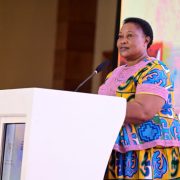
That question is now at the centre of an election dispute involving Ssembabule District Woman MP Florence Nambaziira, whose academic qualifications have come under scrutiny at the Masaka High Court.
Nambaziira, who was elected on the National Resistance Movement (NRM) ticket in January 2026, told court that she neither completed Primary Seven nor Senior Four, raising questions about the academic documents she presented to establish her eligibility to serve in Parliament.
Her testimony prompted Justice Christine Akello to order the National Council for Higher Education (NCHE) to clarify her academic qualifications within two days.
The directive was issued on Saturday, October 24, 2026, during the hearing of a petition filed by her predecessor, Mary Begumisa, who is challenging the election outcome.
During her appearance in court, Nambaziira explained that she instead acquired vocational training in hairdressing from Mengo Youth Vocational Center through the Directorate of Industrial Training (DIT). The course covered hair plaiting, hair washing and styling.
However, Begumisa’s lawyer, Isaac Ebiro Ekirapa, questioned how Nambaziira obtained an academic equivalence certificate from NCHE without having sat the primary and Ordinary Level examinations.
Ekirapa argued that the council should explain the basis and status of the documents relied upon to establish her academic eligibility.
Begumisa had earlier obtained records from DIT confirming the existence of Nambaziira’s vocational certificate. The outstanding question is whether that qualification, alongside the documents presented to NCHE, satisfies the academic requirements for election to Parliament.
Uganda’s electoral laws require parliamentary candidates to possess a minimum formal education qualification equivalent to Advanced Level standard. Candidates relying on alternative qualifications must establish that they meet the applicable equivalency requirements.
The petition, however, goes beyond academic qualifications. Begumisa also alleges voter bribery, ballot stuffing, multiple voting and obstruction of polling agents in parts of the district, including Mawogola and Mawogola West.
These allegations remain before the court and are yet to be determined.
For now, the focus is on NCHE, which has two days to explain Nambaziira’s academic status. Its response could prove significant as the court considers whether the qualifications she relied upon met the legal requirements for her election.
The case has brought into sharp focus the question of how alternative educational qualifications are assessed for people seeking elective office—and how those qualifications are verified before the electorate chooses its representatives.
What's your reaction?
You may also like
More in:National
Minister Babalanda Warns Basoga Against Land Fragmentation, Urges Families to Embrace Wealth-Creation
PRESIDENT MUSEVENI URGES EUROPEAN INVESTORS TO TAP INTO UGANDA’S ECONOMIC OPPORTUNITIES
Tayebwa Issues Stern Warning to Ineffective Parliamentary Committees