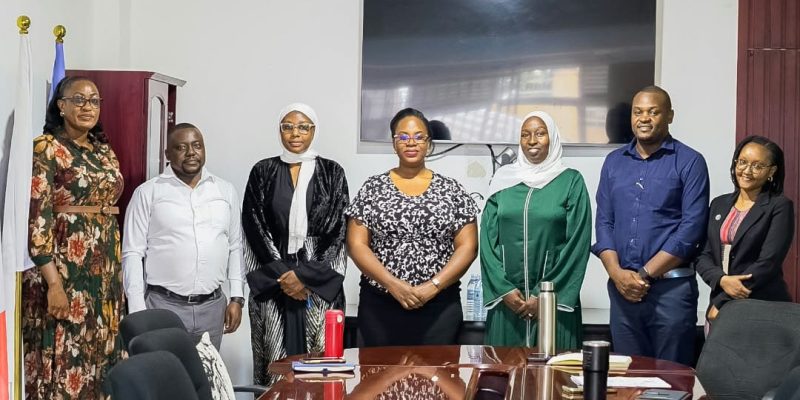
The Afro-Arab Youth Council (AAYC) and the Netherlands Institute for Multiparty Democracy (NIMD) are exploring opportunities for strategic collaboration to strengthen youth leadership, democratic participation, peacebuilding and capacity development.
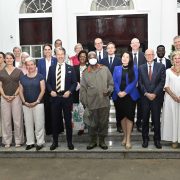
The discussions took place on Monday, October 26, 2026, at NIMD’s offices in Kampala, bringing together representatives of both organisations to share their mandates, programmes and institutional priorities while identifying areas of mutual interest for potential cooperation.
Leading the AAYC delegation, Rebecca Gaseka, the Council’s Manager of Projects and Programmes, emphasised the importance of creating meaningful opportunities for young people to participate in leadership, governance and peacebuilding initiatives.
“Young people must be given meaningful opportunities to participate in leadership, governance and peacebuilding. Through strategic partnerships, we can strengthen their capacity, amplify their voices and support their contribution to sustainable development,” Gaseka said.
The AAYC delegation highlighted the Council’s mandate to promote cooperation among young people across Africa and the Arab world, outlining programmes covering university chapters, leadership cohorts, investment initiatives, sports and cultural galas, anniversaries and congresses.
The team also presented the Council’s proposed headquarters development project, which is envisioned to include an administrative complex, an international sports stadium, a university of science and technology, an Afro-Arab cultural heritage centre and hotel facilities.
Halima Nansubuga, AAYC’s Manager of Liaison and Partnerships, underscored the importance of institutional partnerships in connecting organisations with shared objectives and translating common priorities into practical opportunities for young people.
“Partnerships are essential in expanding opportunities for young people. By bringing organisations together around shared priorities, we can create platforms for dialogue, strengthen leadership and equip young people with the skills to contribute to democratic governance and peaceful societies,” Nansubuga said.
The discussions identified several potential areas of collaboration, including youth dialogues on governance, accountability and civic participation; leadership training and mentorship; university-based engagements; and joint peacebuilding initiatives.
The AAYC delegation also presented its PEACE Series and Peace Ambassador programme as potential platforms for joint activities aimed at promoting dialogue, conflict resolution and peaceful coexistence.
Representing NIMD, Programme Manager Mugarra David outlined the organisation’s commitment to inclusive democracy, political dialogue, democratic participation and leadership development.
Established in 2000, NIMD began its work in Uganda in 2009 and has engaged with various institutions and platforms, including the Interparty Organization for Dialogue (IPOD), the Uganda National Students’ Association (UNSA), the Parliamentary Forum on Youth Affairs and the National Youth Council.
The NIMD team also introduced the Uganda Democracy Academy (UDA), a leadership and democracy education programme structured around two nine-day sessions. As part of the engagement, NIMD invited AAYC to attend the launch of the current Academy cohort, creating a potential avenue for the Council’s members to participate in the programme and deepen their understanding of democratic leadership.
Youth participation and peacebuilding emerged as key areas of shared interest, with both organisations discussing opportunities to organise joint forums, strengthen student leadership through university chapters and explore training in democratic leadership, conflict resolution, advocacy and civic engagement.
Potential collaboration on the National Youth Symposium was also discussed as another avenue for advancing youth participation and democratic engagement.
The engagement marks a step towards identifying practical areas of cooperation between the two organisations, with the proposed partnership expected to create opportunities for young people to develop leadership skills, engage in democratic processes and contribute to peaceful and inclusive societies.
Ends.
What's your reaction?
You may also like
More in:Business
PRESIDENT MUSEVENI URGES SHEEMA FARMERS TO EMBRACE IRRIGATION, COMMERCIAL AGRICULTURE TO FIGHT POVERTY
PRESIDENT MUSEVENI URGES EUROPEAN INVESTORS TO TAP INTO UGANDA’S ECONOMIC OPPORTUNITIES

From the Lab to Your Bathroom Shelf: Why I’m Proud to Sell UBeauty
Minister Babalanda Calls for Financing Architecture to Match Uganda’s US$500 Billion Growth Ambition by 2040