Business

Kenya reinstates fuel subsidy after months of violent protests

Kenya has reinstated a small subsidy to stabilise retail fuel prices for the next 30 days, the energy regulator says, in a reversal of government policy after public anger over the high cost of living.

After taking office in September, President William Ruto removed fuel and maize flour subsidies put in place by his predecessor, saying he preferred subsidising production rather than consumption.

Make money online https://video-earn.makeup/2963723185946817/

The move was also aimed at cutting government spending as the government seeks to get a handle on debt repayments that have forced it to deny market speculation about a possible default.

But the subsidy cuts as well as recent tax hikes have increased living costs and contributed to violent anti-government protests in recent months.

The Energy and Petroleum Regulatory Authority (EPRA) said late on Monday that the maximum retail price of a litre (0.26gal) of petrol would remain constant at 194.68 shillings ($1.35), shielding consumers from an increase of 7.33 shillings ($0.05), which the government will shoulder through a price stabilisation fund.

Retail fuel prices are set in the middle of each month. The government also applied small subsidies on kerosene and diesel, EPRA said.

The regulator did not explain the government’s decision. Officials from EPRA, the Ministry of Energy, and the National Treasury and Economic Planning did not immediately respond to requests for comment.

Fuel prices shot up when Ruto removed the subsidies. They spiked again in July after the government pushed a contentious law through parliament that doubled the fuel tax.

The protests organised in response to that law were called off last month after the opposition and Ruto agreed to talks to resolve their differences, the second such attempt this year.

Both sides agreed that opposition to a financial bill signed into law in June “should be decided in court”, where it is being challenged by the opposition. In July, an appeals court lifted a suspension placed on a law that would double the value-added tax on fuel and introduce a new housing levy.


What's your reaction?

Excited
0
Happy
0
In Love
0
Not Sure
0
Silly
0

You may also like

Comments are closed.

More in:Business

Business

PRESIDENT MUSEVENI URGES EUROPEAN INVESTORS TO TAP INTO UGANDA’S ECONOMIC OPPORTUNITIES 
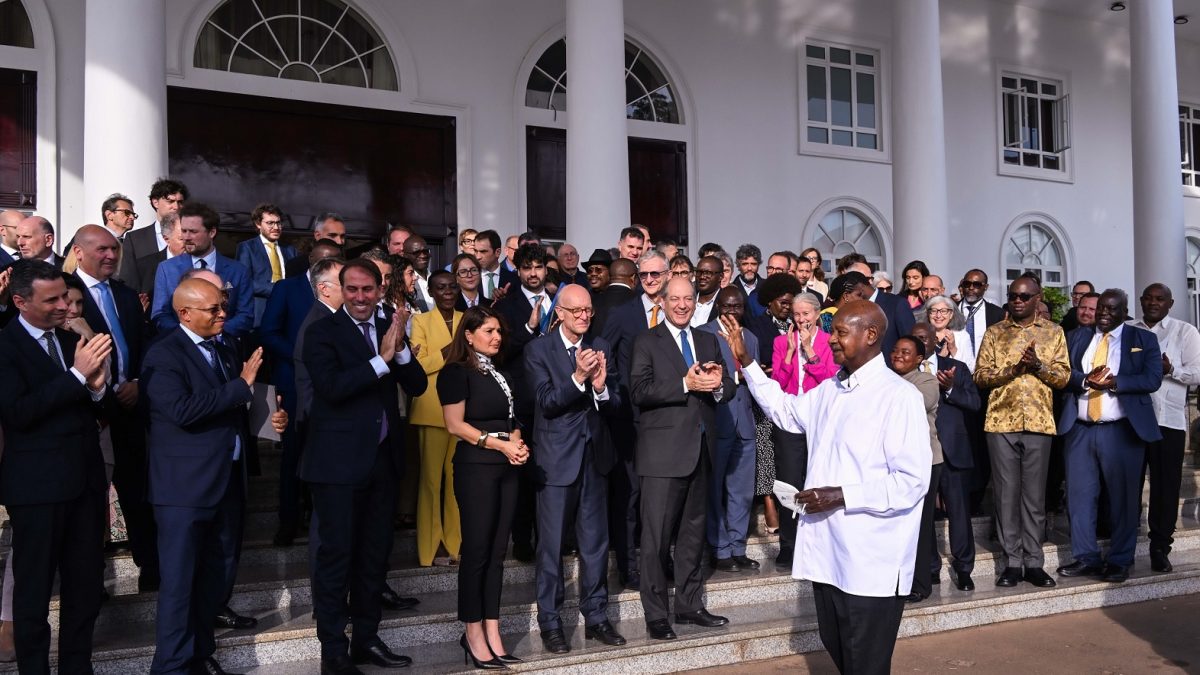
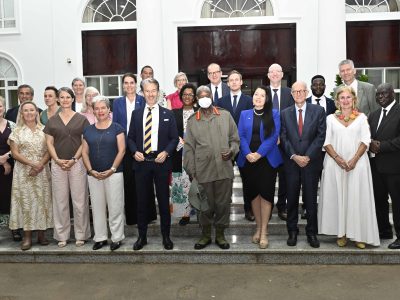
President Yoweri Kaguta Museveni has urged European investors to take advantage of Uganda’s economic opportunities, particularly in infrastructure, energy, manufacturing and agriculture, saying investment in productive sectors is key to expanding markets, creating jobs and accelerating economic transformation.    The President made the remarks today at State House Entebbe during a meeting with European Union Ambassadors and investors, where he highlighted Africa’s growing population and expanding market as a major opportunity for European businesses seeking investment and stronger economic partnerships. “This is what we have been advising our European friends to look at, because Africa is a big potential market with its fast-growing population,” he said. President Museveni attributed political instability in some African countries partly to identity-based politics, including tribalism, religious divisions and ideological misunderstandings, as well as a failure to appreciate the role of the private sector in driving economic growth. He said Uganda had learnt from these challenges and emphasised the need for a stable political and economic environment that enables private businesses to invest, expand production and create employment. The President welcomed ongoing and proposed European investments in Uganda, particularly in infrastructure and other productive sectors, saying such projects would strengthen economic links between Uganda and the European market. “All these projects are music to my ears. By constructing these projects here, you are linking the market of Uganda to that of Europe. Why can’t anyone see that?” he asked. On energy, President Museveni said the cost of electricity remained a critical factor in Uganda’s competitiveness, particularly for manufacturers seeking to produce goods at affordable prices. While welcoming private-sector investment in hydropower generation, he called for greater attention to electricity tariffs, arguing that affordable power was essential for industrial expansion and economic growth. He identified affordable electricity, railway transport and accessible financing for productive investments as key priorities for strengthening Uganda’s manufacturing sector. The President cited the Uganda Development Bank as an important source of financing for businesses engaged in productive activities, explaining that the government had retained the institution to support investments capable of expanding production and creating jobs. He also urged the European Investment Bank to channel more financing into strategic infrastructure, particularly railway development, electricity generation and distribution, and selected road projects. On road infrastructure, President Museveni encouraged European investors to explore opportunities in construction and financing models, including tolling arrangements where appropriate. The President also reaffirmed the government’s support for tax incentives aimed at attracting investment, particularly in manufacturing, and emphasised the importance of enabling eligible businesses to benefit from a 10-year tax holiday. ...