NationalUganda

Kigezi leaders argue government to regulate campaign spending

In a bid to promote better service delivery and reduce corruption, opinion leaders in Kigezi subregion are calling on the government to control the amount of money spent during election campaigns.

The call was made during a regional dialogue on elections and human rights organized by the Uganda Human Rights Commission at Volcano Hotel in Rubanda district on Thursday.

The executive director of Kick Corruption of Uganda, Byamugisha Robert Kakuru, highlighted the dangers of money in elections, stating that excessive spending by politicians could compromise service delivery.

“Government should come in to regulate this spending. Why pour in all that money? These people will think about getting their invested monies once they win,” Byamugisha emphasized.

Dr. Francis Runumi, a former LC 5 Chairman for Kabale district, attributed poverty to the reason why people are often “bought” during elections.

“Someone who has never touched a note of shs 10,000, can he reject if it’s given for free from a politician?” Dr. Runumi questioned.

Twembi Theopista, the Kigezi regional Uganda Human Rights Commission boss, condemned the commercialization of politics, stating, “We strongly condemn the commercialization of politics in our region. It’s disheartening to see politicians treating votes like commodities, buying their way to power instead of earning it through genuine service.”

The dialogue comes at a time when Uganda is gearing up for elections. Excessive spending by politicians not only skews the playing field in favor of the wealthy but also compromises the integrity of the electoral process.


##

What's your reaction?

Excited
0
Happy
0
In Love
0
Not Sure
0
Silly
0

You may also like

Comments are closed.

More in:National

Business

PRESIDENT MUSEVENI URGES EUROPEAN INVESTORS TO TAP INTO UGANDA’S ECONOMIC OPPORTUNITIES 
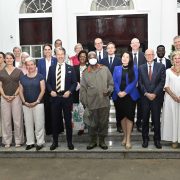
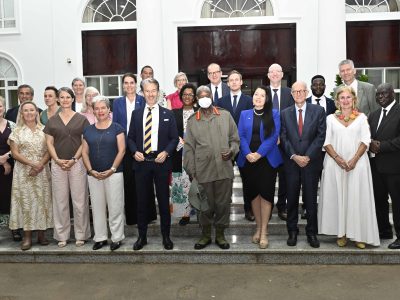
President Yoweri Kaguta Museveni has urged European investors to take advantage of Uganda’s economic opportunities, particularly in infrastructure, energy, manufacturing and agriculture, saying investment in productive sectors is key to expanding markets, creating jobs and accelerating economic transformation.    The President made the remarks today at State House Entebbe during a meeting with European Union Ambassadors and investors, where he highlighted Africa’s growing population and expanding market as a major opportunity for European businesses seeking investment and stronger economic partnerships. “This is what we have been advising our European friends to look at, because Africa is a big potential market with its fast-growing population,” he said. President Museveni attributed political instability in some African countries partly to identity-based politics, including tribalism, religious divisions and ideological misunderstandings, as well as a failure to appreciate the role of the private sector in driving economic growth. He said Uganda had learnt from these challenges and emphasised the need for a stable political and economic environment that enables private businesses to invest, expand production and create employment. The President welcomed ongoing and proposed European investments in Uganda, particularly in infrastructure and other productive sectors, saying such projects would strengthen economic links between Uganda and the European market. “All these projects are music to my ears. By constructing these projects here, you are linking the market of Uganda to that of Europe. Why can’t anyone see that?” he asked. On energy, President Museveni said the cost of electricity remained a critical factor in Uganda’s competitiveness, particularly for manufacturers seeking to produce goods at affordable prices. While welcoming private-sector investment in hydropower generation, he called for greater attention to electricity tariffs, arguing that affordable power was essential for industrial expansion and economic growth. He identified affordable electricity, railway transport and accessible financing for productive investments as key priorities for strengthening Uganda’s manufacturing sector. The President cited the Uganda Development Bank as an important source of financing for businesses engaged in productive activities, explaining that the government had retained the institution to support investments capable of expanding production and creating jobs. He also urged the European Investment Bank to channel more financing into strategic infrastructure, particularly railway development, electricity generation and distribution, and selected road projects. On road infrastructure, President Museveni encouraged European investors to explore opportunities in construction and financing models, including tolling arrangements where appropriate. The President also reaffirmed the government’s support for tax incentives aimed at attracting investment, particularly in manufacturing, and emphasised the importance of enabling eligible businesses to benefit from a 10-year tax holiday. ...