 l
Ugandan journalist, community leader, and public servant Mike Ssegawa drawing on his extensive background in grassroots organizing and his administrative experience as a deputy Resident District Commissioner (RDC)—has authored a practical handbook to equip Local Council One (LC1) chairpersons with the knowledge and skills needed to effectively lead their communities.
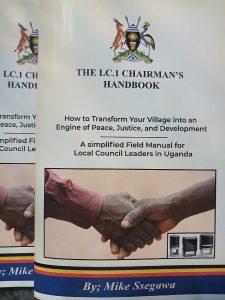
Titled The LC1 Chairman’s Handbook: How to Transform Your Village into an Engine of Peace, Justice, and Development, the publication serves as a simplified field guide for grassroots leaders. Bringing together his perspectives as both a former journalist and a central government representative dealing with grassroots administration, Ssegawa notes that the handbook directly addresses the everyday operational, security, and administrative challenges faced by village leaders. He has pledged to distribute it free of charge to LC1 chairpersons across the country.
The handbook comprises 12 chapters covering the core responsibilities of village leaders. Topics include leadership and ethics, the legal limits of the LC1 court, village security, grassroots justice, local economic development, public health, emergency response, meeting management, and the revival of bulungi bwansi (community voluntary work). It also provides practical tools such as official registers, forms, templates, a 12-month village transformation calendar, and simplified guides to the Succession Act and the Marriage Act.
Drawing closely from his public service insights—including working hand-in-hand with local councils to maintain law, order, and government policy implementation—Ssegawa emphasizes coordination between village leadership and Resident District/City Commissioners (RDCs/RCCs). He highlights how seamless communication between LC1 chairpersons and security monitors like RDCs is vital for proactive village security, dispute tracking, and proper government program delivery at the grassroots.
In the opening chapter, The Mind of a Transforming Leader, Ssegawa urges LC1 chairpersons to embrace servant leadership rather than viewing the office as a symbol of power. He cautions that leaders who expect unquestioned authority and distance themselves from residents undermine the purpose of grassroots governance. Instead, he argues, effective leadership is built on empathy, accessibility, integrity, and sound judgment.
“You are not a king; you are a caretaker,” Ssegawa writes, emphasizing that genuine authority is earned through service rather than intimidation.
The handbook also explains the constitutional and legal foundation of the LC1 office, describing it as the first point of contact between citizens and government under Uganda’s Constitution and the Local Government Act.
Ssegawa says the publication is intended to serve as a practical reference for both newly elected and serving LC1 chairpersons, helping them strengthen governance, foster cooperation with district security and administrative offices like the RDCs, promote peaceful dispute resolution, and accelerate community development at the village level.
What's your reaction?
You may also like

More in:National
Take Parliament to the People, Tayebwa Advise MPs
Minister Babalanda Warns Basoga Against Land Fragmentation, Urges Families to Embrace Wealth-Creation
PRESIDENT MUSEVENI URGES EUROPEAN INVESTORS TO TAP INTO UGANDA’S ECONOMIC OPPORTUNITIES