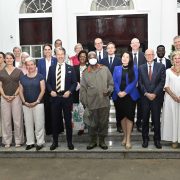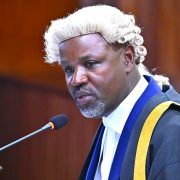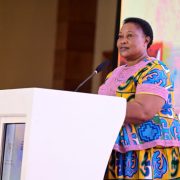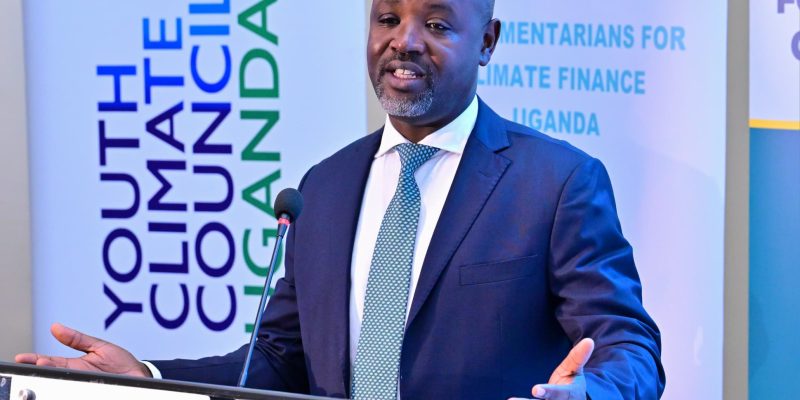
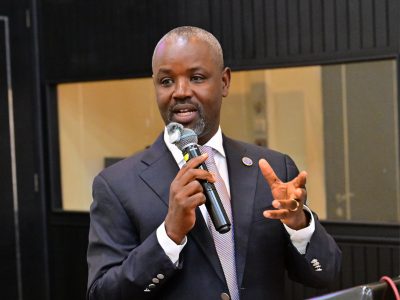
Deputy Speaker of Parliament Thomas Tayebwa has urged Members of Parliament to use Parliament’s legislative, budgeting, oversight and representation roles to help Uganda prevent climate-related disasters and build resilience.
Tayebwa said climate change can no longer be treated as an issue for speeches and conferences but requires concrete action and investment in long-term solutions.
He made the remarks on Tuesday while opening a two-day induction for members of the Parliamentary Committee on Climate Change and the Committee on Natural Resources at Mestil Hotel in Kampala.
He said the 12th Parliament would be judged by how effectively it prevents climate-related disasters and protects future generations.
“History will judge the 12th Parliament not by how many sittings we had, or how many conferences we attended, but on how we prevented disasters from happening again,” Tayebwa said.
He urged MPs to ensure that climate considerations are incorporated into government programmes and public spending, arguing that investments could be wiped out if the country does not address the effects of climate change.
Tayebwa said Parliament should ensure that the government focuses more on preventing climate-related disasters than spending public money responding to their aftermath.
He cited recurring flooding along River Nyamwamba in Kasese, where communities are repeatedly displaced, as an example of a problem requiring a permanent solution.
He questioned whether the government should continue spending money every year on tents, blankets and food for communities affected by flooding and famine, instead of investing in measures that can prevent such disasters.
He also mentioned Ntoroko as a district at high risk from climate change, saying some families had already lost large portions of their land after it was submerged.
Tayebwa said climate action must also extend to agriculture, warning that changing weather patterns could undermine programmes intended to improve household incomes and food security.
He called for climate-smart agriculture, drought-resistant seeds, agroforestry, soil protection and better-equipped agricultural extension workers.
“I do hope that we, as the 12th Parliament, can tie PDM funds to climate-smart agriculture, to drought-resistant seeds, to ensure we focus on agroforestry, soil protection, and also ensure that we have extension workers who are well equipped with knowledge to teach people on how they can do sustainable agriculture,” he said.
He also urged Parliament to promote water harvesting in schools, hospitals and other public institutions and to explore ways of increasing the use of renewable energy.
Tayebwa said public institutions should be encouraged to generate their own electricity, including through solar installations, while surplus electricity could potentially be supplied to the national grid.
The Deputy Speaker further called for stronger oversight of forests and wetlands, saying Parliament must ensure that government agencies responsible for environmental protection are held accountable.
“We need to protect our forests. We need to keep these people in government who should protect our forests in check, on their toes,” he said.
He said Uganda is losing about 80,000 hectares of forest cover annually, describing the situation as unacceptable.
Tayebwa also called for greater investment in weather forecasting to help farmers and communities prepare for extreme weather.
“We need to support Uganda National Meteorological Authority (UNMA), give them the equipment they need to give perfect projections,” he said.
He argued that farmers should also receive weather forecasts on their phones and in languages they can understand before disasters strike.
What's your reaction?
You may also like
More in:National
PRESIDENT MUSEVENI URGES SHEEMA FARMERS TO EMBRACE IRRIGATION, COMMERCIAL AGRICULTURE TO FIGHT POVERTY
Take Parliament to the People, Tayebwa Advise MPs
Minister Babalanda Warns Basoga Against Land Fragmentation, Urges Families to Embrace Wealth-Creation
PRESIDENT MUSEVENI URGES EUROPEAN INVESTORS TO TAP INTO UGANDA’S ECONOMIC OPPORTUNITIES