The Minister for the Presidency, Hon. Babirye Milly Babalanda, has said her office will not shield or defend Resident District Commissioners (RDCs) implicated in corruption, as the Government intensifies its nationwide fight against corruption and abuse of public resources.
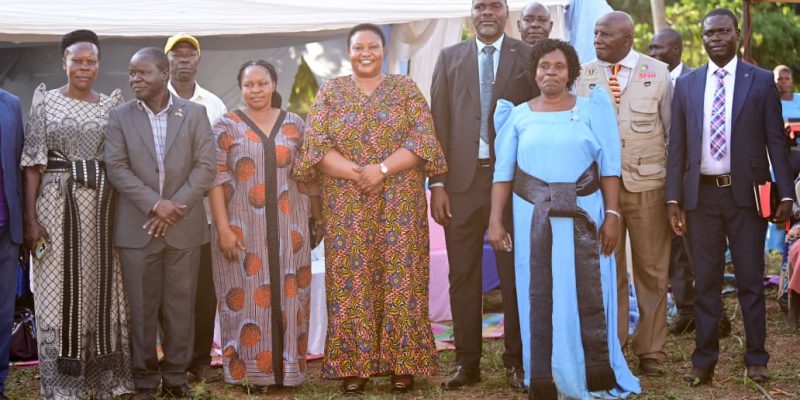
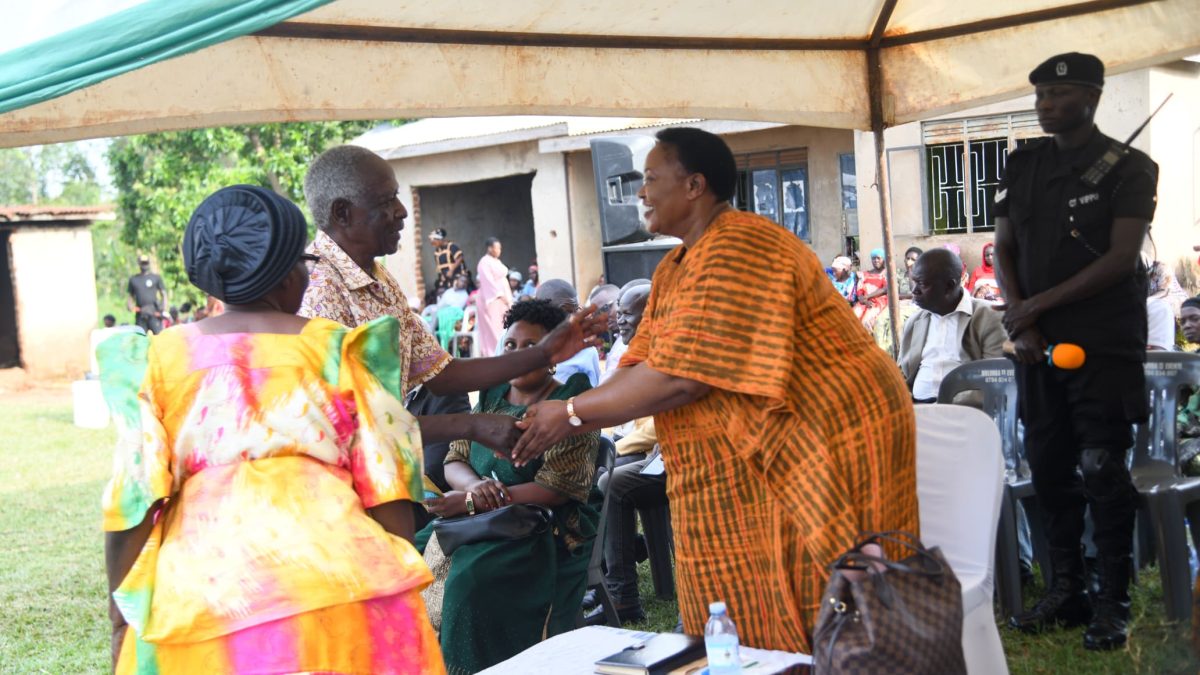
Minister Babalanda made the remarks today during a fundraising event in support of the construction of Ivukula Seventh-day Adventist (SDA) Church in Nsinze Town Council, Namutumba District.
In her address, Minister Babalanda conveyed warm greetings from His Excellency President Yoweri Kaguta Museveni, the First Lady and Minister of Education and Sports, Maama Janet Kataaha Museveni, the Permanent Secretary in the Office of the President, Hajji Yunus Kakande, and the entire staff of the Office of the President.
Her remarks came shortly after the Ministry of Local Government conducted an anti-corruption operation in Pallisa District on October 1, 2026, during which more than 20 district officials were arrested or subsequently interdicted to facilitate investigations into allegations including gross negligence of duty, abuse of office, mismanagement of public resources and possible financial impropriety.
The Pallisa RDC, Dikusoka Majidu, was among those named in connection with the nationwide “Expose the Corrupt” campaign by Ministery of Local Government, led by Hon. Balaam Barugahara Ateenyi. Accordingly, concerns raised in Pallisa included alleged irregularities involving the Parish Development Model (PDM), missing government assets, questionable expenditure of funds intended for roads and water services, and complaints concerning the alleged extortion of PDM and Emyooga beneficiaries.
Minister Babalanda, who provides supervision to RDCs, Resident City Commissioners (RCCs), Deputy RDCs and Assistant RDCs under the Presidency docket, said the developments in Pallisa and other discovered areas demonstrate why officers entrusted with representing the President at the district level must uphold the highest standards of integrity.
“I have conducted several capacity-building workshops and cautioned RDCs, Deputies and their Assistants against corrupt tendencies, but some have failed to listen to our guidelines,” she said.
“RDCs are the President’s representatives in the districts. Their core mandate is to monitor Government programmes, protect public resources and ensure that services reach the people equitably. However, some have gone to the extent of requesting fuel from wananchi before going to the field, as if the Government does not facilitate them. I am not willing to defend corrupt RDCs,” Hon. Babalanda said.
She emphasised that RDCs are expected to be proactive in identifying challenges, monitoring Government programmes and taking action whenever they encounter abuse of public resources or failures in service delivery.
Minister Babalanda further noted that the President has given renewed impetus to the fight against corruption by supporting field-based monitoring and accountability initiatives aimed at identifying problems at the grassroots.
She said the Government cannot allow bureaucratic delays to become a shield for corruption or mal-administration.
“The President’s message has been unequivocal: corruption must be confronted at the point of discovery, rather than waiting for months before action is taken, when evidence may have disappeared,” Babalanda said.
She added that her office has repeatedly cautioned RDCs against waiting for ministers or other senior government officials to visit their districts before responding to problems within their areas of responsibility. The Office of the President has also publicly highlighted this directive in every official communication.
According to Minister Babalanda, RDCs and other Government officials found to have engaged in extortion of PDM SACCOs, solicitation of bribes for jobs or collusion with technical staff to defraud Government resources will be subjected to the applicable administrative and criminal processes.
She said disciplinary measures, including recall or interdiction, would be taken where appropriate, while criminal matters would be handled by the relevant investigative and prosecutorial agencies. The Pallisa operation follows similar actions taken in other districts as the Government continues its anti-corruption drive.
In Bududa, for example, several district officials were arrested over allegations including corruption, misuse of public funds, abuse of office and theft.
Minister Babalanda stressed that allegations must be subjected to due process and that officers facing accusations should be investigated in accordance with the law.
She nevertheless reaffirmed that integrity, patriotism, accountability and performance would remain important considerations in the appointment and retention of RDCs and RCCs.
“This time round, President Museveni will only appoint patriots to take on RDC and RCC responsibilities. If you are corrupt, you cannot be the President’s eye in the district,” she said.
The “Expose the Corrupt” campaign has adopted a grassroots approach involving barazas, field inspections and engagement with citizens to identify concerns affecting service delivery. The Ministry of Local Government says the campaign is intended to strengthen accountability and ensure that public resources, including those under programmes such as PDM and Emyooga, benefit their intended recipients.
Minister Babalanda also used the fundraising event to encourage residents to embrace Government wealth-creation programmes, including the Parish Development Model (PDM), Emyooga, the Youth Livelihood Programme, Operation Wealth Creation (OWC) and the GROW Project.
She noted that the Government has invested substantial resources in programmes aimed at increasing household incomes, creating employment opportunities and reducing poverty. She urged the congregation to adopt the Four-Acre Model as a strategy for sustainable household income, with one acre dedicated to coffee or cocoa, another acre to fruits, a third acre to food crops and the fourth acre to pasture for zero-grazing, complemented by backyard enterprises such as vegetable growing and poultry keeping.
The Minister also expressed appreciation to H.E. President Yoweri Kaguta Museveni and the people of Busoga for honouring her invitation to her Thanksgiving ceremony held on September 23, 2026, at Iringa Township Primary School in Buyende District. She thanked the President and all those who participated in the ceremony for their support and solidarity.
In support of the church’s construction project, Minister Babalanda contributed 100 bags of cement towards the ongoing construction of Ivukula SDA Church.
Her remarks at the fundraising event underscored her call for greater accountability among Government officials while urging communities to actively participate in Government development and wealth-creation programmes.
What's your reaction?
You may also like
More in:National
PRESIDENT MUSEVENI URGES EUROPEAN INVESTORS TO TAP INTO UGANDA’S ECONOMIC OPPORTUNITIES
Tayebwa Issues Stern Warning to Ineffective Parliamentary Committees
Minister Babalanda Urges Ugandans in Diaspora to Invest at Home and Champion Uganda’s Global Image