President Yoweri Kaguta Museveni has called on African leaders to confront and dismantle the long-standing strategic bottlenecks that continue to block the continent’s path to genuine socio-economic transformation.
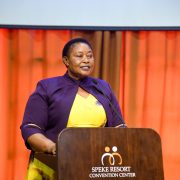
While officially opening the 8th African Leadership Forum at Speke Resort, Munyonyo today ,President Museveni said that Africa cannot achieve sustainable development unless it undergoes a deliberate process of transformation, both economically and ideologically.
“This theme of sustainable development has been around for long. But our question has always been how do you sustainably remain an infant? A baby must grow. At some stage, you must undergo transformation, just like in biology where a caterpillar turns into a butterfly,” he said.
This year’s forum is centered on evaluating the current status of the SDGs in Africa, identifying key bottlenecks and advancing innovative, home-grown solutions to issues such as climate change, education, health, youth unemployment, among others.
The forum, held under the theme “Realizing Sustainable Development Goals in Africa: Progress and Way Forward,” has drawn prominent former and current African leaders.
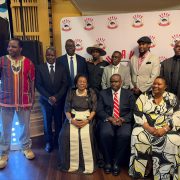
Some of these include the former heads of state ; H.E. Dr. Ernest Bai Koroma – Former President of the Republic of Sierra Leone, H.E. Dr. Moncef Marzouki, the former President of the Republic of Tunisia and H.E. Hailemariam Desalegn Boshe , the Former Prime Minister of the Federal Democratic Republic of Ethiopia.
The African Leadership Forum (ALF) was established in 2014 as an initiative by the Office of the Former President of Tanzania, H.E. Benjamin W. Mkapa, in collaboration with the UONGOZI Institute.
The Forum’s primary objective is to create a dedicated platform for current and former African leaders including heads of state, government officials, private sector actors, and civil society representatives to engage in open and forward-looking dialogues on Africa’s development challenges and opportunities.
Delivering his keynote address, President Museveni reminded the delegates that even before independence, Africa’s first challenge was the absence of political power. But after gaining independence, many countries fell into chaos due to weak states and politics that lacked a historical mission.
“You can’t have an army without a historic mission. The British army was the imperial army. The American army exists to defend capitalism. The Red Army stood for the peasants and workers. So, what do our African armies stand for? You cannot be a soldier without a mission,” he said.
He argued that the weakness of African states today stems from identity-based politics rather than politics of interest and ideology.
“If your politics is based on tribes, religion or gender, how will you build a strong state? Wrong politics have created weak states. You need a liberation movement with clarity to build capable structures,” President Museveni noted.
The President also reflected on economic missteps, particularly the suppression of the private sector in post-independence Africa.
He pointed to Uganda’s own experience under Idi Amin, when Indian entrepreneurs were expelled, setting back the economy.
“Entrepreneurs are critical. When we expelled the Indians, we lost a lot. They were helping us. That was another strategic bottleneck,” he noted.

On Africa’s continued export of raw materials, President Museveni said this practice has left the continent donating wealth and jobs to the rest of the world.
“When you export raw coffee, you get $2.5 per kilogram. But when someone adds value—roasts, grinds, and packages it—they earn up to $40. So in every kilogram, Africa donates over $20 to the world,” he said.
He also warned against exporting minerals like iron ore, revealing that some districts in Uganda had planned to sell the ore to India at just $47 a tonne.
“I said over my dead body. Why export raw iron ore? Let it stay in the ground until we’re ready to add value here. Raw materials are a curse if you don’t use them properly,” he noted.
President Museveni also stressed that sustainable development must include regional market expansion. He cited Uganda’s current milk production as an example.
“We produce 5.3 billion litres of milk annually, but Ugandans only consume 200 million litres. What happens to the rest? We need bigger markets,” he added.
He said infrastructure must go beyond roads and include cheaper transport systems like rail and water.
The President further underscored the importance of human capital, saying a country cannot transform if its people are uneducated, unhealthy, and unskilled.
Turning to the issue of poverty, President Museveni noted that many Africans still remain outside the money economy.
“In the 1960s, only 10% of Ugandans were in the money economy. Today, it’s 68%, but we still have a big population working just for the stomach,” he said.
He emphasized that the National Resistance Movement (NRM) has always focused on moving Ugandans from subsistence to commercial production through initiatives like Entandikwa, NAADS, and Operation Wealth Creation.
“By 2013, only 32% were in the money economy. We involved the army under Operation Wealth Creation, and the figure jumped to 65%,” he added.
The President explained that Uganda’s economy has evolved through six distinct phases: minimum recovery, expansion of the economy, diversification, value addition, the knowledge economy, and now science and innovation, including vaccine production.
“Whenever we talk of sustainable development, this is what we mean building a new economy, driven by transformation,” President Museveni said.
On his part , the former President of the United Republic of Tanzania, H.E. Jakaya Kikwete called on African leaders to move beyond discussions and take bold, practical steps to accelerate progress towards the Sustainable Development Goals (SDGs).
H.E Kikwete expressed gratitude to Uganda for hosting this year’s forum and praised President Museveni for taking time out of his schedule to personally grace the event.
“Your Excellency, we thank you for the warm reception and the generous hospitality we have received here in Kampala, this beautiful and historic city. Your presence at this forum means a lot to us. It demonstrates your commitment to the realization of the SDGs,”he said.
H.E Kikwete noted that the idea of the forum was born in Dar es Salaam, Tanzania, and since 2022, he has been leading its efforts to foster strategic dialogue among African leaders.
“Over the years, the forum has become a unique platform that enables candid conversations on Africa’s development trajectory, global trends, and the continent’s response to emerging challenges,” he said.
H.E Kikwete also stressed the importance of translating the forum’s outcomes into concrete action.
“We hope that this African Leadership Forum will serve as a call for bold and proactive solutions, and for a renewed commitment across the continent. The outcomes must go beyond recommendations; they must lead to practical solutions that can be implemented,” he added.
He concluded by reaffirming the forum’s role in promoting regional cooperation, knowledge sharing, and sustainable growth through leadership that is visionary, committed and accountable.
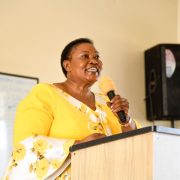
The Ugandan leaders in attendance were Rt.Hon. Robinah Nabbanja the Prime Minister , Rt . Hon. Ruhakana Rugunda, the former Prime Minister , Hon. Amama Mbabazi , the former Prime Minister, Prof. Gilbert Bukenya, the former Vice President, among others.
What's your reaction?
You may also like
More in:Business
PRESIDENT MUSEVENI URGES EUROPEAN INVESTORS TO TAP INTO UGANDA’S ECONOMIC OPPORTUNITIES

From the Lab to Your Bathroom Shelf: Why I’m Proud to Sell UBeauty
Minister Babalanda Calls for Financing Architecture to Match Uganda’s US$500 Billion Growth Ambition by 2040
PRESIDENT MUSEVENI COMMENDED FOR SKILLING INITIATIVE AS STATE HOUSE ANNOUNCES NEW HUB IN BUSOGA