President Yoweri Kaguta Museveni has called for a deliberate and
comprehensive policy to support Uganda’s older persons, including
specialised healthcare, stronger family protection and improved economic
empowerment.
President Museveni made the call today while hosting Uganda’s
celebrations to mark the International Day of Older Persons at State
House, Entebbe.
The scientific and virtual celebration was held under the theme, “Ageing
with Dignity; Strengthening Care and Support Systems.”
The International Day of Older Persons was designated by the United
Nations General Assembly in 1990 to promote understanding, respect and
support for ageing populations. Uganda started commemorating the day in
1999.
Congratulating older persons upon the occasion, President Museveni said
the Government needs to develop a comprehensive policy that addresses
the unique needs of the elderly.
“Elders are not new in society. They have always been there. I have not
participated much in developing a deliberate policy for them. I think it is
high time we do so,” he said.
President Museveni said support for older persons should be built around
three traditional pillars that have historically defined their place in Ugandan
society—family, wealth and a home.
“An elder has a family, what we call omugurusi or omukakikuru. Very few
elders don’t have families. Those are called encweekye. Secondly, an elder
has wealth like cows, goats, land and these days buildings and investments
in modern companies,” he said.
“Thirdly, he has a home. They used to have traditional ones and these days
they have modern ones. So when we support elders, we should support
them to either maintain this or have a bit of this,” he added.
The President said family relations involving older persons must be
handled with honesty and mutual respect.
He noted that while some elders can become dictatorial and refuse to
consult younger family members about their wealth, some children and
relatives also neglect older persons or seek to take over their property.
“An elder should also learn how to consult young people on what they
think,” he said.
President Museveni, however, expressed concern about children who
disrespect their parents and attempt to manipulate inheritance.
“Children should protect and respect elders. It is even in the Ten
Commandments that you should honour your father and mother so that
your days may be many on earth. We should actually make a law because
in our tradition elders should be protected from these children who
disrespect them and try to distort inheritance like the prodigal son,” he said.
He also cautioned older persons against fragmenting family property
among many children, saying excessive subdivision of land and other
assets can leave families economically vulnerable.
The President urged Government and other stakeholders to sensitise
Uganda’s estimated 2.3 million older persons about modern inheritance
and wealth-management practices, including using shares and other
arrangements instead of continuously fragmenting property.
On healthcare, President Museveni said the Government should provide
older persons with guidance on nutrition and introduce specialised medical
services targeting their needs.
He said he had recently learnt that, just as paediatricians specialise in
treating children, geriatricians specialise in the healthcare of older persons.
“Maybe we can have a geriatrician per district.
We can provide
scholarships to doctors to study and specialise and after three years they
are equipped with knowledge,” he said.
President Museveni also emphasised physical exercise as an important
component of healthy ageing, saying lifestyle-related conditions can
contribute to health complications among older persons.
He disclosed that he exercises regularly, including running and doing push-
ups.
“Some of the problems older people have is that bones break down. Many
of the diseases are caused by lifestyle, including smoking and drinking,” he
said.
On economic empowerment, President Museveni defended the inclusion of
older persons in the Parish Development Model (PDM), despite concerns
raised by some parish officials about their ability to repay loans.
“I hear some chiefs fear giving elders money, claiming they don’t pay back.
We insist that elders must get PDM money and if they don’t pay back there is no problem. The issue should be not misusing the money,” he said.
He said older persons could invest in activities such as goat rearing
because many have fewer physical work demands.
President Museveni said the Government was also aware of calls to lower
the eligibility age for the Senior Citizens Grant (SAGE) from 80 to 65 years
and increase the monthly payment from Shs25,000 to Shs35,000.
However, he said the Government currently faces competing financial
priorities.
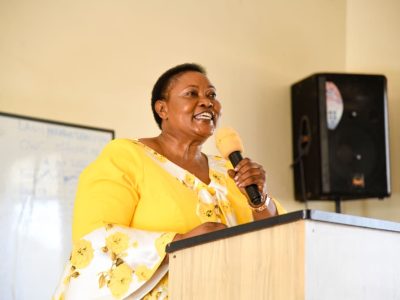
The Minister for ICT and National Guidance, Hon. Justine Kasule
Lumumba, congratulated older persons upon the day and thanked
President Museveni and other leaders for policies that have contributed to
improvements in life expectancy, as reflected in national census data.
“Older persons have played a vital role in preserving cultural traditions and
improving the economy,” she said.
Hon. Lumumba said older persons have continued to contribute to national
development, provide guidance and uphold religious and cultural values.
“Thank you for holding this country together and for being part of this
process,” she said.
She also commended the President for promoting the representation of
older persons in leadership and noted that technology had enabled the
virtual celebration to reach Ugandans across the country.
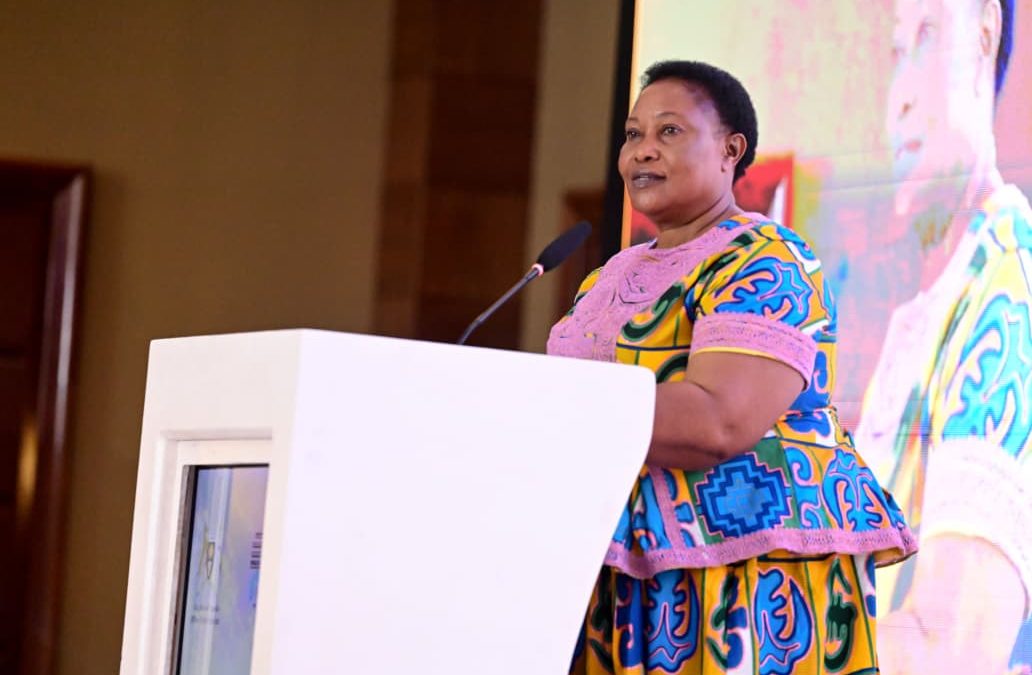
The Minister of State for Older Persons, Hon. Jacqueline Mbabazi, thanked
President Museveni for hosting the national commemoration and said older
persons remain valuable members of society who deserve recognition,
dignity and respect.
She said the theme of this year's celebration underscores the importance
of enabling older persons to participate in decisions affecting their lives
while protecting them from discrimination.
“This year's theme was informed by the fact that over 1.6 million older
persons are breadwinners. I appeal to everyone to clear the misconception
that most older persons are just dependents,” she said.
Hon. Mbabazi said statistics indicate that less than seven per cent of older
persons have access to social protection, while more than 30 per cent of
their allowances is spent on healthcare.
Older persons seek better services:
The Chairperson of the National Council for Older Persons, Ms. Ann
Muhindo, thanked President Museveni for recognising older persons as a
special interest group under the Constitution.
She commended Government programmes such as SAGE and PDM and
welcomed the proposal to lower the SAGE eligibility age from 80 to 65
years and increase the monthly grant from Shs25,000 to Shs35,000.
“We request that this development starts in the next financial year,” she
said.
Ms. Muhindo also asked the Government to ensure adequate supplies of
medicines at Health Centre IIIs serving older persons, decentralise pension
verification and provide free legal services to elderly people facing land
grabbing and related disputes.
Ireland pledges continued support:
The Ambassador of Ireland to Uganda, H.E. Mags Gaynor, said she was
honoured to join Uganda in commemorating older persons and celebrating
their contribution to families and communities.
She described older persons as custodians of knowledge who support
households and preserve cultural heritage.
Ambassador Gaynor said social protection programmes should be
predictable and reliable rather than being support that can be switched on
and off.
She reaffirmed the commitment of development partners to continue
supporting older persons in Uganda.
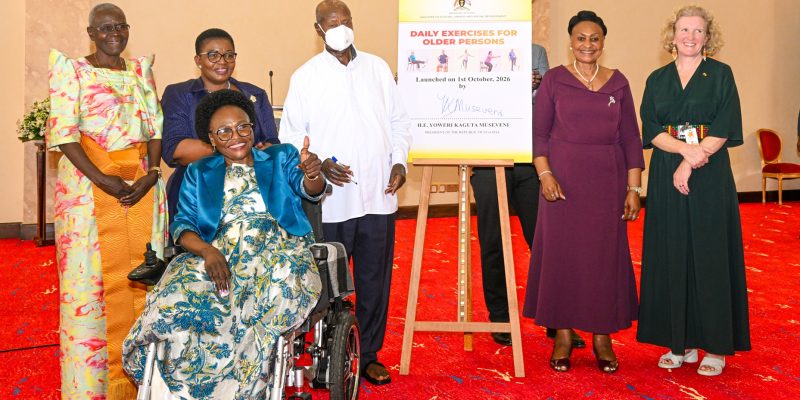
At the end of the celebration, President Museveni officially launched the
Daily Exercises Chart for Older Persons.
The chart contains simple, age-appropriate exercises that older persons
can undertake individually or in groups.
According to the Ministry of Gender, Labour and Social Development, the
chart is intended to keep older persons active, healthy and strong while
helping reduce lifestyle-related complications, including weakened bones
and poor physical health.
The initiative forms part of broader efforts to promote healthy and dignified
ageing in Uganda.
What's your reaction?
You may also like
More in:National
Tayebwa Issues Stern Warning to Ineffective Parliamentary Committees
Minister Babalanda Urges Ugandans in Diaspora to Invest at Home and Champion Uganda’s Global Image
Minister Babalanda Roots for Coordination, Accountability to Drive Wealth-Creation

We Must Honor the Builders of PLU in Western Uganda