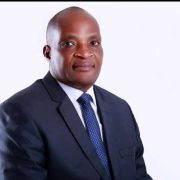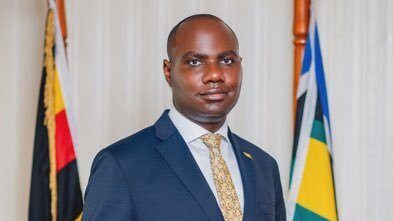

Hon Henry Musasizi / Courtesy Photo
A Story of Patience, Purpose, and Proven Excellence
There are appointments that surprise a nation. And then there are appointments that feel like the inevitable arrival of something long overdue, a recognition so fitting, so earned, so perfectly timed that even the skeptics find themselves nodding in quiet agreement.
On the evening of May 26, 2026, President Yoweri Museveni announced a sweeping Cabinet reshuffle for Uganda’s new 2026–2031 government term. Amid the flurry of names, transfers, and new faces, one promotion stood out with particular resonance. Hon. Henry Musasizi, the quiet, meticulous, numbers-driven legislator from Rubanda East, was elevated from State Minister for Finance (General Duties) to full Cabinet Minister of Finance, Planning and Economic Development, replacing the long-serving Matia Kasaija at the helm of Uganda’s most powerful economic ministry.
For those who have watched Musasizi work, up close, behind the scenes, in the trenches of budget debates and parliamentary finance committees — this was not just a promotion. It was the culmination of a life built on discipline, competence, and an unshakeable commitment to public service.
This is the story of that rise.
ROOTS IN RUBANDA: WHERE IT ALL BEGAN
Henry Musasizi is a son of Rubanda, a district nestled in the beautiful, hilly terrain of Kigezi in south-western Uganda. It is a land known for its resilient people, its misty hills, and its culture of hard work. Like many young people from that region, Musasizi did not inherit privilege or political connections. What he had was something far more durable: a mind sharp enough to cut through complexity, and a character forged in the values of accountability and service.
He pursued his education with singular focus. He sat for his Uganda Certificate of Education (UCE) between 1995 and 1998, followed by his Uganda Advanced Certificate of Education (UACE) in 1999 and 2000. He then earned a Bachelor of Commerce degree from Makerere University between 2001 and 2005. Not content to stop there, he pursued professional accounting qualifications, completing the Certified Public Accountants of Uganda (CPAU) certification between 2007 and 2009. He then reached across the Atlantic to earn a Master of Business Administration (MBA) from Heriot-Watt University’s Edinburgh Business School between 2010 and 2012.
This was not a man skating through life on charm. This was a man building himself, brick by brick, for something big.
THE PROFESSIONAL FOUNDATION: A CRAFTSMAN OF NUMBERS
Before the political spotlight found him, Henry Musasizi spent years in the private and non-governmental sectors doing the unglamorous, essential work of financial stewardship.
He began as an Accountant with CARITAS Kabale Diocese from 2006 to 2007, an organisation serving some of Uganda’s most vulnerable communities. From there, he moved to AMREF Uganda, the continent’s largest African health development organisation, where he served first as Project Accountant (2007–2009) and was promoted to Regional Accountant (2009–2010). From 2012 to 2015, he became a Partner at AHMHE Associates, a Certified Public Accountancy firm.
Think about what those years represent. Years of verifying figures. Years of ensuring that budgets meant to serve the poor actually reached the poor. Years of learning the difference between what money is supposed to do and what it actually does when managed well, or badly. These were years that no classroom can replicate, years that built in him not just technical competence but moral seriousness about public resources.
He is, to his bones, a man who understands that finance is not about numbers on a spreadsheet. It is about schools that get built or don’t. About medicines that arrive or don’t. About roads that connect communities or leave them stranded in isolation.
THE LEGISLATOR: PARLIAMENT AS A CLASSROOM AND A CALLING
In 2011, Henry Musasizi won the parliamentary seat for Rubanda East Constituency, and he has held it ever since. His entry into Parliament was not that of a man seeking a platform or a title. It was the entry of a professional seeking a bigger canvas.
What followed was one of the most substantive legislative careers in Uganda’s recent parliamentary history, particularly on financial matters.
From 2011 to 2016, he served on the Committee on Finance, Planning and Economic Development, arguably Parliament’s most consequential oversight committee. From 2011 to 2018, he served on the Public Accounts Committee (Central Government), the body responsible for holding government accountable for how public money is spent. From 2016 to 2021, he was elevated to Chairperson of the Committee on Finance, Planning and Economic Development, the very committee that scrutinises the national budget and oversees Uganda’s fiscal direction. From 2018 to 2021, he also served on the Budget Committee, and throughout much of this time, he was a Member of the Presidential Advisory Committee on Budget.
He was, in essence, Uganda’s foremost parliamentary watchdog on public finance, the person sitting across the table from government officials, demanding explanations, pushing for accountability, and ensuring that Uganda’s fiscal decisions were subjected to rigorous oversight. He also held other responsibilities that showed the breadth of his public commitment: Chairman of the Kabale District Roads Committee, Vice Chairman of the Uganda Parliamentary Forum on Youth Affairs, and Treasurer of the Kabale Parliamentary Forum.
And through all of this, he remained a certified member of the Institute of Certified Public Accountants of Uganda, never letting the politician in him forget the professional duties of the accountant.
THE STATE MINISTER: LEARNING THE MACHINERY FROM THE INSIDE
In 2021, President Museveni appointed Musasizi as State Minister for Finance, Planning and Economic Development in charge of General Duties, placing him inside the very ministry he had spent a decade scrutinising from Parliament. Some might have found this transition jarring. For Musasizi, it was a masterclass.
As State Minister, he was responsible for supervising budget implementation, overseeing debt management, and managing fiscal transfers to local governments.
Five years. Five years of budget cycles. Five years of understanding not just what needs to be done in Uganda’s economy, but how the machinery actually works, where it is well-oiled and where it creaks. Five years of building relationships with international financial institutions, bilateral partners, regional counterparts, and domestic stakeholders. Five years of preparing, whether he knew it fully or not, for the moment that arrived on May 26, 2026.
This is what made his elevation not merely deserved, but strategically sound. When a ship needs a new captain, the wisest choice is the one who knows every room, every corridor, and every lever on that vessel.
THE APPOINTMENT: WHAT IT MEANS FOR UGANDA
The timing of Henry Musasizi’s elevation to full Cabinet Minister of Finance, Planning and Economic Development could not be more consequential. Uganda is at a pivotal economic juncture.
His first major responsibility is expected to be steering the formulation of the 2026/27 national budget, a process that will require balancing fiscal discipline with the development priorities of a new five-year government term. The challenges include expanding Uganda’s tax base without strangling the private sector that drives growth, managing public debt, ensuring timely funding for government programmes, and navigating the complex demands of a youthful, fast-growing population that needs jobs, infrastructure, and services now.
These are not simple challenges. They require someone who understands macroeconomics and microeconomics, someone who can read a balance sheet and read a room, someone who has sat on both sides of the accountability table. They require, in other words, exactly Henry Musasizi.
Moreover, his elevation offers something invaluable: continuity. Uganda’s ongoing fiscal reforms, begun under the previous administration, need a steady hand to carry them forward rather than an abrupt change of direction. Musasizi brings institutional memory, existing relationships, and a clear-eyed understanding of where the nation’s finances stand and where they need to go.
COME WITH CLEAN HANDS, OR DON’T COME AT ALL
There is a quiet but unmistakable warning known to those who work closely with Hon. Henry Musasizi. He believes that if you want to be his friend or associate with him, you must come with clean hands. If you are tainted by corruption, even by the faintest smell of it, you will pay the price.
What's your reaction?
You may also like
More in:Analysis
We Must Honor the Builders of PLU in Western Uganda
GROW Project Raises Government Wealth-Creation Investments to UGX 10.75 Trillion
Uganda’s Cash Economy and the Bank of Uganda’s New Cash Withdrawal Limits
Opinion: Strengthening Uganda’s Anti-Corruption Systems