URA to Crack Down Auditors, Lawyers, Tax consultants Exploiting Tax Envision in the Country
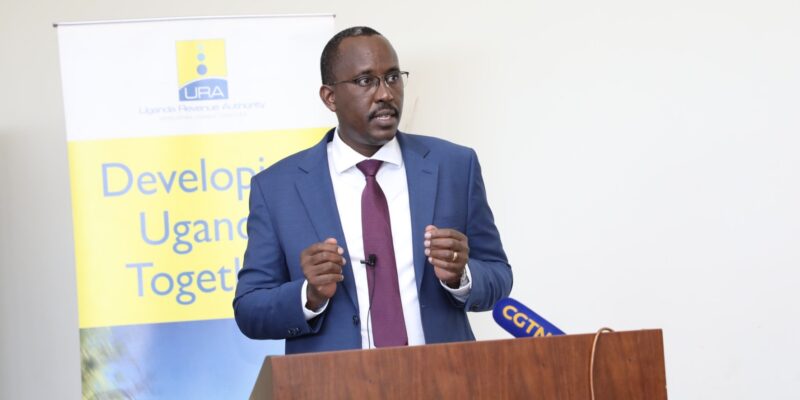
The Uganda Revenue Authority (URA) has stepped up its crackdown on tax fraud by targeting a previously under-examined group: professional enablers. These include accountants, auditors, lawyers, and tax consultants who exploit their specialized knowledge to aid clients in evading taxes.
While much public attention has focused on non-compliant businesses and individual taxpayers, URA says a critical enabler of sophisticated tax evasion lies within the trusted community of professionals who operate behind the scenes. These actors use their expertise in financial reporting and tax law to design and conceal fraudulent schemes that cost the country billions in revenue.
“In many of our high-profile investigations, we are finding that professional service providers are not just passive participants but active facilitators of tax fraud,” said a URA official familiar with recent enforcement efforts.
A 2023 investigation uncovered a significant case involving a medium-sized audit firm in Kampala. The firm allegedly manipulated the books of a restaurant chain to understate gross receipts and inflate supplier invoices—resulting in an under-declaration of over UGX 1.2 billion in Value Added Tax (VAT) and income tax. URA discovered the same firm had replicated this template of fraud for at least four other businesses.
Land transactions have also become a hotbed for such schemes. According to URA, several legal practitioners have been implicated in helping clients undervalue property sales to dodge Capital Gains Tax and stamp duty. “These professionals not only draft misleading agreements but also coach their clients on how to mask the true value of transactions through cash deals or offshore transfers,” the authority noted.
To clamp down on this growing threat, URA launched the High-Risk Professionals Compliance Programme (HRPCP). This initiative targets professionals who are repeatedly linked to tax anomalies. Under the programme, tax agents and accounting firms representing flagged clients are placed under scrutiny, and where necessary, required to account for their role in tax return preparation, recordkeeping, and transaction structuring.
URA is also strengthening its collaboration with key regulatory bodies like the Institute of Certified Public Accountants of Uganda (ICPAU) and the Uganda Law Society (ULS) to ensure that errant professionals face disciplinary action. This has already resulted in several suspensions and deregistration.
“Professional misconduct in the tax space will no longer be tolerated. We are working closely with regulators to ensure that those abusing their licenses are held to account,” said a URA compliance officer.
In a bid to increase accountability, URA is developing a formal registry of licensed tax agents, with only those who meet strict ethical and technical standards allowed to represent clients before the authority. This will not only help weed out rogue advisors but also restore trust in the tax advisory ecosystem.
The Tax Procedures Code Act, 2014 (as amended), criminalizes aiding and abetting tax evasion. Yet for long, many enablers have relied on weak enforcement, professional privilege, and social status to escape consequences. URA says that era is coming to an end.
With advanced data analytics and strengthened enforcement tools, URA is now able to detect complex fraud schemes with greater precision. Suspicious patterns across multiple clients or transactions are being flagged in real-time, putting unscrupulous professionals directly in the spotlight.
“The message is clear—those who enable tax fraud will be treated as co-conspirators, not bystanders,” said the URA Commissioner General.
URA is calling on all professionals—accountants, auditors, lawyers, and consultants—to be ambassadors of tax compliance. Their integrity is not just vital to their clients but essential to the country’s economic stability.
As Uganda intensifies efforts to increase domestic revenue and reduce dependence on external aid, the URA emphasizes that curbing tax fraud is a national priority—and professional enablers are now firmly in the crosshairs
What's your reaction?
You may also like



More in:Business

Personal care is not a gender issue. It is a matter of health, hygiene and self-confidence

AAYC, NIMD Explore Strategic Partnership to Advance Youth Leadership, Democracy and Peacebuilding

PRESIDENT MUSEVENI URGES SHEEMA FARMERS TO EMBRACE IRRIGATION, COMMERCIAL AGRICULTURE TO FIGHT POVERTY

PRESIDENT MUSEVENI URGES EUROPEAN INVESTORS TO TAP INTO UGANDA’S ECONOMIC OPPORTUNITIES