By Wilfred Arinda Nshekantebirwe
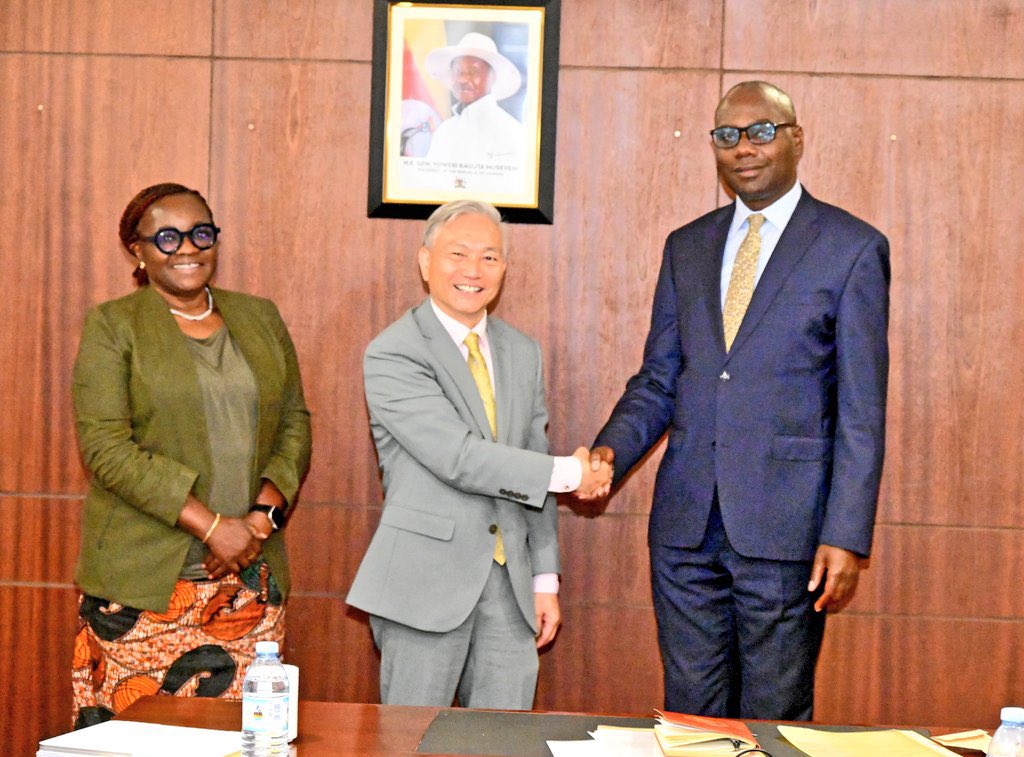
There is a particular kind of diplomatic meeting that produces nothing more than a joint photograph and a statement about continued commitment to shared goals. Friday’s encounter between Finance Minister Henry Musasizi and World Bank Division Director Qimiao Fan was not that kind of meeting.
At the centre of the conversation was a document that has taken considerable time and effort to produce, the Country Partnership Framework, a strategic roadmap setting out how Uganda and the World Bank intend to work together in the years ahead. Hon Henry Musasizi commended the Bank team for getting it done, but his enthusiasm went beyond courtesy.
The framework, he said, is aligned to the priorities he came into office carrying, enhancing domestic revenue mobilisation, investing in productive infrastructure, and promoting value addition and export growth. Those are not the World Bank’s priorities imposed on Uganda. They are Uganda’s own priorities, reflected back in a document that both sides now share.
That matters more than it might appear. Uganda’s relationship with the World Bank spans decades and touches almost every corner of the country’s development landscape, roads, schools, health centres, energy infrastructure, agricultural programmes, water systems, governance reform.
The portfolio has grown to $4.72 billion. It is a relationship with genuine depth and a track record that Musasizi acknowledged openly. But depth and a shared strategic framework are two different things, and for much of that history the two institutions have at times been working in proximity rather than in true alignment.
The Country Partnership Framework is an attempt to change that. And Musasizi, a minister who has spent his first weeks in office demanding that every institution he oversees connects its work to the government’s transformation agenda on the ground, received it as exactly the kind of tool he needs.
He did not, however, spend the entire meeting in congratulatory mode. The portfolio stands at $4.72 billion. The disbursement rate sits at 32 percent. Musasizi named both numbers in the same breath and drew the conclusion that they demand, something is not working, on both sides of the table, and it needs to be fixed drastically rather than gradually.
He directed that all World Bank projects must align to Agricultural Technology Management Sites and their enablers, a condition that reflects his insistence that external financing must connect to where Uganda’s development is actually happening, in the parishes, in the agricultural value chains, in the communities the money is meant to reach.
###
What's your reaction?
You may also like
More in:Economy
Minister Musasizi Warns District Leaders Against Abandoning Anti-Corruption Duties to Balaam.
Minister Musasizi Reaffirms Uganda’s Commitment to EU Partnership to Drive Investment, Trade and Jobs
Minister Musasizi to MPs: Broaden Tax Base, Don’t Just Tax Same People More to Reach 20% Revenue Target
Uganda’s Cash Economy and the Bank of Uganda’s New Cash Withdrawal Limits