When Kings Fall: How Leadership Vacuums Are Fracturing Uganda’s Cultural Institutions
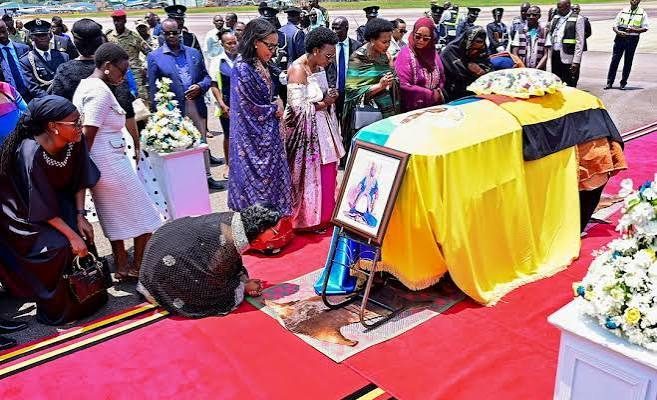
KAMPALA, UGANDA: A king’s prolonged illness or sudden death should be a moment of solemn transition. In Uganda’s cultural institutions, it too often becomes the trigger for rival cabinets, competing claimants, court battles and, increasingly, security deployments.
The pattern is now unmistakable. When the throne is empty or the occupant too weak to arbitrate, customary succession mechanisms prove unclear, contested or deliberately bypassed and parallel power structures rush into the vacuum.
Tooro: the latest rupture
In Tooro the rupture is still unfolding. King Oyo Nyimba Kabamba Iguru Rukidi IV died on 27 August 2026. Within days, competing claims to the throne drew in the Babiito royal clan, kingdom officials, the army and the Queen Mother.
On 10 September Queen Mother Best Kemigisa accused the army of surrounding the palace and restricting the family’s movements. “We cannot leave or receive people freely. We are under house arrest,” she said, appealing to Maj Gen Kayanja Muhanga, UPDF leadership and President Yoweri Museveni to allow the family to mourn and bury the king in peace.
She said the deployment began after the army removed the royal guards without warning and took the Omusuuga, head of the Babiito clan, to an undisclosed location. “They could have done this anywhere else. Instead, they chose to jubilate while my son was still lying in his casket next to them,” she said, criticising the timing of the succession announcement.
Babiito clan leaders at Karuziika Palace had just announced that Prince Edward Kijanangoma Rukidi had been elected the next Omukama. A 21-member committee claimed it had conducted due diligence and that authority to elect the king rests with the Ababito clan. The announcement met immediate resistance. Clan leaders had earlier rejected an heir named by the kingdom’s prime minister and barred him from the palace. Security forces were already visible at the kingdom’s administrative offices in Fort Portal.
A private family and clan disagreement had, once again, become a public-security question.
Bunyoro: the long illness that created two power centres
The same dynamic has played out more slowly, and no less divisively, in Bunyoro-Kitara. Omukama Solomon Gafabusa Iguru I has been largely incapacitated by illness for several years. Unable to perform key rituals or arbitrate disputes, he has left a prolonged vacuum.
In 2024 the Babiito clan, led by Chief Prince (Okwiri) Fred Mugenyi Rucunya, moved to dismiss Prime Minister Andrew Byakutaga, accusing him of overstaying his term. The clan appointed an interim cabinet. Byakutaga refused to leave, insisting only the Omukama can appoint or dismiss officials. Parallel power centres emerged. High Court rulings, attempts to occupy kingdom offices, arrests and security deployments around the palace and chambers followed. Inter-faith leaders tried mediation. The standoff continues.
An empty or weakened throne, once again, produced rival structures rather than orderly succession.
Familiar fractures elsewhere
The pattern is not new. In Acholi, a faction of clan leaders challenged Rwot David Onen Acana II from mid-2023 and installed a rival Paramount Chief in 2024. The government later reaffirmed Acana as the recognised leader. In Lango the death of Won Nyaci Yosam Odur Ebii produced parallel institutions, competing elections, High Court injunctions and Court of Appeal stays before the government gazetted one claimant. In Bunyala a section of the Ssabanyala’s family moved to choose another leader; the cultural institution dismissed the process as drama that lacked the required clan participation.
Busoga offers a partial contrast. After a decade-long standoff between the Kyabazinga’s office and the Bulamogi royal house, a formal reconciliation was reached in 2024. Yet even there, land disputes with the central government continue to test the institution’s cohesion.
Where custom still holds
Not every institution fractures. The Alur Kingdom has repeatedly used its Council of Chiefs and traditional mediation to settle multi-decade chiefdom and clan rifts, including a 20-year dispute among the Palei sub-clans and a contested succession in Acer Chiefdom. Buganda steers many internal clan leadership and succession matters toward the Kisekwa Tribunal rather than civil courts. Clearer internal processes appear to contain conflict before it draws in security agencies or the central government.
The deeper problem
Uganda’s Constitution recognises traditional leaders where community custom supports them, while barring those leaders from governmental power. Yet the symbolic authority and official standing of these institutions mean succession disputes are rarely treated as purely private.
The recurring failure lies in the gap between custom and contemporary reality. Many kingdoms still rely on oral tradition, clan consensus or the personal authority of a healthy monarch. When that authority is removed by death or long illness, rival interpretations of custom multiply. Wills are disputed, committees are challenged, and the state is drawn in; often through gazetting one claimant and, when tensions rise, deploying security.
The wider lesson is stark. Uganda is not witnessing a sudden multiplication of kingdoms. It is witnessing repeated contests over who controls existing institutions, who interprets custom, and whose claim carries community authority once the king can no longer decide. Those contests increasingly end not in the palace courtyard but in courtrooms, ministries and, at times, under the watch of soldiers.
What's your reaction?
You may also like
More in:National
AL-HAJJ FARUK KIRUNDA: Uganda starts reaping the fruits of Patriotism
Government to Write Off Shs35 Billion Tea Factory Tax Arrears, Says Tayebwa
Tayebwa Says Museveni Allocated Land for Ankole Industrial Parks

UGANDA’S HEALTH TECH REVOLUTION: How Mediconnect is Saving Lives in Remote Communities