By Naboth Isaac Niwagaba
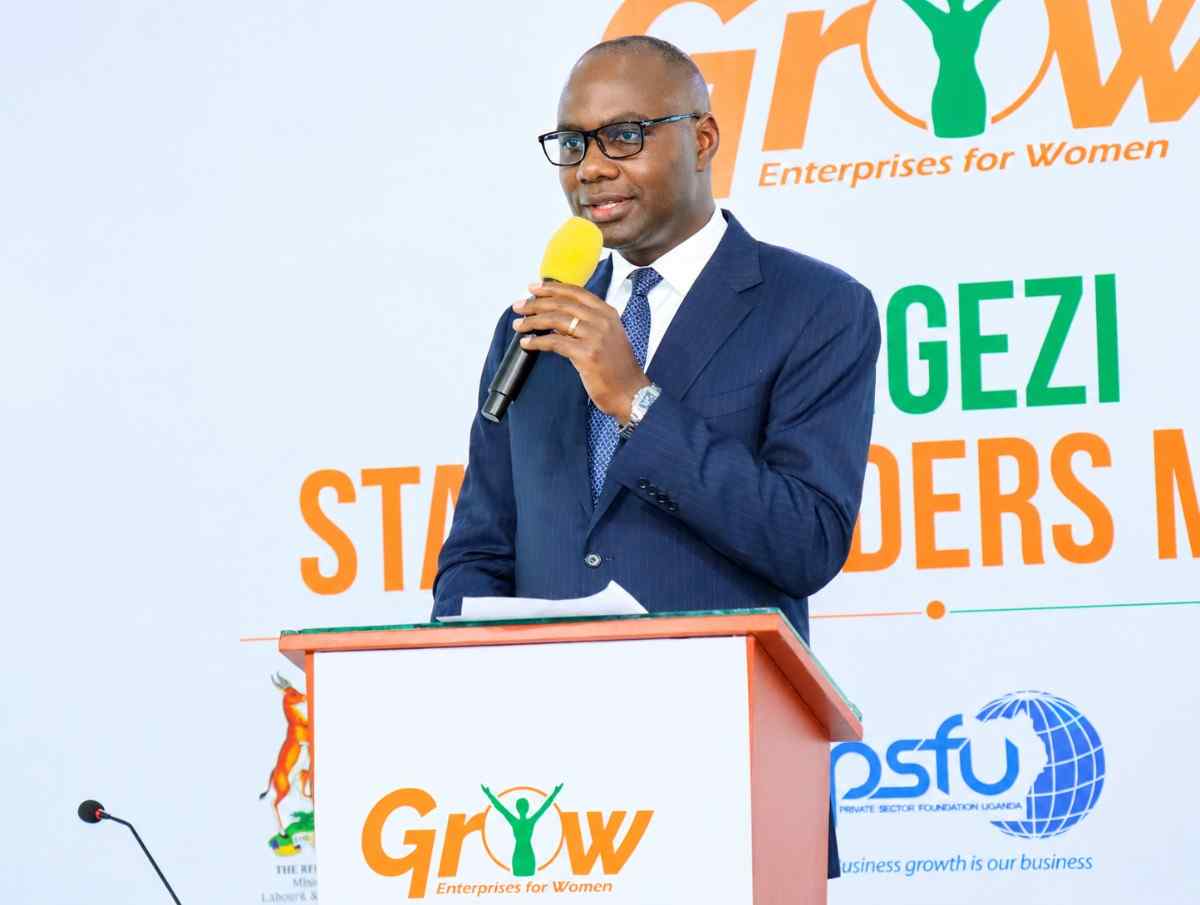
The Generating Growth Opportunities and Productivity for Women Enterprises (GROW) Project has brought the Government’s expenditure on wealth-creation programmes to a total of UGX 10.75 trillion over the past five years, Minister of Finance Henry Musasizi has revealed.
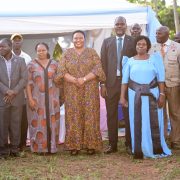
Musasizi was speaking at the GROW Stakeholders Meeting for the Kigezi sub-region, held at the Uganda National Institute for Teacher Education (UNITE), Kabale Campus.
The event aimed to assess progress in implementing the GROW Project in the six Kigezi districts: Kabale, Rubanda, Rukiga, Kisoro, Kanungu and Rukungiri.
Musasizi reiterated the Government’s resolve to bring every Ugandan household into the money economy through various wealth-creation programmes, which have received a total of UGX 10.75 trillion in the last five years.
He said the GROW Project alone had been capitalised with up to USD 217 million, which is a grant from the World Bank. The project targets women in business, with beneficiaries eligible for loans ranging from UGX 2 million to UGX 200 million. The loans carry an interest rate of 5–10%, depending on the borrower’s repayment performance.
The Minister explained that GROW seeks to address historical constraints affecting women-owned enterprises. It aims to improve access to affordable finance and entrepreneurial services, and to support women in transitioning from micro and small enterprises to medium-sized businesses.
Other major investments in wealth-creation programmes include UGX 4.4 trillion invested in the Parish Development Model (PDM) by June 2026. The programme covers 10,589 parishes across the country and has reached 3.57 million beneficiaries, according to the Minister. Investments in Emyooga program have reached UGX 760 billion, while the Agriculture Credit Facility has a total of UGX 1.35 trillion, reaching up to 14,000 projects and beneficiaries.
Musasizi noted that the Government had capitalised the Uganda Development Bank (UDB) to UGX 2.2 trillion, with another UGX 442 billion allocated in the current financial year.
Other programmes include the Small Business Fund, which supports small and medium-sized enterprises and has been capitalised at UGX 200 billion, with a maximum loan limit of UGX 500 million per borrower; the Large Farmer Support Fund, through which UGX 176 billion has been released to support private large-scale farmers; the Equity Investment Portfolio under UDC, valued at approximately UGX 1.4 trillion, generating more than 5,400 jobs in agro-processing, manufacturing and pharmaceuticals; and the Presidential Zonal Industrial Skilling Hubs, which now cover 19 operational zones.
“These initiatives demonstrate that the Government considers enterprise development and access to affordable finance essential for transforming household incomes, creating employment and building wealth for prosperity,” Musasizi said.
Speaking at the same event, State Minister for Gender, Labour and Social Development in charge of the elderly, Mrs Jacqueline Mbabazi, clarified that the GROW Project targets only women in business. She said the World Bank-funded project seeks to uplift up to 40% of Ugandan business enterprises owned by women.
She explained that a research report indicated that women’s businesses were making profits up to 30% lower than those of businesses owned by men, prompting the need for affirmative action.
The National Coordinator for the GROW Project, Dr Ruth Aisha Kasolo, said the Government had disbursed up to UGX 11.3 billion in the Kigezi region alone as of October 2026. Rukungiri received the largest share, at UGX 3.5 billion, followed by Kabale, with UGX 2.2 billion. She added that UGX 160 billion had been disbursed nationwide.
Dr Kasolo said that, under the GROW Project, beneficiaries would have their businesses registered and receive UNBS certificates free of charge.
However, stakeholders reported several challenges, including the limited presence of banks mandated to disburse GROW loans. In Kigezi, the loans are accessed through Able SACCO, Pearl Bank, Pride Bank and Centenary Bank, but Concerns were raised that these financial institutions do not have enough branches across the region.
In his submission, Kabale District Principal Assistant Secretary Manzi Gordon expressed concern that some marginalised groups, including the Batwa community, were struggling to access GROW funds because they lacked established businesses and faced other bureaucratic hurdles.
Meanwhile, Dr. Ruth Aisha Kasolo announced that the Stakeholder Meetings for the GROW Project would continue from Regional to District Level, across the Country, and the outcomes would guide further high level discussions at Policy Level.
###
What's your reaction?
You may also like

More in:Analysis
Uganda’s Cash Economy and the Bank of Uganda’s New Cash Withdrawal Limits
Opinion: Strengthening Uganda’s Anti-Corruption Systems

My Role is to Put Rubanda’s Needs in the Budget-Minister Musasizi

Minister Musasizi Monitors Government Projects, commissions Maternal Health Equipment