“We must end dependence on food imports” Prime Minister Nabbanja urges African leaders

Uganda’s Prime Minister Robinah Nabbanja has urged African leaders to prioritize self-reliance, innovation and climate resilience in the continent’s agricultural sector.
Nabbanja made the remarks while opening the African Union Extraordinary Assembly of Ministers of Agriculture. The meeting marks a critical milestone in the adoption of the Comprehensive Africa Agriculture Development Programme (CAADP) Strategy and Action Plan 2026-2035.
Nabbanja emphasized Africa’s potential to become food-secure, citing the continent’s vast natural resources, fertile soils and arable land. However, she lamented Africa’s dependency on food imports, which amounted to $100 billion in 2021.
“Africa is endowed with 65% of the world’s remaining uncultivated arable land, yet we spend $100 billion on food imports annually,” Nabbanja said. “Why should a continent so richly blessed with natural resources depend on others to feed itself? We must take decisive action to change this narrative.”
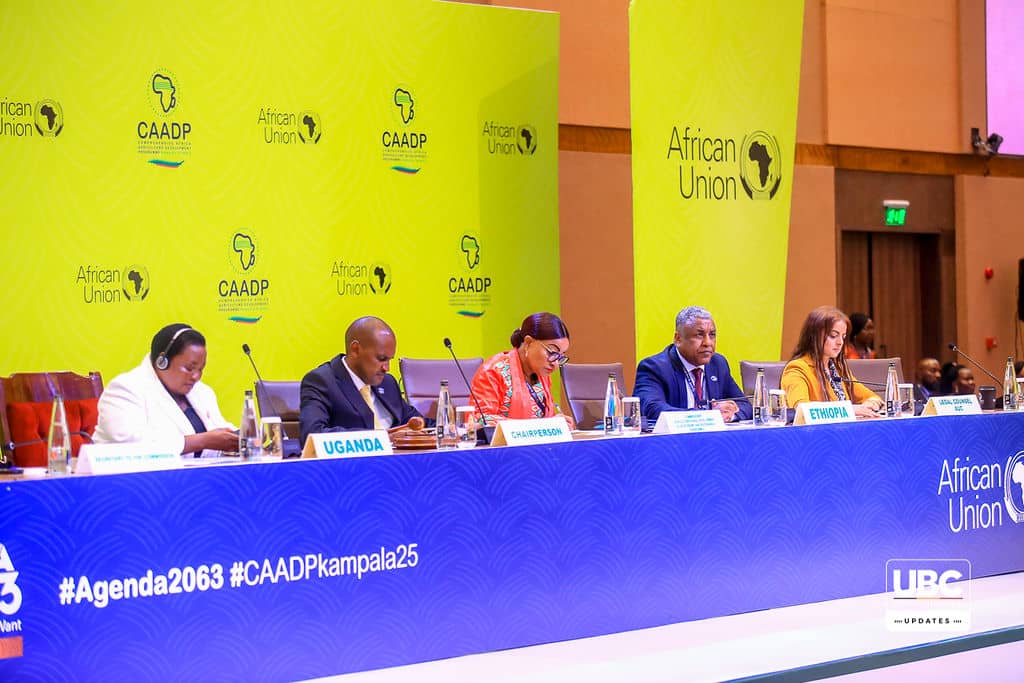
The CAADP Strategy and Action Plan 2026-2035 marks the third in a series of 10-year strategies aimed at achieving the goals set in the 2003 Maputo Declaration and Agenda 2063.
Nabbanja called for urgent reforms, noting the shortcomings highlighted in the 2023 biennial review of CAADP’s implementation. She urged ministers to guide the continent toward adjustments that would yield tangible results.
To transform Africa’s agricultural sector, Nabbanja proposed several measures, including policy reviews to enhance food security and nutrition, investment in research for improved seeds and livestock, and mechanization and irrigation to mitigate climate change impacts.
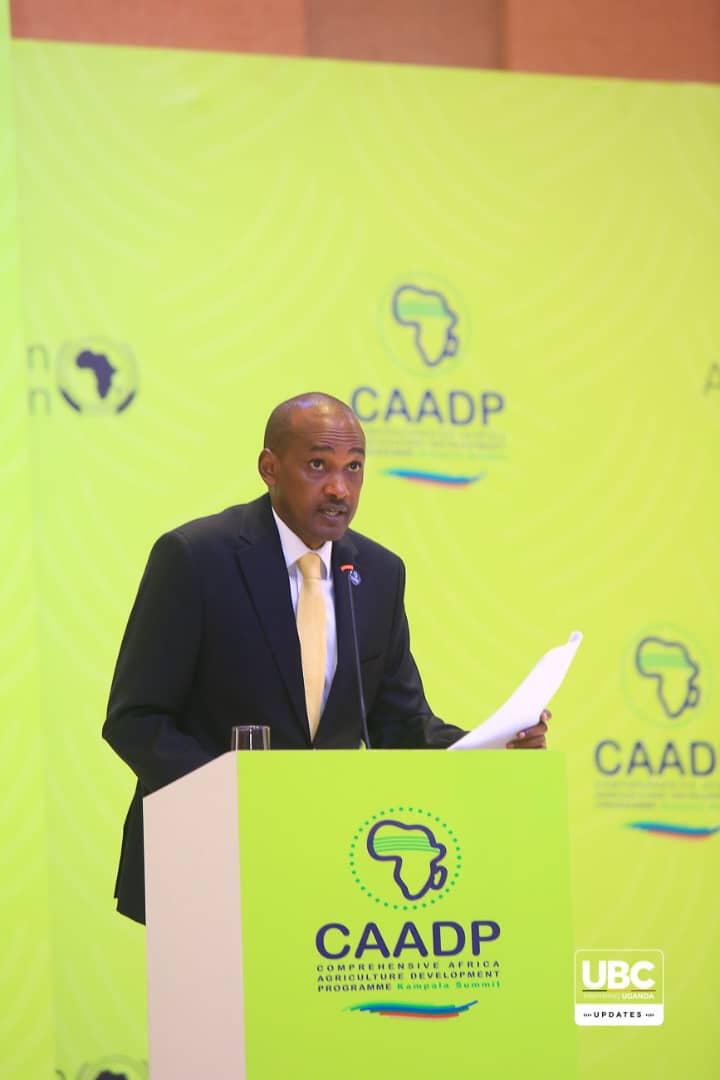
She also emphasized the need to mobilize for productivity, eliminate trade barriers, and add value to agricultural products. “We must take advantage of the African Continental Free Trade Area and stop exporting raw materials,” Nabbanja said. “Why not export finished and branded products from Africa?”
As the CAADP Strategy and Action Plan 2026-2035 moves toward adoption, Nabbanja urged ministers to channel their efforts into implementation, emphasizing collaboration across national, regional and continental levels.
“Let us work together in a complementary way to deliver the Africa we want,” she added.
Josefa Sacko, the Commissioner for Agriculture, Rural Development, Blue Economy, and Sustainable Environment at the African Union Commission, commented on the importance of the CAADP strategy.
“It aims to boost food production, expand value addition, boost intra-Africa trade, create millions of jobs for our youth and women, build inclusive agrifood value chains, and build resilient and sustainable agri-food systems that will withstand shocks and stressors now and in the future,” she said.
The summit will conclude on January 11 with a meeting of Heads of State and Government, where the CAADP Strategy and Action Plan is expected to be adopted.
Uganda’s Minister of Agriculture, Animal Industry, and Fisheries, Frank Tumwebaze, stressed the need to move into implementation of the strategy as soon as the summit ends.
“The planning phase of the Kampala CAADP Agenda ends during this Summit. We must, therefore, move into implementation and execution mode. It is by focusing on execution that we can make a meaningful impact to our continent and our people,” he said.
Ethiopia’s Minister of Agriculture, Girma Amente, highlighted his country’s efforts to implement the CAADP agenda. “Ethiopia has cascaded CAADP into the national agricultural investment plan, which emphasizes the importance of increasing public investment in agriculture,” he said.
The session is expected to produce actionable strategies for reducing Africa’s reliance on food imports, building climate-resilient agricultural systems, and unlocking the sector’s full potential.
What's your reaction?
You may also like
More in:Business

Personal care is not a gender issue. It is a matter of health, hygiene and self-confidence
AAYC, NIMD Explore Strategic Partnership to Advance Youth Leadership, Democracy and Peacebuilding

PRESIDENT MUSEVENI URGES SHEEMA FARMERS TO EMBRACE IRRIGATION, COMMERCIAL AGRICULTURE TO FIGHT POVERTY
PRESIDENT MUSEVENI URGES EUROPEAN INVESTORS TO TAP INTO UGANDA’S ECONOMIC OPPORTUNITIES