Business

Clean Energy Opportunities for Refugees: Apply Now for £10,000 Grants.

Kampala, Uganda – A call has gone out to refugee-led clean energy enterprises in Uganda, Kenya, and Ethiopia to apply for inclusive investment grants. The grants, worth up to £10,000 each (local currency equivalent), are aimed at supporting clean energy projects in displacement settings.

Ashden, a climate solutions charity, is administering the grants as part of its new ‘Inclusive Investment Pilots’ program. The program will support clean energy projects, such as solar power, clean cooking technology, and productive use renewable energy solutions, which are delivered by and serve refugees and displaced people.

Twelve grants are available, with six allocated to Uganda, three to Kenya, and three to Ethiopia. Successful applicants will also receive technical assistance and communications support to build their projects into revenue-generating energy delivery models.

According to Isona Shibata, Head of International Programmes at Ashden, “Ashden are pleased to expand our work on humanitarian energy access with grants to earlier stage renewable energy and clean cooking projects led by and for refugees and displaced people. There is an urgent need for support and financial inclusion of refugee entrepreneurs and refugee-led organisations.”

The grants are part of the Transforming Humanitarian Energy Access program, which is supported by the Aurora Trust and UK AID (through the Transforming Energy Access platform). The program aims to accelerate the transition to clean energy in displacement settings, where millions of people rely on firewood and charcoal for cooking and have limited access to electricity.

Clare Ballantine, Head of the Howden Foundation, which is providing funding for six of the Inclusive Investment Pilots in Uganda and Kenya, said, “We are excited to be involved as funders of this programme, which directly supports individuals in displacement settings and the organisations assisting them. Our focus is on empowering communities to adapt to the challenges of extreme heat and drought, including through solutions like solar irrigation and cooling as a service.”

The call for applications is now open, and refugee-led projects in Uganda, Kenya, and Ethiopia are encouraged to apply. The deadline for stage one applications is March 17, 2025.

What's your reaction?

Excited
1
Happy
1
In Love
0
Not Sure
0
Silly
0
The Scribe is Uganda's leading online local Newspaper. We are among the few surviving media outlets in Uganda that are still following media standards and ethics.
Email: editor@scribe.co.ug

You may also like

Comments are closed.

More in:Business

Business

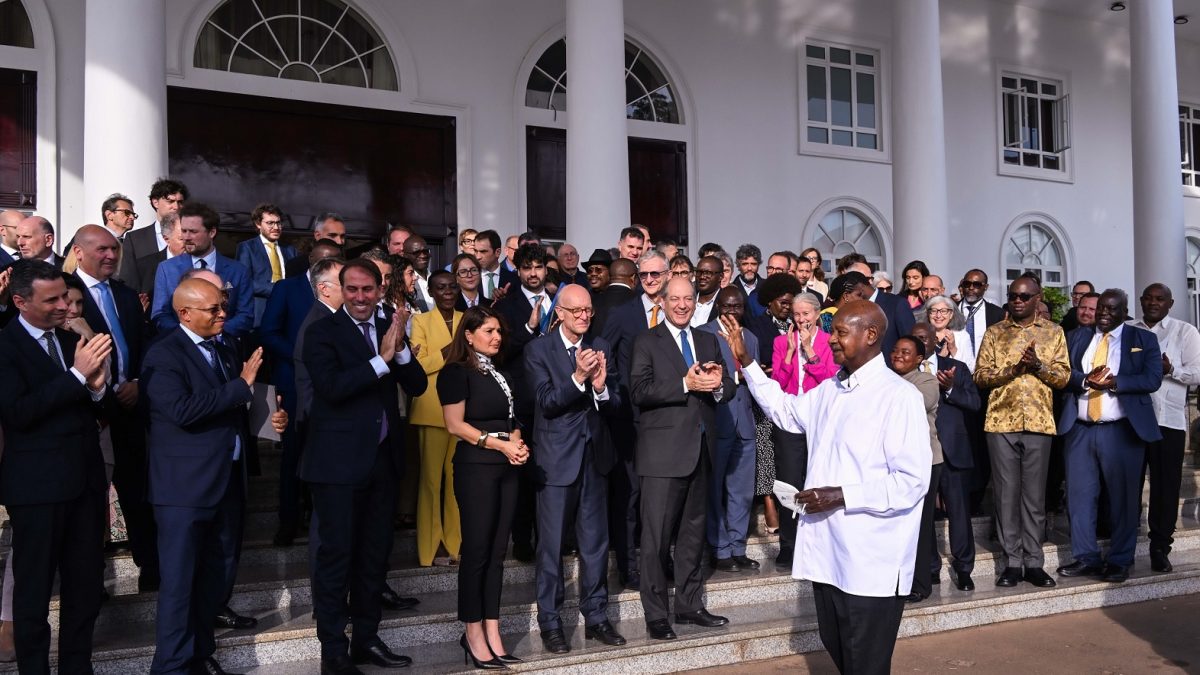
PRESIDENT MUSEVENI URGES EUROPEAN INVESTORS TO TAP INTO UGANDA’S ECONOMIC OPPORTUNITIES 
President Yoweri Kaguta Museveni has urged European investors to take advantage of Uganda’s economic opportunities, particularly in infrastructure, energy, manufacturing and agriculture, saying investment in productive sectors is key to expanding markets, creating jobs and accelerating economic transformation.    The President made the remarks today at State House Entebbe during a meeting with European Union Ambassadors and investors, where he highlighted Africa’s growing population and expanding market as a major opportunity for European businesses seeking investment and stronger economic partnerships. “This is what we have been advising our European friends to look at, because Africa is a big potential market with its fast-growing population,” he said. President Museveni attributed political instability in some African countries partly to identity-based politics, including tribalism, religious divisions and ideological misunderstandings, as well as a failure to appreciate the role of the private sector in driving economic growth. He said Uganda had learnt from these challenges and emphasised the need for a stable political and economic environment that enables private businesses to invest, expand production and create employment. The President welcomed ongoing and proposed European investments in Uganda, particularly in infrastructure and other productive sectors, saying such projects would strengthen economic links between Uganda and the European market. “All these projects are music to my ears. By constructing these projects here, you are linking the market of Uganda to that of Europe. Why can’t anyone see that?” he asked. On energy, President Museveni said the cost of electricity remained a critical factor in Uganda’s competitiveness, particularly for manufacturers seeking to produce goods at affordable prices. While welcoming private-sector investment in hydropower generation, he called for greater attention to electricity tariffs, arguing that affordable power was essential for industrial expansion and economic growth. He identified affordable electricity, railway transport and accessible financing for productive investments as key priorities for strengthening Uganda’s manufacturing sector. The President cited the Uganda Development Bank as an important source of financing for businesses engaged in productive activities, explaining that the government had retained the institution to support investments capable of expanding production and creating jobs. He also urged the European Investment Bank to channel more financing into strategic infrastructure, particularly railway development, electricity generation and distribution, and selected road projects. On road infrastructure, President Museveni encouraged European investors to explore opportunities in construction and financing models, including tolling arrangements where appropriate. The President also reaffirmed the government’s support for tax incentives aimed at attracting investment, particularly in manufacturing, and emphasised the importance of enabling eligible businesses to benefit from a 10-year tax holiday. ...