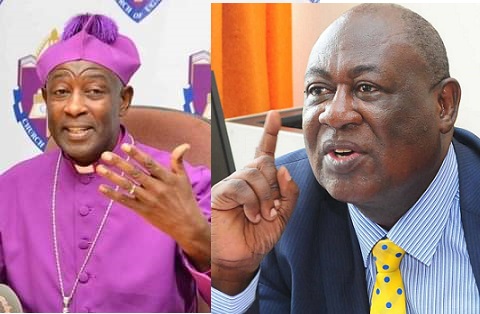
A major land dispute involving Uganda Christian University (UCU), the Church of Uganda, and the estate of prominent historical figure Hamu Mukasa has escalated after the State Minister for Lands, Dr. Sam Mayanja, directed the cancellation of a controversial freehold land title in Mukono District.
In a strongly worded letter copied to President Yoweri Museveni and several top government officials, Dr. Mayanja declared that the freehold title currently held by church-related entities over land at Ntawo was illegally issued and must be revoked immediately.
The dispute centers on land originally owned by the late Hamu Mukasa, one of Buganda’s most influential chiefs and a key historical figure during the colonial era.
According to documents reviewed by this publication, Mukasa granted a 99-year lease to the Governor of the Uganda Protectorate on July 6, 1927, effective July 1, 1927. The Governor subsequently subleased the land to the Registered Trustees of the Native Anglican Church.
Dr. Mayanja argues that the church’s interest was strictly leasehold in nature and legally subordinate to Mukasa’s original Mailo ownership.
However, in 1940, after the Church reportedly claimed the original lease certificate had been lost, authorities issued a Special Certificate of Title. Instead of replacing the leasehold documentation, a freehold title identified as Freehold Register Volume 57 Folio 16 was issued on December 2, 1940.
The minister described the issuance as “a clear administrative and legal error,” arguing that a sublease could not legally be transformed into freehold ownership while the superior Mailo interest still existed.
“The title was issued in error over a pre-existing Mailo interest and was irregularly granted following an application for a sublease certificate,” Dr. Mayanja stated.
The minister also dismissed arguments reportedly advanced by UCU and related entities claiming rights through adverse possession and Uganda’s 12-year limitation laws.
According to the letter, adverse possession can only arise where occupation occurs without the permission of the registered owner. Since the Church and UCU entered the property through lease and sublease arrangements, they acknowledged the superior ownership interest of the landlord and therefore cannot claim adverse possession.
“A party cannot claim adverse possession against a landlord while occupying the land under a leasehold interest,” the minister wrote.
He further noted that the original 99-year lease is due to expire in June 2026, after which the land would revert to the estate of the late Hamu Mukasa unless a new agreement is reached.
The dispute has also been marred by allegations of violence and unlawful activities.
Dr. Mayanja’s letter references reports accusing individuals associated with UCU of demolishing homes, destroying crops, desecrating burial grounds, assaulting residents, and damaging personal property including vehicles and motorcycles.
Additional allegations include unauthorized sand mining and brick-making activities on the contested land.
The minister did not indicate whether criminal investigations had formally commenced, but several security agencies were copied on the correspondence, including the Inspector General of Police, the Land Protection Unit, and Mukono District security officials.
Distinction Between Donated and Leased Land
In his guidance, Dr. Mayanja emphasized that while Hamu Mukasa donated substantial land to the Church in several areas including Nabuti Bugujju, Lweza, eSsi, Ndeeba Kayunga, and Nasuti the Ntawo land was never donated outright.
Instead, he maintained that the land was leased for a defined period and that attempts to convert the interest into permanent freehold ownership contradicted Mukasa’s intentions and Uganda’s land tenure laws.
The minister directed the Commissioner of Land Registration to initiate proceedings under Section 88 of the Land Act to cancel the freehold title and all derivative interests connected to it, including those allegedly held by UCU Holdings Ltd.
He further instructed that the land register be corrected to restore the Mailo ownership of the Estate of the late Hamu Mukasa.
In one of the most consequential directives contained in the letter, Dr. Mayanja ordered the immediate suspension of all UCU-related activities on the land pending resolution of the dispute.
The Mukono Resident District Commissioner (RDC) was instructed to ensure that UCU workers and agents vacate the property “in an orderly manner.”
He urged the Church to enter into good-faith negotiations with the administrators of the Mukasa estate to seek an amicable settlement before the lease expires in June 2026.
“In the absence of a resolution, the family should be at liberty to take possession of its property,” the minister warned.
The matter is expected to spark significant legal and political debate given the stature of the institutions involved and the sensitivity surrounding Mailo land ownership in Uganda.
The Church of Uganda and UCU Holdings Ltd had not publicly responded to the minister’s directives by press time.
What's your reaction?
You may also like


More in:Business

Personal care is not a gender issue. It is a matter of health, hygiene and self-confidence

AAYC, NIMD Explore Strategic Partnership to Advance Youth Leadership, Democracy and Peacebuilding
PRESIDENT MUSEVENI URGES SHEEMA FARMERS TO EMBRACE IRRIGATION, COMMERCIAL AGRICULTURE TO FIGHT POVERTY
PRESIDENT MUSEVENI URGES EUROPEAN INVESTORS TO TAP INTO UGANDA’S ECONOMIC OPPORTUNITIES