By Arinda Wilfred Nshekantebirwe | Opinion & Analysis
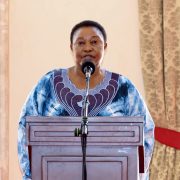
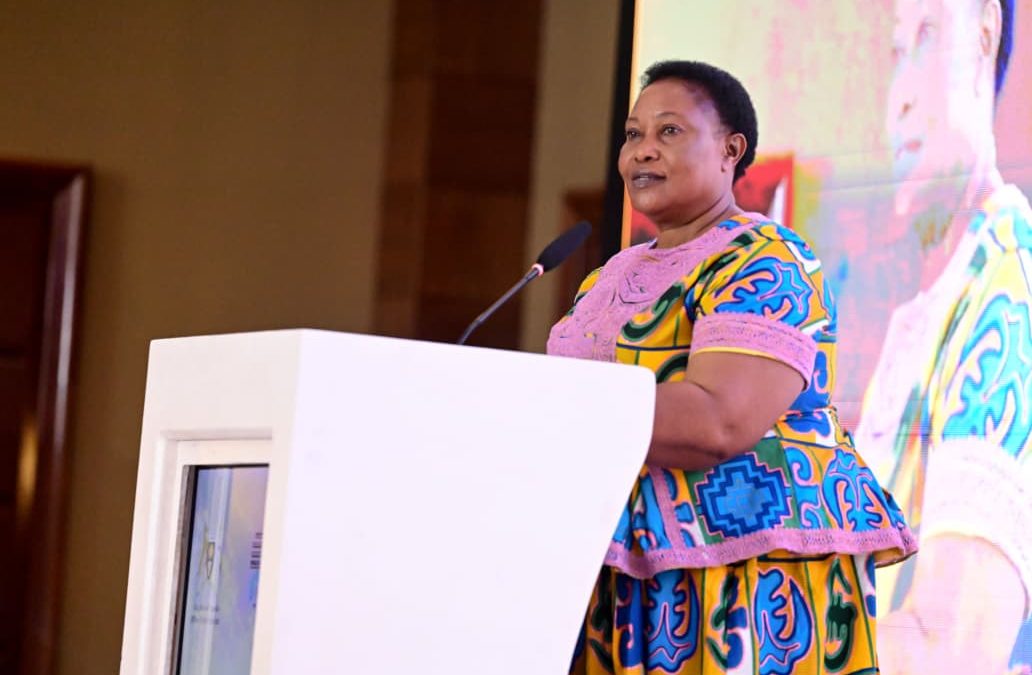
When President Yoweri Kaguta Museveni unveiled his new Cabinet for the 2026–2031 term, many names drew gasps, speculation, and debate. Some ministers were dropped. Others were shuffled. New faces were introduced. But one retention stood out not merely as a political formality, but as a deliberate, well-earned, and strategically sound decision: the reappointment of Hon. Babirye Milly Babalanda as Minister for the Presidency.
In a country where cabinet reshuffles often carry the scent of political reward and regional balancing, Babalanda’s reappointment smells different. It smells like performance. It smells like results. And it smells, frankly, like merit, a rare and refreshing aroma in the corridors of power.
Allow me to explain, comprehensively and without apology, for why Milly Babalanda was not just the obvious choice, but the only sensible choice to continue at the helm of one of Uganda’s most sensitive, most complex, and most constitutionally anchored ministries.
A Historic First: No Minister Before Her Has Done This
Let us begin with history, because history matters. Milly Babalanda is, by all documented accounts, the first minister ever to serve more than one full term in the Ministry of the Presidency. This is not a minor footnote. The Ministry of the Presidency has historically been a revolving door, a high-stakes, high-pressure post that grinds ministers down and chews through ambitions. Her predecessors came and went, often overwhelmed by the sheer breadth of the docket.
That Babalanda not only survived but thrived, and did so well enough to earn a second term, is proof about who she is as a leader. It is a rare combination of resilience, political astuteness, and genuine administrative capability. In a ministry that operates without even a State Minister to share the load, she carried the full weight of the docket alone and still delivered.
The historic nature of her reappointment must not be glossed over. History does not repeat itself out of sentiment. It repeats itself out of necessity.
The Constitutional Anchor: Why the Ministry of the Presidency Is Not Optional
Before we celebrate Babalanda’s achievements, we must first understand what she was actually managing, because many Ugandans still underestimate the constitutional weight of the Ministry of the Presidency.
The ministry’s very existence is rooted in the Constitution of the Republic of Uganda. Under Article 98, the President is the Head of State, Head of Government, and Commander-in-Chief of the Uganda Peoples Defence Forces — the Fountain of Honour. Under Article 99(3), executive authority is vested in the President, and he is responsible for the welfare of citizens, the safeguarding of the Constitution, and the laws of Uganda.
The Ministry of the Presidency exists to give that constitutional mandate operational reality. It is the administrative engine that converts presidential authority into ground-level action. It is not a ceremonial office. It is the backbone of the executive.
Under the ministry’s docket sits a formidable portfolio: oversight of Resident District Commissioners (RDCs), Resident City Commissioners (RCCs), their deputies, and assistants, a combined field structure of over 136 RDCs, 165 Deputy RDCs, 11 RCCs, and 11 Deputy RCCs spread across every corner of Uganda. Additionally, the ministry oversees institutions such as the Uganda AIDS Commission, the Uganda Printing and Publishing Corporation (UPPC), the Uganda Security Printing Company (USPC), the National Leadership Institute (NALI), the Manifesto Implementation Unit, and the Patriotism Corps.
This is not one ministry. This is, functionally, many ministries compressed into one, with zero State Minister support. The individual who runs it must be exceptional, or the entire architecture of presidential reach into the districts collapses.
Babalanda ran it. And she ran it well.
The RDC Revolution: Turning Eyes and Ears Into Hands and Feet
Perhaps Babalanda’s most transformative and visible achievement has been what she did with the Resident District Commissioner structure. When she inherited the office in June 2021, the RDC corps was a mixed bag, some diligent, many absent, and the overall structure lacking the cohesion that the Constitution demands of presidential representatives.
She changed that, systematically and unapologetically.
Under her watch, she institutionalized a culture of discipline, presence, and accountability among RDCs. She reminded them, repeatedly and firmly, that they are the eyes, ears, and now, more critically, the hands and feet of the President in every district. Absenteeism, which had become something of an unwritten perk of the posting, was confronted head-on. Officers who were supposed to be in their districts were expected to be in their districts, physically, not on WhatsApp.
She introduced regular capacity-building engagements, both physical and virtual through Zoom, turning what had previously been infrequent check-ins into systematic performance reviews. These were not photo opportunity workshops. They were, as those who attended described them, real accountability forums where targets were set, challenges were named, and delivery was demanded. RDCs came knowing they would be asked what they had done, not what they planned to do.
The results were tangible. RDCs across Uganda became more responsive, more proactive, and more embedded in their communities. Monitoring of government programmes like PDM, OWC, the Parish Development Model, improved significantly because the people mandated to monitor them were finally, reliably, in the field.
During the 2026 general elections, the coordination she had built within the RDC corps proved its value spectacularly. Under her leadership, RDCs and RCCs ensured peace, order, and lawful conduct throughout the electoral period in all regions of the country. There was a seamless security apparatus that brought together RDCs, the police, the army, and the Internal Security Organisation in a way that many electoral cycles before had failed to achieve. The result: the most peaceful general election Uganda had seen in years, and a resounding 71% victory for President Museveni, a number that did not fall from the sky, but was built, district by district, by a coordinated field structure that Babalanda had spent five years constructing.
To put it plainly: Museveni’s 71% had Babalanda’s fingerprints all over it.
A Ministry That Runs the Manifesto: The Accountability Architecture
One of the less celebrated but most consequential aspects of Babalanda’s tenure is how she strengthened the Manifesto Implementation Unit under her ministry. The Unit became under her watch a genuine accountability mechanism, tracking presidential commitments, measuring progress, and ensuring that campaign promises did not evaporate the morning after the election.
This matters enormously in the Ugandan governance context. Manifestos in many African democracies are aspirational documents that lose their urgency the moment voting closes. Under Babalanda, the Manifesto Implementation Unit bridged the dangerous gap between political promise and administrative reality. It gave the Presidency a credible answer to the question that citizens are always asking: “What happened to what was promised?”
This alignment with Vision 2040, Uganda’s long-term national development framework, also meant that the Ministry was not merely reactive, not just fire-fighting, but actively positioning the executive arm of government to deliver on generational goals.
Institutional Renewal: UPPC, USPC, Uganda AIDS Commission
Beyond the RDC structure, Babalanda oversaw a period of institutional renewal across the agencies under her docket.
At the Uganda Printing and Publishing Corporation (UPPC), the focus shifted towards modernization and financial discipline, making government printing services more efficient and self-sustaining, ending the era of bloated inefficiency that had characterized the institution.
At the Uganda Security Printing Company (USPC), improved service delivery in the issuance of driving permits and licenses brought accountability to processes that citizens interact with daily. The strengthening of secure printing accountability meant that some of the most sensitive government documents were produced with greater integrity.
At the Uganda AIDS Commission, Babalanda strengthened coordination and accountability in the HIV response, a matter of life and death for millions of Ugandans. In September 2023, UNAIDS formally recognized her contribution to Uganda’s HIV/AIDS fight with an international award, the kind of recognition that neither political connections nor good intentions alone can earn. Only results earn it.
The National Leadership Institute (NALI) continued to groom leaders in ideology and governance. The Patriotism Corps expanded its reach, instilling values among Uganda’s youth. These achievements, individually significant, collectively tell the story of a minister who understood that her mandate was institutional, not personal.
Integrity in an Era of Scandals: The Babalanda Standard
As Babalanda one time stated publicly: “I thank God that in the many scandals that have been registered in the country, where even intellectuals have been victims, your daughter Babalanda does not feature anywhere.”
This is not a trivial boast. In five years at the helm of a ministry with budgets, procurement processes, agency oversight, and a national field structure, the absence of scandal is in itself an achievement of enormous proportions. The Ministry of the Presidency handles sensitive state functions daily. That it did so under Babalanda without becoming a byword for corruption or misuse of office is a testament to the standard she set and the culture she cultivated.
She famously said, “I may not be rich, but I am contented with the chance you gave me to serve.” In an era when public service is frequently exploited for personal enrichment, that kind of contentment is not weakness, it is the rarest and most valuable form of public sector character.
The Daughter of the Soil Who Understands the Soil
There is something deeply important about Babalanda’s background that tends to be underappreciated in analytical circles: she comes from the grassroots, and she governs with a grassroots sensibility.
Born on 5 December 1970 in Nalinaibi Village, Kamuli District, she grew up navigating the hard realities of rural Uganda, limited education access, scarce resources, and the invisible ceiling that society places on women from modest backgrounds. She has described herself as “a daughter of the soil,” and that self-description is not political posturing. It is biographical truth.
This background matters because the Ministry of the Presidency, at its most fundamental level, is about connecting presidential authority to ordinary citizens in ordinary districts. A minister who has lived that reality, who knows what it means when government programmes don’t arrive, when RDCs are absent, when development is a rumour, governs differently from one who has only read about it. Babalanda governs with her feet on the ground even when her desk is in Kampala.
President Museveni recognised this early. He once noted that he first encountered Milly Babalanda through her grassroots work with women’s groups in Busoga, and that organic, community-rooted origin of her political career explains why her management style has always prioritised field presence and last-mile delivery over bureaucratic report-writing.
Why Continuity Is Not Laziness: The Strategic Logic of Retention
Critics of Babalanda’s reappointment might argue that retaining the same minister is the path of least resistance, a safe, uncreative choice. This argument misunderstands governance.
In a ministry as complex and relationship-dependent as the Presidency, where trust between the Minister, the RDC corps, the institutional heads, and the President himself has been built over five deliberate years, replacing the minister simply for the sake of change would be reckless, not bold.
Governance is not a reality television show. Continuity of competent leadership is a public good. The systems Babalanda built, the culture she cultivated, the relationships she forged with hundreds of RDCs across Uganda, these cannot be transferred in an orientation session. They are the product of sustained, deliberate, personal engagement over years.
Reappointment, in this case, is not routine. As those who work in the ministry have noted, it is a strategic choice, a recognition that the work done in the last term met the President’s expectations, and that the architecture being built for the 2026–2031 term requires the same architect.
The Challenges Ahead: High Bars and Higher Expectations
Fairness demands acknowledging that Babalanda’s second term will not be a victory lap. The challenges facing the Ministry of the Presidency in the 2026–2031 period are formidable.
The Parish Development Model (PDM): President Museveni’s flagship poverty reduction programme, will require more intensive monitoring than ever before, and the RDC structure will be the primary monitoring mechanism. Leakages, misappropriation, and poor targeting have already been documented in some areas, and the Ministry must tighten oversight significantly.
The digital transformation of public service delivery demands that the RDC corps, many of whom come from a generation more comfortable with physical engagement than digital tools, be equipped and empowered to operate in an increasingly digital governance environment.
The RDC welfare question also remains live. Some RDCs still operate without adequate office space, transport, and logistical support, a matter Babalanda has begun to address through phased construction of offices and provision of vehicles, but which requires sustained political and budgetary commitment.
And perhaps most profoundly, the ministry must continue to navigate its inherently dual nature, it is simultaneously administrative and political, both a service delivery overseer and a political mobilisation structure. Managing that duality with integrity, so that the constitutional mandate is not subordinated to partisan interests, will define whether this second term surpasses the first.
The bar is high. Babalanda set it herself.
Not Just the Right Person
Milly Babalanda’s reappointment as Minister for the Presidency is one of the most defensible decisions in President Museveni’s 2026 cabinet formation. It is defensible not on grounds of loyalty alone, not on the basis of regional arithmetic, not as a reward for political service, though all of these may have played their part. It is most powerfully defensible on the basis of documented, measurable, institutionally grounded performance.
She transformed an underperforming RDC corps into the most coordinated presidential field structure Uganda has seen in decades. She protected her institution from scandal in an environment where scandal is pervasive. She earned international recognition for her work on HIV/AIDS. She built systems that outlasted individual appointments and created accountability architectures that serve Vision 2040. She did all of this as the sole minister in a docket that demands the energy of three.
And she did it as a daughter of the soil, carrying the weight of ordinary Ugandans’ expectations with the discipline of someone who has never forgotten where she came from.
The reappointment was right. The person is right. And Uganda, if it pays attention, should be grateful.
The author is the LC5 Male Workers’ Councillor for Rubanda District wilfredarinda@gmail.com
###
What's your reaction?
You may also like
More in:National
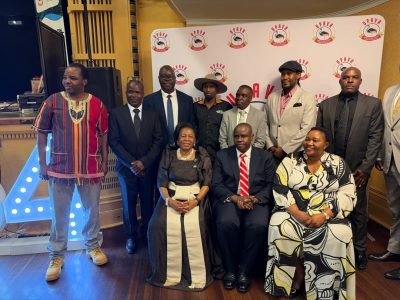
Minister Babalanda Urges Ugandans in Diaspora to Invest at Home and Champion Uganda’s Global Image
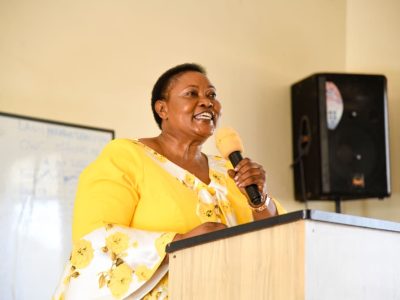
Minister Babalanda Roots for Coordination, Accountability to Drive Wealth-Creation
We Must Honor the Builders of PLU in Western Uganda
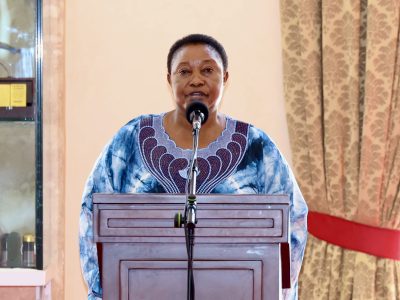
64TH INDEPENDENCE ANNIVERSARY: Minister Babalanda Calls for Economic Independence and Stronger Anti-Corruption Drive