How Akatare Is Rewriting Uganda’s Agricultural Trade — and Why Africa Must Pay Attention
Imagine working from sunrise to sunset, tending your land through drought and rain, harvesting a crop that could feed thousands and walking away with barely enough to cover your costs.
This is the lived reality of millions of Ugandan farmers. The problem is not the land. It is not the farmer. It is the broken, opaque chain sitting between the producer and the market.
Into this gap steps Akatare a bold, Ugandan-built digital agricultural marketplace connecting farmers directly to buyers, standardizing how produce is measured and traded, and opening doors to markets most small-scale producers could only dream of.
Behind it is an unlikely but compelling figure: RS Lawrence, known in Uganda’s music scene as Resistance Lawrence an artist, entrepreneur, and founder of Nengo Innovations Co. Ltd and Reslaw Group Ltd who has turned his years on the ground in Uganda’s agricultural value chain into a platform with continental ambitions.

The Problem Stealing Billions From African Farmers
RS Lawrence spent years sourcing produce from farming communities across Uganda — from Nakifuma to Mbarara, from Kabale to Kapchorwa supplying institutions including Uganda Christian University.
What he witnessed was a systemic swindle hiding in plain sight. Commodities like sweet potatoes, matooke, cassava, rice, yams, watermelons, and avocados were being bought from farmers in sacks and heaps, then sold to consumers in kilograms with the value captured in between going to everyone except the farmer.
Many farmers work tirelessly throughout the season yet earn far less than they deserve because of how agricultural products are traded. If transactions were based on standard measurements and supported by a transparent marketplace, farmers would be much better positioned to earn fairly for their efforts.
What Akatare Does — And Why It Opens Borders
Accessible at www.akatare.com, Akatare is more than a marketplace it is a market infrastructure. It enables farmers to create digital agricultural stores, showcase produce, connect directly with buyers, and access local and international markets beyond their immediate communities.
Verified profiles build credibility and attract sustained business. Young Ugandans and the unemployed gain an accessible entry point into the agricultural economy.
The platforms impact extends far beyond Uganda. Africa holds approximately 60 percent of the worlds uncultivated arable land, yet accounts for only a fraction of global agricultural trade not because the produce is lacking, but because the market infrastructure to move it has been absent.
Akatare attacks that gap directly. A verified farmer in Kapchorwa with consistent product listings and a track record of fulfilled orders becomes a credible supplier visible to buyers in Nairobi, Dubai, or London. The digital store does not sleep. It works while they tend their land.
At the continental level, Akatare offers precisely the ground-level trade infrastructure that the African Continental Free Trade Area (AfCFTA) needs but rarely finds. Policies without platforms are just ambitions. Akatare is the platform.
The Call to Government and Partners
Ugandas government has long declared agriculture the backbone of the national economy. Here is a privately funded, homegrown innovation that has done what many government-commissioned platforms have not: it has actually been built, launched, and made accessible.
It has the potential to directly increase farmer incomes, expand export volumes, generate tax revenue, and create employment for young Ugandans.
What Akatare needs from government is not charity it is partnership: policy integration, farmer onboarding through extension services, rural connectivity investment, and institutional procurement channeled through verified platforms. Development partners, agribusinesses, and impact investors are equally called upon.
RS Lawrence is explicit that Akatare needs more than funding. The platform requires physical support: agricultural equipment to boost farmer productivity, storage and logistics facilities to reduce post-harvest losses, and technical infrastructure to scale across Uganda and the continent.
What we are building is not just a website. It is an ecosystem. And ecosystems need more than one input to thrive. We need partners who understand that the digital side of this platform is only as strong as the physical agricultural infrastructure supporting the farmers using it — not only in Uganda, but on every corner of African soil.
A Revolution Rooted in Mukono — Reaching for the Continent
Great transformations do not always announce themselves loudly. Sometimes they begin with a musician and entrepreneur from Mukono who spent too many years watching farmers get underpaid and decided to do something about it. RS Lawrence has built Akatare. The platform is live. The farmers are there. The produce is there. The global appetite for African agricultural goods
is growing.
If you are a farmer in Uganda, Kenya, Tanzania, Ghana, Nigeria, anywhere on this continent this platform is built for you. Akatare gives you a storefront that never closes, a price that reflects what your produce is actually worth, and access to buyers you would never have met at the trading post.
What remains is the collective will of governments, investors, development
partners, and ordinary Africans to show up and build this into what it can be.
The farmer has always done their part. Now it is time for everyone else to do theirs.
Register. Connect. Trade. Grow.
Akatare: www.akatare.com | Nengo Innovations Co. Ltd: www.nengoholdings.com
Reslaw Group Ltd: www.reslawgroup.com | RS Lawrence: www.rslawrence.com
What's your reaction?
You may also like


More in:Business

From Fragmented Processes to Integrated Operations: CINAT Technologies Launches GRIND ERP
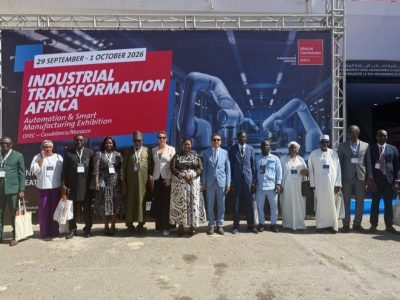
Minister Babalanda Calls for Investment and Industrial Partnerships to Accelerate Uganda’s Transformation at ITAF 2026 Casablanca, Morocco
From 5.2 to 8.6 litres: How NAGRC is unlocking the Ankole’s milk potential
dfcu Deepens Dialogue with Ndeeba Entrepreneurs Through Kyusa Level SME Dine-Out