NationalNEWSPoliticsUganda

Kampala’s Future on Trial: NRM and NUP Head to Court Over Local Council Power

The fight for Kampala goes to the court room; Between NRM and NUP, who will rule the Capital City for the next 5 years?

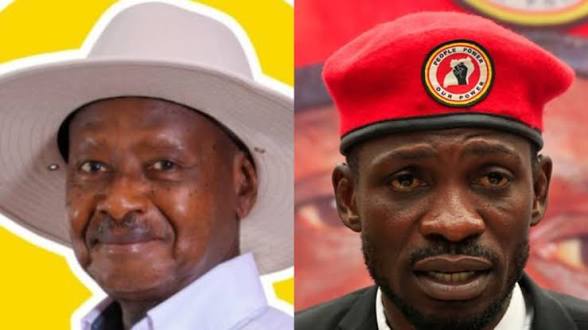
The contest for Kampala’s local council electoral positions in the recently concluded elections was majorly between the ruling party NRM under the leadership of His Excellency the President of Uganda Y.K. Museveni and the young National Unity Platform led by Hon. Robert Kyagulanyi Ssentamu a.k.a Bobi Wine.

Of the 35 seats at City Hall; NRM has 16 seats while NUP has 19 including the Lord Mayor and the Speaker, of 48 seats in Makindye, NRM has 22 including the mayor and speakership, NUP has 17, of the 42 seats in Central, NRM has 32, NUP 5, Of the 39 seats in Kawempe: NRM has 29 and the speakership and NUP has 5 plus the Chairperson, of the 44 seats in Rubaga, NRM has 12, NUP 20 with the mayor and speakership while of the 48 seats in Nakawa, NRM has 23, and NUP has 12 plus the Mayor.


94 petitions have been filed in magistrate courts and 17 in high court from Kampala alone out of the 346 petitions countrywide. Courts are known to overturn results, set aside elections and declare winners for different reasons caused by the contestants or the electoral commission during the election process and declaration of results. Thus in election petitions, it is the aggrieved candidate suing the declared candidate and the electoral commission and the two have to defend the result.


The Judiciary has created special court sittings to expeditiously hear and conclude these


petitions within 60 days from September 14, 2026 to November 13, 2026. Judiciary has


deployed 100 judicial offices: 48 judges and 52 magistrates deployed according to the number


of cases at each station.


Of the 157 petitions filed in High court (by members of parliament and LC III and V


Chairpersons) 17 cases are from Kampala, while of the 189 petitions filed in magistrate courts


(councilors) 94 are in Kampala. Clearly Kampala’s local council elections were highly


contentious compared to the rest of the country.


Whoever makes the decisions in the divisions in the Capital City is in charge of the city. Fairly


stated, the party with the highest number of seats in the different local councils makes the


decisions there. This affects developments plans and implementation of government programs


in the city thus the significance of battle for the local council seats soon commencing in courts.


This is a place to watch for the political analysts for the next 60 days as it will shape the political


landscape of Kampala. Will it be NRM or NUP to rule the Capital City?

What's your reaction?

Excited
0
Happy
0
In Love
0
Not Sure
0
Silly
0

You may also like

Comments are closed.

More in:National

Business

PRESIDENT MUSEVENI URGES EUROPEAN INVESTORS TO TAP INTO UGANDA’S ECONOMIC OPPORTUNITIES 
President Yoweri Kaguta Museveni has urged European investors to take advantage of Uganda’s economic opportunities, particularly in infrastructure, energy, manufacturing and agriculture, saying investment in productive sectors is key to expanding markets, creating jobs and accelerating economic transformation.    The President made the remarks today at State House Entebbe during a meeting with European Union Ambassadors and investors, where he highlighted Africa’s growing population and expanding market as a major opportunity for European businesses seeking investment and stronger economic partnerships. “This is what we have been advising our European friends to look at, because Africa is a big potential market with its fast-growing population,” he said. President Museveni attributed political instability in some African countries partly to identity-based politics, including tribalism, religious divisions and ideological misunderstandings, as well as a failure to appreciate the role of the private sector in driving economic growth. He said Uganda had learnt from these challenges and emphasised the need for a stable political and economic environment that enables private businesses to invest, expand production and create employment. The President welcomed ongoing and proposed European investments in Uganda, particularly in infrastructure and other productive sectors, saying such projects would strengthen economic links between Uganda and the European market. “All these projects are music to my ears. By constructing these projects here, you are linking the market of Uganda to that of Europe. Why can’t anyone see that?” he asked. On energy, President Museveni said the cost of electricity remained a critical factor in Uganda’s competitiveness, particularly for manufacturers seeking to produce goods at affordable prices. While welcoming private-sector investment in hydropower generation, he called for greater attention to electricity tariffs, arguing that affordable power was essential for industrial expansion and economic growth. He identified affordable electricity, railway transport and accessible financing for productive investments as key priorities for strengthening Uganda’s manufacturing sector. The President cited the Uganda Development Bank as an important source of financing for businesses engaged in productive activities, explaining that the government had retained the institution to support investments capable of expanding production and creating jobs. He also urged the European Investment Bank to channel more financing into strategic infrastructure, particularly railway development, electricity generation and distribution, and selected road projects. On road infrastructure, President Museveni encouraged European investors to explore opportunities in construction and financing models, including tolling arrangements where appropriate. The President also reaffirmed the government’s support for tax incentives aimed at attracting investment, particularly in manufacturing, and emphasised the importance of enabling eligible businesses to benefit from a 10-year tax holiday. ...