By Akansasira Junior Victor.
“What we have once enjoyed deeply we can never lose. All that we love deeply becomes a part of us.”* Helen Keller, The Open Door, 1957
For nearly two centuries, the history of Tooro Kingdom has been a story of courage, succession struggles, colonial disruption, abolition, restoration and resilience. From the daring decision of Prince Kaboyo to break away from Bunyoro in the nineteenth century to the extraordinary reign of King Oyo Nyimba Kabamba Iguru Rukidi IV, Tooro’s monarchy has survived moments when the crown appeared strong and others when it nearly disappeared.
The modern Kingdom of Tooro was founded around 1830 by Omukama Kaboyo Olimi I Kasunsunkwanzi, a son of Omukama Kyebambe III of Bunyoro. Kaboyo broke away from Bunyoro and established an independent kingdom, carrying with him the traditions of the Babiito dynasty. Tooro’s own historical account traces the region’s earlier political heritage through the legendary Batembuzi and Bachwezi traditions before the rise of the Babiito dynasty.
The first Omukama, Kaboyo Olimi I (c.1822/1830–1861), laid the foundation of the kingdom. He was succeeded by Kazana Ruhaga I (1861–1866), whose reign ended violently after he was reportedly killed during a succession struggle involving his brother. Nyaika Kasunga Kyebambe I ruled first from 1866–1871, followed briefly by Kato Rukidi I in 1871, before Nyaika returned from 1871–1872. The throne then passed rapidly through Olimi II (1872–1875), Rukidi II (1875), Kyebambe II/Rubuubi (1875), Kakende Nyanuyonjo (1875–1876), Katera (1876–1877), Rubuubi again (1877–1879) and Kakende again (1879–1880). This turbulent period demonstrated one of Tooro’s historical weaknesses: intense royal succession disputes and instability around the throne.
The kingdom’s greatest nineteenth-century setback came when Omukama Kabalega of Bunyoro temporarily reconquered Tooro. For a period, Tooro lost its independence and was absorbed back into Bunyoro-Kitara. Yet history would again turn. Prince Daudi Kasagama Kyebambe IV, who had escaped, was restored to the throne in the 1890s with British support. His reign, generally recorded as 1891–1928, restored Tooro but also ushered the kingdom into the colonial order, where British influence came at the cost of loyalty obligations, taxation and concessions over resources.
Kasagama was succeeded by Sir George David Matthew Kamurasi Rukidi III (1928–1965), whose long reign provided relative continuity during the colonial and early independence periods. He was followed by his son, Patrick David Matthew Kaboyo Rwamuhokya Olimi III (1965–1995). However, Olimi III inherited a crown entering one of its darkest political moments. In 1967, the government of President Milton Obote abolished Uganda’s traditional kingdoms. The Omukama remained part of the royal heritage, but the institution itself lost official constitutional recognition and its properties were confiscated.
The restoration of traditional institutions in 1993 reopened the gates of history. Uganda’s Traditional Rulers (Restitution of Assets and Properties) legislation provided for the restoration of confiscated assets and properties connected to traditional rulers. Olimi III therefore witnessed the rebirth of Tooro as a cultural institution before his death on August 26, 1995.
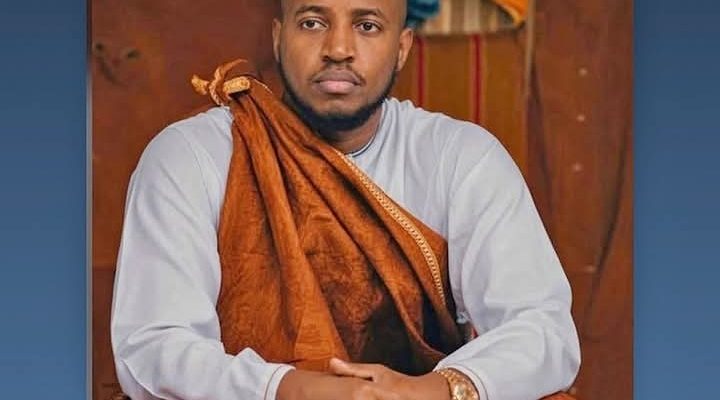
His death brought the crown to perhaps its most remarkable ruler: his three-year-old son, Oyo Nyimba Kabamba Iguru Rukidi IV. Oyo was enthroned on September 12, 1995, becoming the world’s youngest reigning monarch, according to the recognition associated with his reign. Because of his age, regents and the Queen Mother, Best Kemigisa, played critical roles in guiding the young king until he assumed greater responsibility as an adult.
King Oyo’s greatest achievement was perhaps transforming the image of a traditional monarch for a younger generation. His reign promoted cultural preservation, youth empowerment, education, agriculture, tourism, health and environmental protection. In 2021, he launched Tooro Kingdom Vision 2045, a long-term development framework focusing on culture, skills development, poverty reduction, employment, agriculture, tourism, health, HIV/AIDS prevention and environmental conservation. His model farm initiatives and youth vocational programmes reflected an important philosophy: that cultural leadership should also inspire economic productivity.
Oyo also used his international visibility for public health advocacy. He was appointed a UNAIDS cultural champion/envoy in 2016, using his platform to engage young people on HIV/AIDS prevention and health awareness. During his reign, the crown increasingly became associated not merely with royal ceremony, but with development-oriented cultural leadership.
Yet every reign has its limitations. One criticism of modern cultural institutions is that ambitious visions can remain stronger on paper than in measurable implementation. Tooro’s Vision 2045 therefore requires stronger institutional systems, transparent monitoring, sustainable financing and measurable outcomes. Youth unemployment, poverty, land pressures, environmental degradation and unequal development across the kingdom remain challenges that cannot be solved through symbolism alone.
Today, however, history has taken another dramatic turn. King Oyo died on August 27, 2026, aged 34, while receiving medical treatment in the United States, according to reports confirmed by the Tooro Kingdom leadership and widely reported internationally. The cause of death has not been publicly announced. His death ended a reign of more than three decades and brought profound grief to Tooro, Uganda and admirers of traditional institutions across Africa. The Kingdom’s Prime Minister stated that the royal line would continue and that Oyo had left behind a Prince whose identity would be revealed according to Tooro customs and traditions.
The next Omukama will inherit not simply a throne, but a responsibility. The expectation is to unite all clans and communities, protect the Rutooro language and heritage, accelerate Vision 2045, empower young people, strengthen tourism and agriculture, preserve the environment and build stronger partnerships without compromising the dignity and independence of the kingdom.
King Oyo’s story teaches a powerful lesson: a crown is inherited, but a legacy is built. From Kaboyo’s courageous breakaway to Oyo’s youthful and globally recognised reign, Tooro Kingdom has repeatedly risen after adversity. The next king must therefore preserve the past without becoming imprisoned by it. He must respect tradition while understanding technology, speak for elders while listening to youth, and wear the crown not as an ornament of privilege, but as an instrument of service.
As Tooro mourns King Oyo, the sacred drum of history does not fall silent. It waits for the next generation to answer its call.
Farewell Ndugu Oyo Nyimba!
Akansasira Junior Victor,
Researcher/ Writer.
0702969211
What's your reaction?
You may also like
More in:NEWS
Sironko NRM Boss Hajji Lumolo Injects in UGX 10 Million to Fuel MK Endorsement Rally in Mbale
PRESIDENT MUSEVENI URGES EUROPEAN INVESTORS TO TAP INTO UGANDA’S ECONOMIC OPPORTUNITIES
“Don’t Call me Over Verification” Tayebwa Tells Parliament Staff