Uganda
Man Lynched by Mob After Allegedly Defiling 16-Year-Old Girl in Rukungiri

Crime scene
By Arinda Nsheka
A 20-year-old man, Wilber Ariho, has been lynched by a mob in Rukungiri, Uganda, after he allegedly defiled a 16-year-old girl. The incident occurred on January 16th, 2024, at around 7:30 PM in Kashanda village, Nyarushanje parish, Rukungiri district.
According to a statement issued by the Kigezi Regional Police Spokesperson, ASP Elly Maate, the victim, a pupil at Nyabushenyi Upper Primary School, was alone at home preparing supper when Ariho, along with another man identified as Ezra Ekyorikunda, found her.
The two men allegedly overpowered the girl, with Ekyorikunda covering her mouth while Ariho proceeded to defile her in a nearby valley. After the assault, the victim managed to escape and return home, where she revealed what had happened.
News of the attack spread quickly, and on the morning of January 17th, a mob of villagers set out to hunt down Ariho and Ekyorikunda. They managed to find both men and subjected them to a severe beating. Ariho unfortunately succumbed to his injuries, while Ekyorikunda was rescued by police and is currently under arrest.
The police have registered cases of defilement and murder by mob justice at Rubabo Police Station. The body of Ariho has been taken to Kisizi Hospital mortuary for a postmortem examination.
“Inquiries are at hand,” concluded ASP Maate in the statement
What's your reaction?
Excited
0
Happy
0
In Love
0
Not Sure
0
Silly
0
You may also like
More in:Uganda
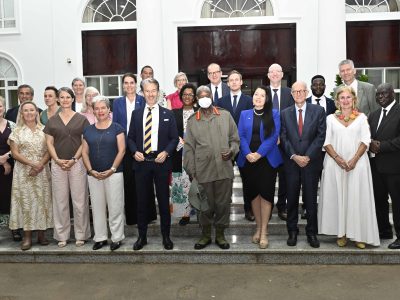
PRESIDENT MUSEVENI URGES EUROPEAN INVESTORS TO TAP INTO UGANDA’S ECONOMIC OPPORTUNITIES
President Yoweri Kaguta Museveni has urged European investors to take advantage of Uganda’s economic opportunities, particularly in infrastructure, energy, manufacturing and agriculture, saying investment in productive sectors is key to expanding markets, creating jobs and accelerating economic transformation. The President made the remarks today at State House Entebbe during a meeting with European Union Ambassadors and investors, where he highlighted Africa’s growing population and expanding market as a major opportunity for European businesses seeking investment and stronger economic partnerships. “This is what we have been advising our European friends to look at, because Africa is a big potential market with its fast-growing population,” he said. President Museveni attributed political instability in some African countries partly to identity-based politics, including tribalism, religious divisions and ideological misunderstandings, as well as a failure to appreciate the role of the private sector in driving economic growth. He said Uganda had learnt from these challenges and emphasised the need for a stable political and economic environment that enables private businesses to invest, expand production and create employment. The President welcomed ongoing and proposed European investments in Uganda, particularly in infrastructure and other productive sectors, saying such projects would strengthen economic links between Uganda and the European market. “All these projects are music to my ears. By constructing these projects here, you are linking the market of Uganda to that of Europe. Why can’t anyone see that?” he asked. On energy, President Museveni said the cost of electricity remained a critical factor in Uganda’s competitiveness, particularly for manufacturers seeking to produce goods at affordable prices. While welcoming private-sector investment in hydropower generation, he called for greater attention to electricity tariffs, arguing that affordable power was essential for industrial expansion and economic growth. He identified affordable electricity, railway transport and accessible financing for productive investments as key priorities for strengthening Uganda’s manufacturing sector. The President cited the Uganda Development Bank as an important source of financing for businesses engaged in productive activities, explaining that the government had retained the institution to support investments capable of expanding production and creating jobs. He also urged the European Investment Bank to channel more financing into strategic infrastructure, particularly railway development, electricity generation and distribution, and selected road projects. On road infrastructure, President Museveni encouraged European investors to explore opportunities in construction and financing models, including tolling arrangements where appropriate. The President also reaffirmed the government’s support for tax incentives aimed at attracting investment, particularly in manufacturing, and emphasised the importance of enabling eligible businesses to benefit from a 10-year tax holiday. ...
“Don’t Call me Over Verification” Tayebwa Tells Parliament Staff
Deputy Speaker of Parliament Thomas Tayebwa has cautioned parliamentary staff and MPs against seeking his ...
HON.MILLY BABALANDA: Ugandans in the Diaspora are Strategic Partners for National Development
Uganda’s socio-economic transformation requires the collective effort of all citizens, wherever they live. Our diaspora ...