By Wilfred Arinda Nshekantebirwe
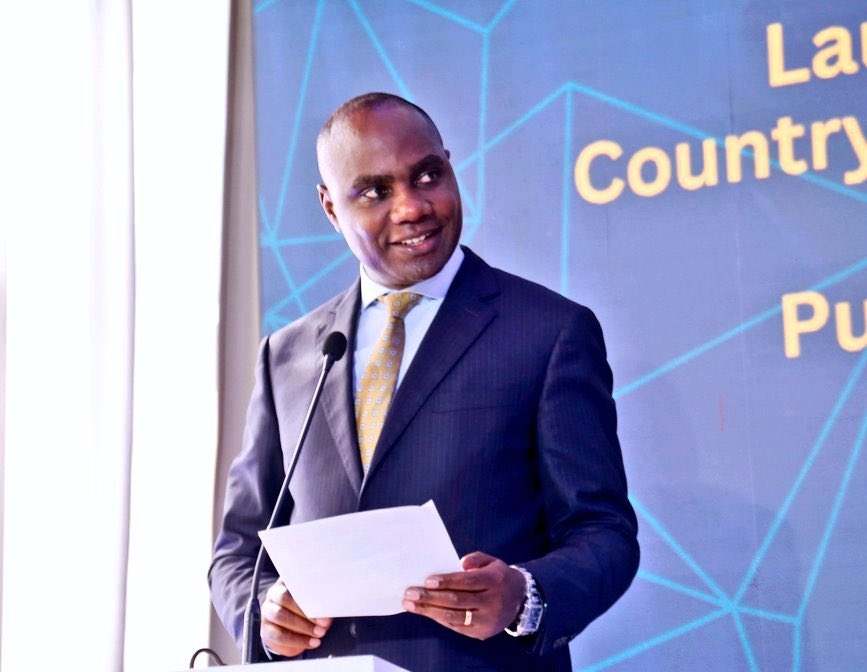
Finance Minister Hon Henry Musasizi stood before the cameras on Monday morning and launched two documents that together tell the story of where Uganda is, where it is trying to go, and what it will take to get there. One is a ten-year operational strategy. The other is a frank assessment of the country’s public finances at a moment of historic opportunity. Read together, they amount to the most comprehensive statement yet of the economic framework within which Hon Musasizi intends to operate as Finance Minister.
The Uganda Country Partnership Framework is the World Bank Group’s formal commitment to Uganda’s transformation over the next decade. It is built around a single ambition, supporting Uganda’s journey toward becoming a modern, prosperous, and competitive upper middle-income country by 2040.
What makes it different from previous frameworks is the scale of the private capital it is designed to mobilise. The strategy plans to unlock and enable private investment to the tune of $3.8 billion, not through government borrowing but through a deliberate effort to crowd in private capital at scale, reducing the burden on the public purse while accelerating the pace of investment in the areas Uganda needs most.
The framework is aligned to Uganda’s tenfold growth strategy and the priorities of the National Development Plan IV. It focuses on wealth creation, better jobs, stronger economic governance, healthier and better-skilled people, and better-connected communities through quality infrastructure. It also puts a deliberate emphasis on building a more productive and inclusive private sector, an acknowledgement that government alone cannot drive the transformation Uganda is attempting and that the energy, capital, and innovation of the private sector must be systematically unleashed rather than merely tolerated.
The second document launched on Friday morning, the Public Finance Review, carries a message that Musasizi clearly wanted heard. Uganda is entering its oil decade. The revenues from the country’s oil fields are approaching. And the temptation, in any country that has discovered oil, is to treat that moment as an arrival, a point at which the hard work of building institutions, mobilising domestic revenue, and managing public expenditure efficiently can be relaxed because the money will simply flow.
The Public Finance Review pushes back hard against that temptation. Its central recommendation is that sustainable prosperity will not depend on oil revenues alone. It will depend on strong institutions, efficient public expenditure, enhanced domestic revenue mobilisation, and continued investment in the people of Uganda.
It is, in its way, a pre-emptive warning, a document that arrives before the oil money does, precisely to shape the decisions that will determine whether that money builds a country or hollows one out.
Musasizi received that message as entirely consistent with the agenda he brought into office. His five pillars, the $500 billion economy target, absolute fiscal discipline, aggressive revenue mobilisation, the Presidential wealth creation agenda, and smart oil governance, are themselves a response to exactly the challenge the Public Finance Review identifies. Uganda cannot afford to become oil-dependent. It must become oil-enhanced, a country that uses petroleum revenues to strengthen the institutions and infrastructure that will outlast the oil fields.
The minister also used the launch to put Uganda’s recent economic record on the table. Despite multiple global shocks, a pandemic, supply chain disruptions, the ripple effects of conflicts far from Uganda’s borders, the country has maintained macroeconomic stability, strengthened public financial management, enhanced fiscal transparency, improved debt management, expanded domestic revenue mobilisation, and reinforced public investment management. It is a record that provides a platform to build from, even as the challenges ahead remain formidable.
But the moment that cut through the technical language of frameworks and reviews came near the end of Musasizi’s remarks, when he stepped back from the documents and spoke plainly about what development actually means. Development, he said, is not measured by the size of budgets, the number of projects approved, or the volume of policies adopted. It is measured by the lives transformed, the opportunities created, and the lasting impact on citizens.
For a Finance Minister who has, in three weeks in office, told the World Bank its disbursement rate is not good enough, directed government-owned banks to make credit affordable, and insisted that pension funds must mobilise capital for national transformation, the statement was entirely in character.
The frameworks are launched. The analysis is on the table. The oil decade is coming. What happens next will be written not in documents but in the decisions, the discipline, and the delivery that follow them.
###
What's your reaction?
You may also like
More in:Economy
GROW Project Raises Government Wealth-Creation Investments to UGX 10.75 Trillion
Minister Musasizi Warns District Leaders Against Abandoning Anti-Corruption Duties to Balaam.
Minister Musasizi Reaffirms Uganda’s Commitment to EU Partnership to Drive Investment, Trade and Jobs
Minister Musasizi to MPs: Broaden Tax Base, Don’t Just Tax Same People More to Reach 20% Revenue Target