Business

What is the Uganda Development Finance Summit

The Uganda Development Finance Summit 2025 is part of a broader legacy of international efforts to address Africa’s financing gaps, tracing its roots to global development conferences. The modern framework began with the United Nations’ Third Financing for Development Conference in Addis Ababa, Ethiopia, from July 13-16, 2015.

This landmark event brought together world leaders to devise strategies for funding the Sustainable Development Goals (SDGs), a successor to the Millennium Development Goals (MDGs). The Addis Ababa summit estimated a staggering $11.5 trillion annual investment $172.5 trillion over 15 years was required to eradicate poverty, ensure food security, and promote sustainable growth by 2030, amid a volatile global financial landscape marked by crises like Greece’s debt and Syria’s civil war.

Building on this, national development finance institutions (DFIs) like the Uganda Development Bank (UDB) have emerged as critical players. Established with a mandate to accelerate socio-economic development, UDB has evolved since its inception, gaining recognition under Managing Director Patricia Ojangole, who became the first woman Chairperson of the AADFI in 2025. Her leadership has emphasized low-cost, patient capital to address market failures, a priority underscored by Uganda’s economic recovery efforts post-Idi Amin and Milton Obote eras. The 1991 Investment Code and the creation of the Uganda Investment Authority laid the groundwork, fostering growth praised by the World Bank and IMF in the 1990s and early 2000s.

The 2025 summit marks Uganda’s bold step to host a continental dialogue, inspired by these global precedents and tailored to its context of agricultural dominance and infrastructure needs. With historical challenges like political instability and past project mismanagement in mind, the event seeks to chart a new course, leveraging partnerships like the recent BADEA agreement to drive sustainable progress across Africa.

What's your reaction?

Excited
0
Happy
0
In Love
0
Not Sure
0
Silly
0
The Scribe is Uganda's leading online local Newspaper. We are among the few surviving media outlets in Uganda that are still following media standards and ethics.
Email: editor@scribe.co.ug

You may also like

Comments are closed.

More in:Business

Business

PRESIDENT MUSEVENI URGES EUROPEAN INVESTORS TO TAP INTO UGANDA’S ECONOMIC OPPORTUNITIES 
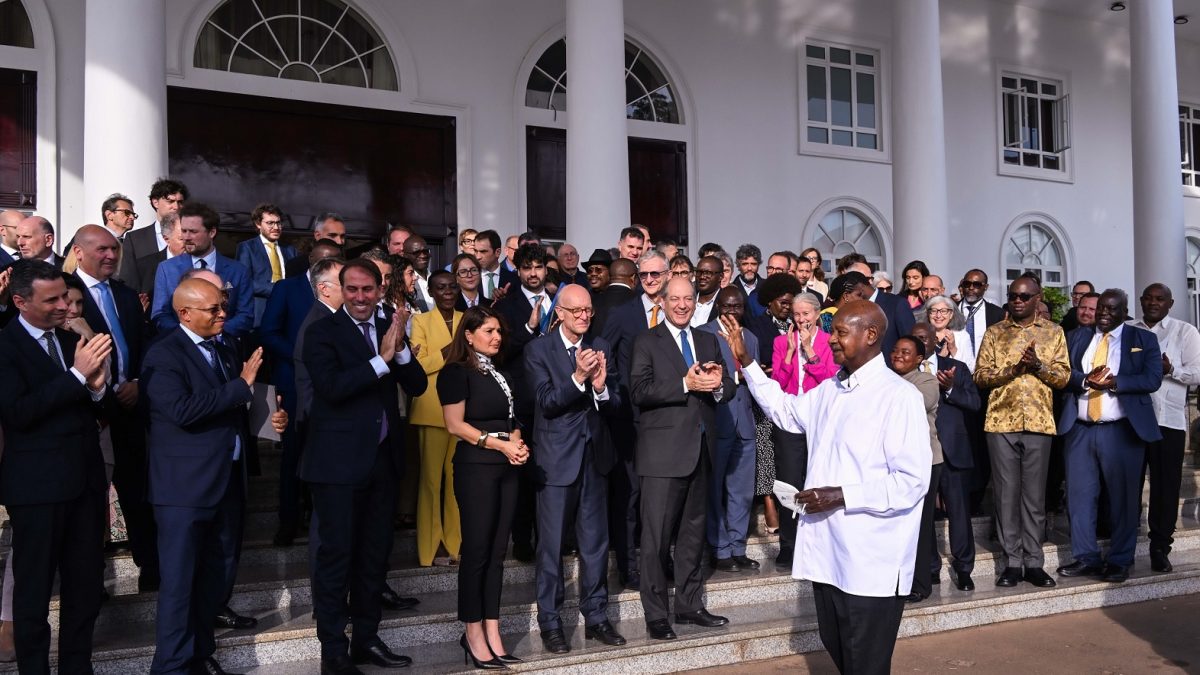
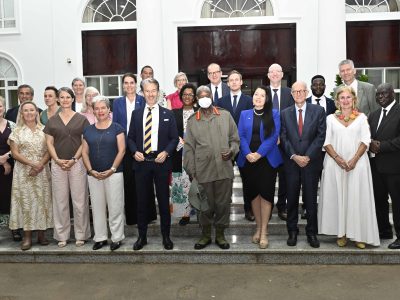
President Yoweri Kaguta Museveni has urged European investors to take advantage of Uganda’s economic opportunities, particularly in infrastructure, energy, manufacturing and agriculture, saying investment in productive sectors is key to expanding markets, creating jobs and accelerating economic transformation.    The President made the remarks today at State House Entebbe during a meeting with European Union Ambassadors and investors, where he highlighted Africa’s growing population and expanding market as a major opportunity for European businesses seeking investment and stronger economic partnerships. “This is what we have been advising our European friends to look at, because Africa is a big potential market with its fast-growing population,” he said. President Museveni attributed political instability in some African countries partly to identity-based politics, including tribalism, religious divisions and ideological misunderstandings, as well as a failure to appreciate the role of the private sector in driving economic growth. He said Uganda had learnt from these challenges and emphasised the need for a stable political and economic environment that enables private businesses to invest, expand production and create employment. The President welcomed ongoing and proposed European investments in Uganda, particularly in infrastructure and other productive sectors, saying such projects would strengthen economic links between Uganda and the European market. “All these projects are music to my ears. By constructing these projects here, you are linking the market of Uganda to that of Europe. Why can’t anyone see that?” he asked. On energy, President Museveni said the cost of electricity remained a critical factor in Uganda’s competitiveness, particularly for manufacturers seeking to produce goods at affordable prices. While welcoming private-sector investment in hydropower generation, he called for greater attention to electricity tariffs, arguing that affordable power was essential for industrial expansion and economic growth. He identified affordable electricity, railway transport and accessible financing for productive investments as key priorities for strengthening Uganda’s manufacturing sector. The President cited the Uganda Development Bank as an important source of financing for businesses engaged in productive activities, explaining that the government had retained the institution to support investments capable of expanding production and creating jobs. He also urged the European Investment Bank to channel more financing into strategic infrastructure, particularly railway development, electricity generation and distribution, and selected road projects. On road infrastructure, President Museveni encouraged European investors to explore opportunities in construction and financing models, including tolling arrangements where appropriate. The President also reaffirmed the government’s support for tax incentives aimed at attracting investment, particularly in manufacturing, and emphasised the importance of enabling eligible businesses to benefit from a 10-year tax holiday. ...