By Wilfred Arinda Nshekantebirwe
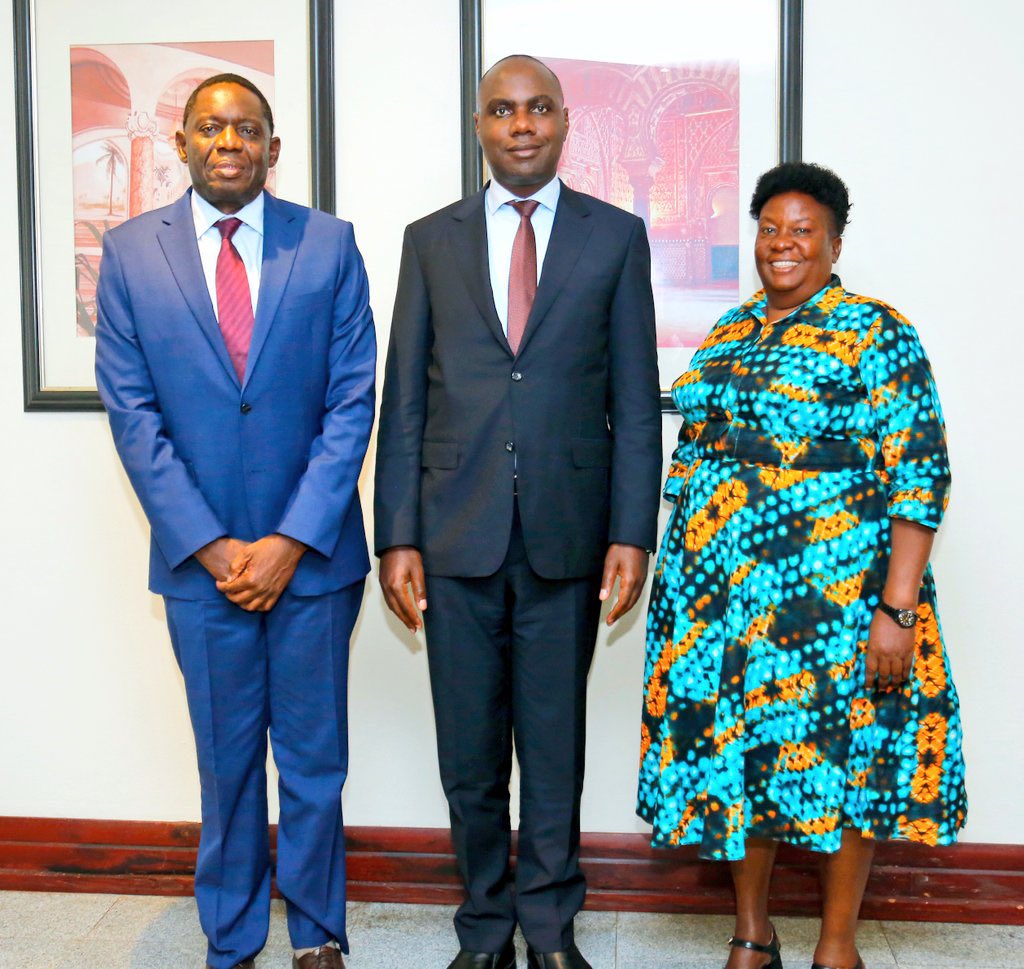
Finance Minister Hon. Henry Musasizi has moved swiftly to strengthen the critical working relationship between the Ministry of Finance, Planning and Economic Development and the Bank of Uganda, holding high-level consultations with Bank of Uganda Governor Dr. Michael Atingi-Ego, his Deputy Prof. Augustus Nuwagaba, and senior Bank officials in a meeting focused on tightening the coordination between Uganda’s fiscal and monetary policy frameworks.
The meeting, one of the earliest high-profile engagements of Musasizi’s tenure, reflects the new Minister’s evident understanding that sustainable macroeconomic stability cannot be achieved by either institution working in isolation.
The Ministry of Finance controls the public purse, setting budgets, managing debt, determining expenditure priorities, and mobilising domestic revenue.
The Bank of Uganda controls monetary conditions, managing inflation, exchange rate stability, and the health of the financial system. When the two institutions pull in different directions, the economy pays the price. When they coordinate effectively, the results can be transformative.
Hon Henry Musasizi was accompanied to the meeting by the Minister of State for Finance in charge of General Duties, Cissy Mulondo, signalling that the coordination agenda he is pursuing is a Ministry-wide commitment and not simply a personal initiative.
The discussions covered a wide and consequential agenda. At the centre was Uganda’s fiscal consolidation agenda and the need for fiscal prudency to support monetary policy effectiveness and broader macroeconomic stability, a direct acknowledgement that undisciplined government spending, domestic arrears, and unpredictable cashflow management have in the past undermined the Bank of Uganda’s ability to keep inflation in check and maintain confidence in the shilling.
Musasizi and the Bank’s leadership agreed to strengthen cashflow management and forecasting mechanisms, a technical but enormously important reform that would give both institutions better visibility over the flow of public resources and reduce the unpredictability that has historically complicated monetary management.
The clearance of domestic arrears featured prominently in the discussions, and for good reason. Uganda’s stock of domestic arrears, accumulated when government fails to pay suppliers, contractors, and service providers on time, injects a hidden form of fiscal pressure into the economy. It erodes confidence among private sector actors, drives up the cost of doing business with government, and creates a shadow liability that distorts the true picture of the country’s fiscal position.
A Finance Minister committed to clearing those arrears is, in effect, committing to a more honest and more stable macroeconomic environment. The meeting also addressed the capitalisation of the Central Bank, ensuring that the Bank of Uganda has the financial strength to execute its mandate without constraints that would compromise its independence or effectiveness.
On the development of Uganda’s financial markets, the two sides discussed reforms to the local currency bond market and a review of the primary dealer market maker system, technical reforms that carry significant implications for Uganda’s ability to finance its development needs domestically rather than relying on expensive external borrowing.
A deep, liquid, and well-functioning local currency bond market is one of the most important structural features of a maturing economy, allowing government to borrow in its own currency, reducing exchange rate risk, and creating investment opportunities for Ugandan pension funds, insurance companies, and retail investors.
The fact that this featured on Musasizi’s agenda in the early weeks of his tenure suggests a Minister thinking not just about the immediate budget cycle but about the long-term architecture of Uganda’s financial system.
Perhaps the most urgent item on the agenda, given the reputational and economic stakes involved, was the agreement to strengthen anti-money laundering mechanisms and the frameworks for combating the financing of terrorism. Accordong to Musasizi, Uganda was previously placed on the Financial Action Task Force Grey List, a designation that signals deficiencies in a country’s financial crime prevention systems and carries real economic consequences, including increased scrutiny on international transactions, higher costs for correspondent banking relationships, and reduced attractiveness to foreign investors.
The two institutions agreed to intensify their joint efforts to ensure Uganda does not return to that list, a commitment that protects the integrity of Uganda’s financial system and its standing in the global economy.
Musasizi pledged his Ministry’s full support to the Central Bank in executing its mandate effectively, framing the relationship between the two institutions not as one of competition or hierarchy but of complementarity. The Governor, Dr. Atingi-Ego, reciprocated, stating that the Bank of Uganda remains committed to a strong coordinated partnership with the Ministry grounded in transparency, policy alignment, and mutual respect for their complementary mandates.
That language, transparency, alignment, mutual respect, is worth pausing on. It describes a relationship that, when it functions as intended, forms the backbone of a country’s economic management. And it describes precisely the kind of institutional relationship that Uganda needs as it pursues the ambitious economic targets Musasizi has set for his tenure, including pushing the revenue-to-GDP ratio to 20 percent, managing future oil revenues with institutional guardrails, and driving the country toward a $500 billion economy.
None of those targets are achievable without a Finance Ministry and a Central Bank that speak the same language, share information freely, plan together, and hold each other to account with honesty.
###
What's your reaction?
You may also like
More in:Economy
Minister Musasizi Warns District Leaders Against Abandoning Anti-Corruption Duties to Balaam.
Minister Musasizi Reaffirms Uganda’s Commitment to EU Partnership to Drive Investment, Trade and Jobs
Minister Musasizi to MPs: Broaden Tax Base, Don’t Just Tax Same People More to Reach 20% Revenue Target
Uganda’s Cash Economy and the Bank of Uganda’s New Cash Withdrawal Limits